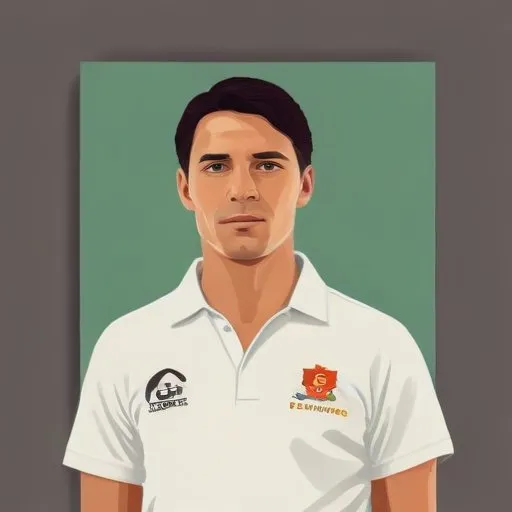
Vic Richardson: The Australian Sports Legend of the 1920s and 1930s
A Dominant Force in Multiple Sports
Vic Richardson is renowned for his outstanding achievements in Australian sports, particularly cricket, Australian rules football, baseball, and golf, earning him a reputation as one of the most versatile and accomplished sportsmen of his era. As a cricket legend, he captained the Australian team and represented the country in 19 Test matches, showcasing his exceptional batting skills and revered fielding prowess.
Early Life and Sporting Beginnings
Born on September 7, 1894, in Parkside, South Australia, Richardson grew up in the Unley area and attended Kyre College and later Scotch College. His natural athleticism led him to engage in various sports, including gymnastics, basketball, cricket, baseball, lacrosse, and Australian Rules football. Richardson's early life was marked by his passion for sports, which ultimately paved the way for his remarkable career.
Cricket Career Highlights
Richardson's cricket career spanned two decades, during which he played 184 matches for Australia and South Australia, scoring 10,724 runs, including 27 centuries, at an average of 37.63. His exceptional fielding skills earned him an average of 1.15 catches per match, with four stumpings as a stand-in wicketkeeper. He made his first-class debut for South Australia in the 1918-1919 season and went on to captain the team.
Test Cricket and Captaincy
Richardson represented Australia in 19 Test matches, including five as captain during the 1935-1936 tour of South Africa. His leadership and batting skills were instrumental in Australia's success during this period.
Football Achievements
In addition to his cricket exploits, Richardson was an accomplished Australian Rules football player, captaining the South Australian team and winning the Magarey Medal, the highest individual honor in the South Australian National Football League, in 1920.
Multi-Sport Mastery
Richardson's sporting prowess extended beyond cricket and football. He represented Australia in baseball, won the South Australian state tennis title, and excelled in lacrosse, basketball, and swimming. His incredible range of sporting accomplishments has few parallels in Australian sporting history.
Legacy and Impact
Vic Richardson's legacy extends beyond his remarkable sporting achievements. He inspired generations of Australian sportsmen and women, demonstrating the importance of dedication, hard work, and teamwork. His iconic status in Australian sports history continues to inspire and motivate athletes across various disciplines.
Personal Milestones and Quotes
Richardson's personal milestones include his marriage to Elsie May Trowse in 1921 and the birth of their two daughters. One of his most notable quotes, which reflects his approach to sports and life, is: "A good sportsman is not one who plays the game, but one who loves the game."
Awards and Honors
Throughout his illustrious career, Richardson received numerous awards and honors, including the Magarey Medal, the South Australian Cricket Association's highest honor, and the Australian Sports Medal.
Legacy in Modern Australian Sports
Vic Richardson's influence on modern Australian sports is profound. He paved the way for future generations of multi-sport athletes and continues to inspire Australians to strive for excellence in various sporting disciplines. His remarkable achievements serve as a testament to the power of dedication, perseverance, and passion.
Trivia and Fun Facts
- Richardson was known for his exceptional fielding skills, earning him the nickname "the best fielder in the world."
- He worked in the South Australian public service during his playing career.
- Richardson's sporting career spanned over two decades, from 1918 to 1936.
Conclusion
Vic Richardson's remarkable sporting career, which encompassed cricket, Australian Rules football, baseball, golf, and other sports, has cemented his place as one of Australia's most celebrated sportsmen. His enduring legacy continues to inspire generations of athletes, ensuring his place in the annals of Australian sporting history.