


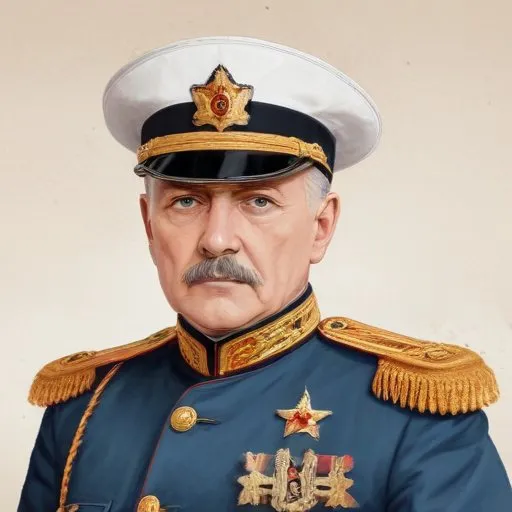
A Soviet military leader who played a crucial role in the Cuban Missile Crisis, helping to prevent a nuclear war between the US and USSR.
Viktor Georgiyevich Kulikov, a prominent Soviet military leader, is renowned for his remarkable tenure as the Commander-in-Chief of the Warsaw Pact from 1977 to 1989. During this period, he held the esteemed rank of Marshal of the Soviet Union, a distinction bestowed upon him on January 14, 1977.
Born into a humble peasant family on July 5, 1921, Kulikov joined the Red Army in 1939. His bravery and strategic acumen during World War II earned him the esteemed title of Hero of the Soviet Union.
Kulikov's military prowess led to his appointment as the Commander of the Kyiv Military District from 1967 to 1969, followed by his role as the Commander of the Group of Soviet Forces in Germany from 1969 to 1971. Subsequently, he served as the Chief of General Staff of the Soviet Armed Forces from 1971 to 1977.
Kulikov's illustrious career was marked by numerous honors and awards, including:
Kulikov was a member of the Soviet-Russian parliament from 1989 to 2003. After a prolonged illness, he passed away on May 28, 2013. His remarkable contributions to the Soviet Armed Forces and his unwavering dedication to his country have cemented his status as one of the most revered military leaders in Soviet history.
Viktor Kulikov's legacy extends beyond his military achievements. He played a significant role in shaping the Soviet Union's defense policies and was instrumental in maintaining the country's military prowess during the Cold War era. His influence on modern society is a testament to his enduring impact on global politics and international relations.
Born in 1903
Soviet Minister of Defense from 1967 to 1976, overseeing the Soviet military during the Cold War and playing a key role in shaping the country's defense policies.
Born in 1924
Marshal of the Soviet Union, last Minister of Defense of the Soviet Union, and leader of the 1991 Soviet coup attempt against Mikhail Gorbachev. He played a crucial role in shaping the Soviet military and its policies during the Cold War era.
Born in 1914
Leader of the Soviet Union from 1982 to 1984, known for attempting to reform the stagnant Soviet economy and crack down on corruption. Implemented policies to increase discipline and productivity.
Born in 1906
A Soviet leader who ruled with an iron fist, implementing policies that stagnated the economy and suppressed dissent, while also being a key figure in the Cold War. He's infamous for his authoritarian regime and bureaucratic inefficiency.
95 Years Old
The last leader of the Soviet Union, who introduced reforms that led to the end of the Cold War and the collapse of communism, earning a Nobel Peace Prize. He's known for his policies of glasnost and perestroika, which transformed the Soviet Union and the world.
