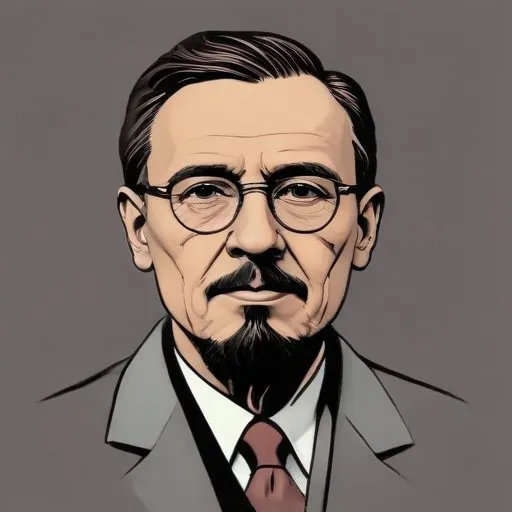
Vincent du Vigneaud: The Pioneering Biochemist Behind Oxytocin Synthesis
A Breakthrough in Biochemically Important Sulphur Compounds
Vincent du Vigneaud, a renowned American biochemist, took the scientific world by storm in 1955 when he was awarded the Nobel Prize in Chemistry for his groundbreaking work on biochemically important sulphur compounds, particularly the first synthesis of a polypeptide hormone, oxytocin. This remarkable achievement cemented his status as a pioneering figure in the field of biochemistry.
Early Life and Education
Born on May 18, 1901, in Chicago, Illinois, du Vigneaud was the son of Alfred du Vigneaud, a French inventor and mechanic, and Mary Theresa. His interest in chemistry was sparked during his high school days, where he experimented with sulphur-based explosives with his friends. After completing his secondary education in 1918, du Vigneaud worked on a farm during World War I, where he became skilled in milking cows, which initially inspired him to pursue a career in farming. However, his elder sister, Beatrice, persuaded him to study chemistry at the University of Illinois at Urbana-Champaign, where he earned his degree in 1921.
Academic Pursuits and Career Highlights
Du Vigneaud's fascination with chemistry, particularly organic chemistry, led him to pursue his master's degree, which he received in 1924. He joined DuPont shortly after, where he worked as an assistant biochemist at the Philadelphia General Hospital. This position enabled him to teach and further develop his skills in biochemistry. His research focus shifted to sulphur compounds, under the guidance of Carl Shipp Marvel, whose enthusiasm for the subject rubbed off on du Vigneaud.
The Synthesis of Oxytocin: A Landmark Discovery
Du Vigneaud's most significant contribution to the field of biochemistry was the synthesis of oxytocin, a peptide hormone responsible for stimulating uterine contractions during childbirth. His research team, including Irving Page, successfully synthesized the hormone in 1953, paving the way for a deeper understanding of its biological functions. This breakthrough earned du Vigneaud the 1955 Nobel Prize in Chemistry, recognizing his pioneering work in the field of biochemically important sulphur compounds.
Awards and Honors
- 1955 Nobel Prize in Chemistry
- Willard Gibbs Award (1954)
Personal Life and Legacy
Du Vigneaud married Zella Zon Ford in 1924, and the couple had two children together. Throughout his career, he held various academic positions, including professor of biochemistry at Cornell University Medical College. His contributions to biochemistry have inspired generations of scientists, and his legacy continues to shape our understanding of sulphur compounds and their biological significance.
Impact on Modern Society
Du Vigneaud's work on oxytocin has far-reaching implications for maternal health and childbirth. His research has led to a better understanding of the hormone's role in inducing labor, enabling medical professionals to develop more effective treatments for obstetric complications. Additionally, his contributions to the field of biochemistry have opened avenues for further research into sulphur compounds, with potential applications in fields such as agriculture, medicine, and environmental science.
Vincent du Vigneaud's groundbreaking work on sulphur compounds and oxytocin synthesis has left an indelible mark on the field of biochemistry, cementing his place as a pioneer in the scientific community.
FAQ
What did Vincent du Vigneaud win the Nobel Prize for?
Vincent du Vigneaud won the Nobel Prize in Chemistry in 1955 for his work on the structure and synthesis of oxytocin and vasopressin, two peptide hormones.
What is Vincent du Vigneauds most significant scientific contribution?
Vincent du Vigneauds most significant scientific contribution is the discovery of the structure of oxytocin and vasopressin, leading to a deeper understanding of hormone function and synthesis.
What was Vincent du Vigneauds research focus?
Vincent du Vigneauds research focused on the structure and function of peptides and proteins, particularly the synthesis and isolation of hormones and their analogues.
What was Vincent du Vigneauds role in the development of medicine?
Vincent du Vigneauds work led to the development of new medicines and therapies, including the treatment of diabetes and cardiovascular disease.
How did Vincent du Vigneauds education shape his research?
Vincent du Vigneauds education at the University of Illinois and Johns Hopkins University laid the foundation for his research in biochemistry, introducing him to the study of peptides and hormones.