


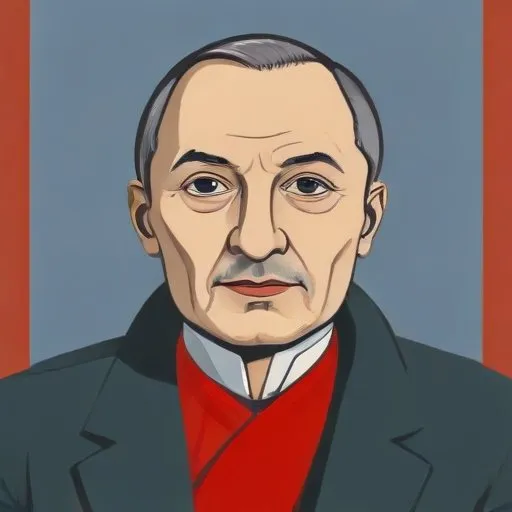
A Russian lexicographer and author who compiled the most comprehensive dictionary of the Russian language, documenting its nuances and regional variations. He's also known for his literary works, including folktales and short stories.
Vladimir Ivanovich Dal was a Russian language lexicographer, polyglot, and Turkologist who left an indelible mark on the world of linguistics. He is best known for compiling and documenting the oral history of the Russian region, which was later published in Russian and became an integral part of modern folklore.
Dal was born on November 22, 1801, in the town of Lugansky Zavod, present-day Luhansk, Ukraine, to a Danish physician named Johan Christian von Dahl and Julia Adelaide Freytag, a linguist with German and French Huguenot ancestry. Growing up in a culturally diverse environment, Dal was exposed to a variety of languages and cultures from a young age.
Dal's fascination with language and folklore led him to compile a comprehensive dictionary of the Russian language, which was published in four volumes between 1863 and 1866. This magnum opus, titled Tolkovyi Slovar Zhivogo Velikorusskogo Yazika (Explanatory Dictionary of the Living Great Russian Language), contained over 30,000 entries and became a seminal work in the field of Russian linguistics.
In addition to his lexicographic work, Dal was a prolific writer and published several articles and books on folklore, ethnography, and linguistics. His work on the oral history of the Russian region helped to preserve the cultural heritage of the country and contributed significantly to the development of modern Russian folklore.
Dal's work was guided by a deep respect for the diversity of languages and cultures. He believed that language was the key to understanding a nation's history, culture, and identity. Through his work, Dal sought to promote a greater understanding and appreciation of the Russian language and culture, and to preserve the country's rich cultural heritage for future generations.
Dal's dictionary and folklore collections have had a profound impact on modern Russian society. His work has influenced generations of linguists, writers, and scholars, and continues to be widely studied and admired today. The Russian Geographical Society, which Dal helped to found, has played a significant role in promoting the study of geography and ethnography in Russia.
Vladimir Dal's contributions to the field of Russian linguistics and folklore are immeasurable. His work has had a lasting impact on modern Russian society, and his dictionary remains an indispensable reference for linguists and scholars today. Dal's legacy serves as a testament to the power of language and culture to shape our understanding of ourselves and the world around us.
Born in 1799
Russia's literary icon penned timeless tales of love, drama, and social commentary, leaving an indelible mark on the country's cultural heritage.
Born in 1814
A 19th-century Russian literary giant, known for his poignant poetry and novels that explored the human condition, particularly in the context of Russian society. His works are still widely read and studied today.
Born in 1818
A Russian literary mastermind who crafted poignant novels and plays that explored the human condition, delving into themes of love, family, and social change.
Born in 1821
A Russian literary mastermind who penned psychologically complex novels that probed the human condition, exploring themes of morality, philosophy, and the darker aspects of human nature.
Born in 1828
A Russian literary giant who penned sweeping novels like "War and Peace" and "Anna Karenina", exploring the human condition with profound insight and masterful storytelling.
Born in 1860
A renowned Russian literary mastermind, celebrated for crafting poignant, psychologically nuanced tales that probe the human condition, and pioneering the modern short story genre.
Born in 1899
A Russian-born novelist and critic, renowned for crafting intricate, lyrical prose and exploring themes of identity, morality, and the human condition through works like "Lolita" and "Pale Fire".
Born in 1880
A Russian literary giant, known for pioneering the avant-garde movement in literature, blending poetry and prose to create innovative, symbolic works that explored the human experience.
