


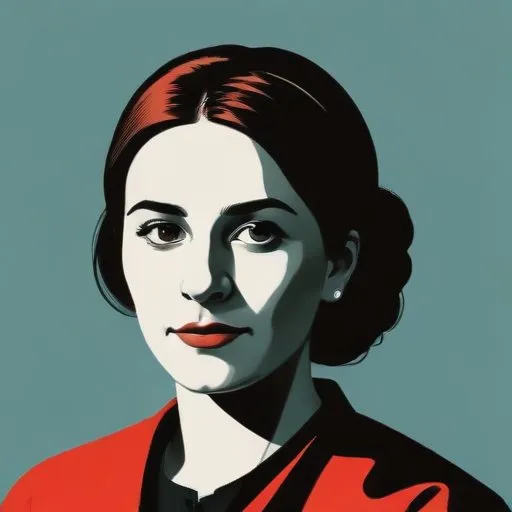
A Czech-American humanitarian who dedicated their life to providing relief, editing, and fundraising for various causes, leaving a lasting impact on the lives of many.
Vlasta Adele Vraz was a Czech-American relief worker, editor, and fundraiser, renowned for her tireless efforts in providing aid to Czechoslovakia during World War II and the post-war era. As the director of American Relief for Czechoslovakia, she played a pivotal role in distributing over $4 million in food, medicine, clothing, and other essential supplies to those in need.
Born on June 18, 1900, in Chicago, Illinois, Vlasta Vraz was the daughter of Enrique Stanko Vraz, a naturalist and explorer born in Bulgaria to Czech parents, and Vlasta Vraz, a homemaker. Her maternal grandfather, August Geringer, was a prominent figure in the Czech-American community, having published a Czech-language daily newspaper, Svornost, in the United States, starting in 1875.
In 1919, Vraz moved to Prague, where she assisted her father in his lecturing endeavors until his passing in 1932. During World War II, she returned to the United States with her widowed mother and worked as a secretary in Washington, D.C. for the Czech government-in-exile. In 1945, she returned to Prague, taking the helm of American Relief for Czechoslovakia, and dedicated herself to alleviating the suffering of the Czech people.
In recognition of her remarkable humanitarian work, Vraz was inducted into the prestigious Order of the White Lion by Jan Masaryk in 1946. This honor was a testament to her unwavering commitment to the Czech people and her remarkable organizational skills, which enabled her to coordinate the distribution of vital resources.
In 1949, Vraz was arrested by Communist authorities on espionage charges, sparking widespread protests from the United States government and international community. After a week in custody, she was released, and upon her return to the United States, she became the president of the Czechoslovak National Council of America.
As president, Vraz continued to advocate for the Czech people, editing two national publications for the Czechoslovak-American community and providing insightful commentary during the 1968 Warsaw Pact invasion of Czechoslovakia.
Vlasta Vraz passed away on August 22, 1989, at the age of 89, leaving behind a remarkable legacy of humanitarian service and advocacy. Her remains were interred at the Bohemian National Cemetery in Chicago, Illinois, alongside her mother and brother, Victor E. Vraz, an economics professor.
Vlasta Vraz's unwavering dedication to the Czech people, her unrelenting advocacy, and her remarkable humanitarian work have cemented her place as a trailblazing figure in the annals of history. Her contributions continue to inspire generations, serving as a beacon of hope and a testament to the power of compassion and determination.
Vlasta Vraz's humanitarian work and advocacy have had a lasting impact on the Czech-American community and beyond. Her commitment to providing aid and support during times of crisis has inspired countless individuals to follow in her footsteps, making a tangible difference in the lives of those in need.
Today, her legacy serves as a powerful reminder of the importance of compassion, empathy, and determination in the face of adversity, inspiring future generations to continue the vital work of humanitarian aid and advocacy.
Born in 1884
A humanitarian and politician who championed human rights, women's empowerment, and social justice, leaving a lasting impact on American politics and international relations.
Born in 1874
The 31st President of the United States was a humanitarian and politician who led the country through the Great Depression and is known for his humanitarian efforts and infrastructure development. He's also infamous for his inability to mitigate the economic crisis.
Born in 1890
Led the Allied forces to victory in World War II and later served as President, maintaining peace and prosperity during the Cold War era. He's known for his strategic leadership and diplomatic skills.
Born in 1884
The 33rd President of the United States, a strong leader who made tough decisions, including dropping atomic bombs on Japan and establishing the Marshall Plan to rebuild Europe after WWII.
Born in 1880
A highly decorated military leader and statesman who played a crucial role in shaping post-WWII foreign policy and was awarded the Nobel Peace Prize for his efforts. He's most known for authoring the Marshall Plan, a massive economic aid program that helped rebuild war-torn Europe.
Born in 1870
A skilled lawyer and politician who played a key role in shaping South Africa's government and served as a prominent international statesman. He's also known for his influential ideas on holism and evolution.
Born in 1887
A French judge and academic who played a crucial role in drafting the Universal Declaration of Human Rights, and was awarded the Nobel Peace Prize in 1968 for his efforts. He is also known for his work in promoting human rights and social justice.
Born in 1875
A humanitarian doctor and philosopher who combined medical care with spiritual reflection, earning a Nobel Peace Prize for his tireless efforts to alleviate human suffering.
