


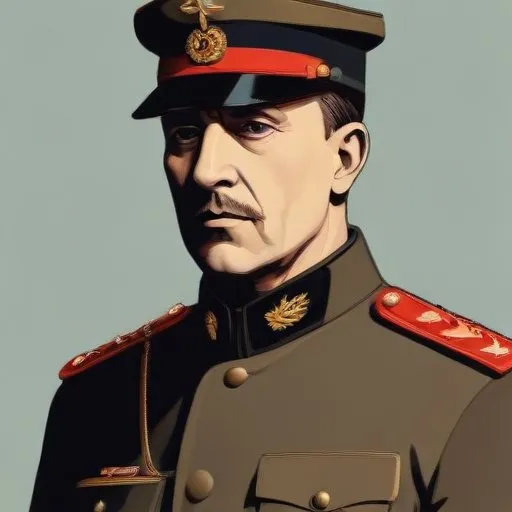
Czech Minister of Foreign Affairs who played a key role in shaping the country's post-WWII foreign policy and was a strong advocate for democracy and human rights. He mysteriously fell to his death from a window in 1948, sparking conspiracy theories.
Jan Masaryk, a Czech diplomat and politician, is best known for serving as the Foreign Minister of Czechoslovakia from 1940 to 1948. During his tenure, he played a crucial role in shaping the country's foreign policy, earning him a reputation as a brave, honest, and impulsive leader.
Born on September 14, 1886, in Prague, Jan Masaryk was the son of Professor and Politician Tom Garrigue Masaryk, who later became the first president of Czechoslovakia in 1918. His American mother, Charlotte Garrigue, instilled in him a strong sense of American culture, which would later influence his diplomatic style.
Masaryk's educational background was marked by a brief stint in the United States, where he lived as a drifter and steelworker. This experience had a profound impact on his life, as he developed a strong American accent and a unique perspective on the world. He eventually returned to Prague in 1913, where he completed his education.
During World War I, Masaryk served in the Austro-Hungarian Army, where he was stationed in Galicia and learned Polish. However, his father's exile and work towards Czech independence made him a target for bullying and hazing during his military service.
After the war, Masaryk joined the diplomatic service, becoming chargé d'affaires to the United States in 1919. He later served as counselor to the legation in London and secretary to the Czechoslovak foreign minister Edvard Beneš in 1922. In 1925, he was appointed minister-plenipotentiary to Britain, a position that showcased his exceptional diplomatic skills.
The British scholar Robert Powell described Masaryk as "the most unconventional of diplomats." He was known for his wit, shrewdness, and abundance of common sense, which often allowed him to triumph over challenging circumstances. Masaryk's American manner and direct conversation style sometimes embarrassed certain types of English people, but it also earned him a reputation as a refreshingly honest and direct diplomat.
Jan Masaryk's diplomatic career spanned over two decades, during which he played a crucial role in shaping Czechoslovakia's foreign policy. His bravery, honesty, and impulsive nature made him a complex and intriguing figure, whose legacy continues to inspire diplomats and politicians around the world.
Through his diplomatic career, Masaryk left an indelible mark on modern society, demonstrating the importance of direct communication, common sense, and psychological insight in international relations. His unconventional approach to diplomacy serves as a reminder that even in the most formal of settings, a dash of wit and humor can go a long way in building bridges between nations.
Jan Masaryk's life and legacy serve as a testament to the power of diplomacy and the importance of approaching international relations with honesty, wit, and a willingness to challenge the status quo.
Born in 1884
A Czech academic and politician who served as the 2nd and 4th President of Czechoslovakia, playing a key role in the country's independence and democratic development. He's known for his efforts to maintain Czechoslovakia's sovereignty during World War II and the Cold War.
Born in 1896
Leader of the Communist Party of Czechoslovakia who oversaw the country's transition to a socialist state and served as president from 1948 to 1953. He's known for his role in establishing a Soviet-backed government in Czechoslovakia.
Born in 1904
The President of Czechoslovak Socialist Republic and General Secretary of the Communist Party of Czechoslovakia, who ruled with an iron fist from 1957 to 1968, suppressing dissents and reform efforts. He's most known for his authoritarian regime and eventual ousting during the Prague Spring.
Born in 1921
A Slovak politician who led a brief, failed attempt to reform communism in Czechoslovakia during the Prague Spring of 1968, known for his efforts to introduce democratic reforms.
89 Years Old
A Czech poet, playwright, and politician who led the country's transition from communism to democracy, and is known for his advocacy of human rights and individual freedom.
85 Years Old
The second President of the Czech Republic, a vocal advocate for free market economics and Euroscepticism, known for his strong opinions on climate change and European integration.
Born in 1914
A Czech writer celebrated for his poetic and humorous novels that explore the human condition, often set against the backdrop of World War II and communist Czechoslovakia.
Born in 1901
A Czech poet and journalist who captured the essence of his country's history and culture through his lyrical and expressive works, earning him the Nobel Prize in Literature.
