


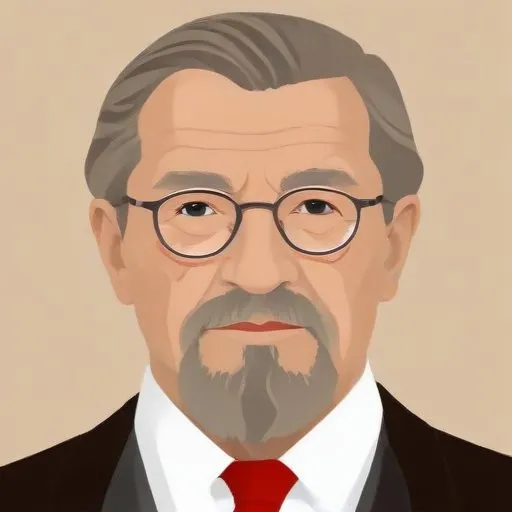
A renowned expert in Eastern thought, particularly Buddhism and Taoism, who has written extensively on these subjects and their relevance to modern Western society.
Renowned for his comprehensive research and profound understanding of Buddhist philosophy, Volker Zotz is an Austrian philosopher, religious studies scholar, and a prolific author. With a career spanning over four decades, Zotz has made significant contributions to the field of Buddhist studies, shedding light on the intricacies of Buddhist philosophy and its influence on Western thought.
Throughout his career, Volker Zotz has made substantial contributions to the field of Buddhist studies, bridging the gap between Eastern and Western philosophy. His extensive research and writings have inspired a new generation of scholars and enthusiasts, cementing his position as a leading authority on Buddhist philosophy.
Zotz's work has not only shed light on the complexities of Buddhist thought but has also facilitated greater understanding and exchange between cultures. As a testament to his dedication and expertise, his legacy continues to inspire and educate scholars and spiritual seekers alike.
Born in 1788
A pessimistic philosopher who wrote about the human condition, emphasizing the struggles and sufferings of life, and is famous for his concept of the "will to life".
Born in 1724
Developed influential philosophical frameworks, such as the Critique of Pure Reason, that shaped modern Western thought on ethics, morality, and human understanding.
Born in 1889
A German philosopher and academic who explored the meaning of existence, time, and human existence, influencing 20th-century philosophy with his concept of "Being-in-the-world".
Born in 1905
Existentialist philosopher and playwright who argued that humans have complete freedom to choose their actions and create their own meaning in life, influencing modern thought on morality and individual responsibility.
Born in 1908
A pioneering feminist philosopher who wrote extensively on ethics, politics, and gender, famously arguing that "one is not born, but rather becomes, a woman."
Born in 1913
A French novelist, philosopher, and journalist who wrote influential works like "The Stranger" and "The Plague", exploring absurdism and the human condition.
Born in 1906
A 20th-century philosopher and theorist who explored the nature of power, politics, and humanity, particularly in the context of totalitarianism and the Holocaust.
