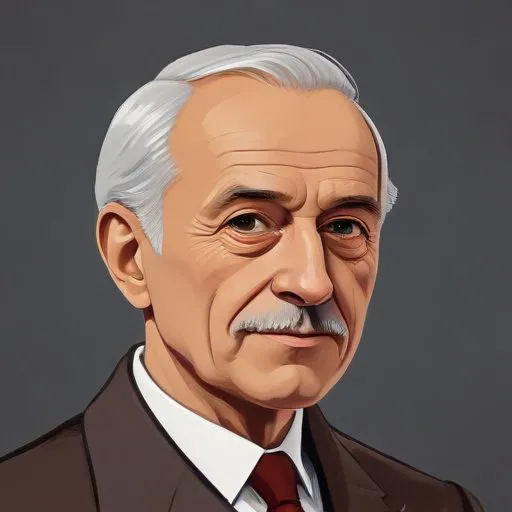
Walther Meissner: Unveiling the Secrets of Superconductors
A Pioneer in the Realm of Low Temperature Physics
Walther Meissner, a renowned German technical physicist, is credited with the groundbreaking discovery of the Meissner effect, a phenomenon that revolutionized our understanding of superconductors. In 1933, Meissner's pioneering work revealed the extraordinary ability of certain materials to expel magnetic fields, a property that has far-reaching implications for modern technology.
Early Life and Education
Born on December 16, 1882, in Berlin, Germany, Meissner was the son of Waldemar Meissner and Johanna Greger. He pursued his academic interests at the Technical University of Berlin, where he studied mechanical engineering and physics. Under the supervision of the esteemed
Max Planck, Meissner earned his doctorate and laid the foundation for his future research endeavors.
A Career Marked by Innovation and Discovery
Meissner's professional journey began at the Physikalisch-Technische Bundesanstalt (PTB) in Berlin, where he worked on various projects, including the development of a large-scale helium liquefier. This achievement, accomplished between 1922 and 1925, earned him recognition as a leading expert in low-temperature physics. The discovery of the Meissner effect in 1933 cemented his status as a pioneer in the field.
The Meissner Effect: A Breakthrough in Superconductivity
Meissner's most significant contribution to science is the discovery of the Meissner effect, which describes the expulsion of magnetic fields by superconductors. This phenomenon has far-reaching implications for the development of high-temperature superconductors, magnetic resonance imaging (MRI), and other cutting-edge technologies.
Academic and Institutional Contributions
In 1934, Meissner was appointed as the chair of technical physics at the Technical University of Munich, a position he held until his retirement. After World War II, he became the president of the Bavarian Academy of Sciences and Humanities, playing a crucial role in promoting scientific research and development in post-war Germany.
Legacy and Impact
Meissner's work has had a profound impact on modern physics and technology. The Meissner effect has inspired numerous breakthroughs in materials science, condensed matter physics, and engineering. His contributions to the field of low-temperature physics have paved the way for advancements in fields such as medical imaging, energy storage, and transportation.
Personal Life and Later Years
Meissner's personal life was marked by simplicity and a deep connection with nature. He lived alone with his two dogs in his later years, finding solace in the tranquility of the Bavarian countryside. He passed away on November 16, 1974, in Munich, leaving behind a legacy that continues to inspire scientists and researchers worldwide.
In recognition of his contributions, the Walther-Meißner-Institut für Tieftemperaturforschung (WMI) was established in Garching, Germany, to pursue cutting-edge research in low-temperature physics and related fields.
Key Milestones and Achievements
- 1922-1925: Established the world's third-largest helium liquefier
- 1933: Discovered the Meissner effect, a fundamental property of superconductors
- 1934: Appointed as chair of technical physics at the Technical University of Munich
- Post-WWII: Became president of the Bavarian Academy of Sciences and Humanities
A Lasting Legacy in the Realm of Physics
Walther Meissner's pioneering work has left an indelible mark on the world of physics. His discovery of the Meissner effect has opened doors to new possibilities in materials science, energy technology, and beyond. As we continue to push the boundaries of human knowledge, Meissner's contributions serve as a testament to the power of human ingenuity and the importance of fundamental scientific research.
FAQ
What is Walther Meissners most notable scientific contribution?
Walther Meissners most notable scientific contribution is the discovery of the Meissner effect, which describes the expulsion of magnetic fields from superconductors. This discovery revolutionized our understanding of superconductivity and has had a profound impact on modern physics.
What was Walther Meissners role in the development of cryogenics?
Walther Meissner was a pioneer in the field of cryogenics, which deals with the behavior of materials at extremely low temperatures. His work on liquefying helium and achieving ultralow temperatures enabled the study of superconductivity and other low-temperature phenomena.
What is Walther Meissners connection to Johannes Stark?
Walther Meissner worked alongside Johannes Stark, a German physicist, at the Physikalisch-Technische Bundesanstalt (PTB) in Berlin. Together, they conducted groundbreaking research on superconductors and low-temperature physics.
What is Walther Meissners legacy in modern physics?
Walther Meissners legacy continues to shape modern physics, particularly in the fields of superconductivity and cryogenics. His discoveries have led to numerous applications in fields such as medical imaging, transportation, and energy storage.
What awards did Walther Meissner receive for his work?
Walther Meissner received several prestigious awards for his work, including the Hughes Medal and the Rumford Prize. These honors recognize his outstanding contributions to the fields of physics and cryogenics.