


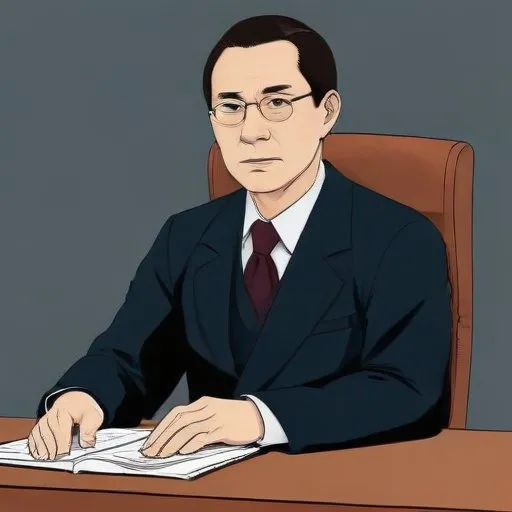
A Japanese lawyer and politician who served as Prime Minister of Japan from 1987 to 1989, known for his leadership during a period of significant economic growth and reform.
Wataru Takeshita was a prominent Japanese politician who made a lasting impact in the world of politics, serving as the Minister for Reconstruction and a member of the House of Representatives in the Diet national legislature. As a key figure in the Liberal Democratic Party, he was known for his leadership roles, particularly as the leader of the Heisei Kenkyukai faction from 2018 until his passing in 2021.
Born on November 3, 1946, in Kakeya, Shimane, Takeshita came from a family of politicians. His elder brother, Noboru Takeshita, was a former Prime Minister of Japan. Wataru Takeshita graduated from Keio University, one of Japan's most prestigious universities, and went on to pursue a career in journalism.
Before entering politics, Takeshita worked as a reporter with NHK, Japan's national public broadcasting organization. In 1985, he began working as an aide to his brother, then-Prime Minister Noboru Takeshita. This experience eventually led him to run for office in 2000, when he was first elected to the House of Representatives.
Takeshita's political career spanned over two decades, during which he held various leadership positions. He was affiliated with the openly revisionist organization Nippon Kaigi and was known for his conservative views. In 2018, he became the leader of the Heisei Kenkyukai faction, a position he held until his passing.
Takeshita was a key supporter of Yoshihide Suga in the 2020 Liberal Democratic Party of Japan leadership election. His faction played a significant role in Suga's victory, solidifying Takeshita's influence within the party.
Takeshita was not without controversy. He was known for his antihomosexual stance, which sparked criticism from human rights groups and members of the LGBTQ+ community.
In July 2021, Takeshita announced his retirement from politics due to health reasons, having been diagnosed with esophageal cancer in 2019. He passed away on September 17, 2021, while still in office.
Despite the controversies surrounding him, Takeshita's legacy as a politician and leader is undeniable. His contributions to Japanese politics and his influence on the Liberal Democratic Party will be remembered for years to come.
Takeshita's life serves as an inspiration to those who aspire to make a difference in politics. His rise from a journalist to a prominent politician is a testament to his dedication and perseverance. Despite facing challenges and controversies, he remained committed to his beliefs and continued to shape Japanese politics until his passing.
72 Years Old
The first Japanese leader to visit Pearl Harbor, he strengthened Japan's economy and international relations through bold policies and diplomatic efforts. He's known for his nationalist views and efforts to revise Japan's pacifist constitution.
86 Years Old
A Japanese target shooter turned politician who served as the country's 92nd Prime Minister, known for his brief yet tumultuous tenure marked by scandals and controversies.
84 Years Old
The 56th Prime Minister of Japan, serving from 2001 to 2006, known for his economic reforms, privatization of the postal system, and bold foreign policy initiatives. He's also famous for his flamboyant hairstyle and love of Elvis Presley music.
Born in 1919
Served as Prime Minister of Japan from 1991 to 1992, known for his efforts to revitalize the country's economy and his role in shaping Japan's post-Cold War foreign policy.
95 Years Old
A Japanese lawyer and politician who served as the 76th Prime Minister of Japan, known for his efforts to reform the country's political system and promote international cooperation. He played a key role in shaping Japan's post-Cold War foreign policy.
Born in 1924
A Japanese politician who served as Prime Minister from 1987 to 1989, known for his efforts to reform Japan's economy and politics, and his involvement in a major corruption scandal.
