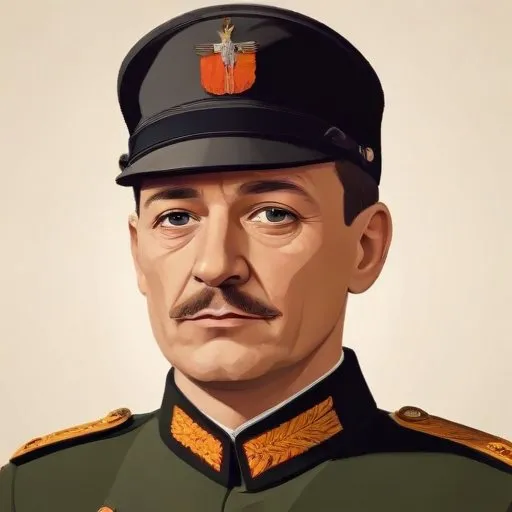
Wilhelm Zaisser: The Architect of East Germany's State Security Apparatus
The Founding Father of the Stasi
Wilhelm Zaisser is best known for his pivotal role in establishing the Ministry for State Security (MfS), the infamous secret police force of the German Democratic Republic (GDR), also known as the Stasi. As its first Minister, Zaisser played a crucial part in shaping the organization's structure and operations, leaving an indelible mark on East Germany's political landscape.
Early Life and Radicalization
Born on June 20, 1893, in Gelsenkirchen, Westphalia, Zaisser's early life was marked by a passion for teaching and a strong sense of social justice. He studied to become a teacher from 1910 to 1913 in Essen, before serving in the Imperial German Army during World War I. It was during this time that Zaisser's political views began to take shape, eventually leading him to join the Independent Social Democratic Party of Germany (USPD) in 1918.
Rise to Prominence in the Communist Party
Zaisser's involvement with the USPD was a precursor to his eventual membership in the Communist Party of Germany (KPD). As an active communist, he played a key role in the Kapp Putsch of 1920, serving as a military leader of the Red Ruhr Army. Although his actions led to his arrest and dismissal as a teacher, Zaisser's dedication to the communist cause only intensified. He went on to work as a propagandist for the KPD, editing various publications, including the Ruhr Echo and the Bergischen Voice of the People.
Soviet Intelligence Connections
In 1923, Zaisser's talents caught the attention of the Soviet Union's GRU (Main Intelligence Directorate), which recruited him into their intelligence wing. Zaisser received training in both political and military intelligence in Moscow, solidifying his position as a valued asset for the Soviet Union. Upon his return to Germany, he worked closely with the KPD's Central Committee, providing crucial support to the party's clandestine activities.
A Career in Covert Operations
Throughout the 1920s and 1930s, Zaisser's expertise in covert operations led to assignments in various countries, including Syria, China, and Czechoslovakia. His experience as a military advisor to these nations not only honed his skills but also fostered a deep understanding of international politics and diplomacy.
The Founding of the Ministry for State Security
In 1950, Zaisser's unique blend of political acumen and espionage expertise made him the ideal candidate to head the newly formed Ministry for State Security (MfS). As its first Minister, he oversaw the creation of a vast network of informants, agents, and surveillance systems, earning the Stasi a reputation as one of the most feared and effective secret police forces in the world.
Legacy and Controversy
While Zaisser's contributions to the establishment of the Stasi are undeniable, his legacy is also marked by controversy. Critics argue that the Stasi's notorious human rights abuses and pervasive surveillance culture were direct results of Zaisser's vision for a omnipresent security apparatus. Despite these criticisms, Zaisser's impact on modern German history remains undeniable, serving as a testament to the enduring power of ideology and political conviction.
Personal Milestones and Key Life Events
- 1893: Born on June 20th in Gelsenkirchen, Westphalia
- 1910-1913: Studied to become a teacher in Essen
- 1918: Joined the Independent Social Democratic Party of Germany (USPD)
- 1920: Participated in the Kapp Putsch as a military leader of the Red Ruhr Army
- 1923: Recruited into the Soviet Union's GRU intelligence wing
- 1927-1930: Served as a military advisor to China
- 1930-1932: Worked as a military advisor to the Czechoslovak Army
- 1950-1953: Founded and headed the Ministry for State Security (MfS)
- 1953: Removed from office and subsequently expelled from the Socialist Unity Party of Germany (SED)
- 1958: Died on March 3rd
Historical Context and Legacy
Wilhelm Zaisser's life and career serve as a fascinating case study on the intersection of politics, ideology, and espionage. His role in shaping the Stasi's culture and operations has had a lasting impact on German history, while his experiences as a communist operative and Soviet intelligence asset offer a unique glimpse into the complexities of international politics during the early 20th century. As a historical figure, Zaisser's legacy serves as a potent reminder of the enduring power of conviction and the blurred lines between loyalty, duty, and morality.
FAQ
What is Wilhelm Zaisser known for in German politics?
Wilhelm Zaisser was a German soldier and politician who played a key role in the countrys post-war reconstruction, serving as the first Minister of State Security in the German Democratic Republic.
What was Wilhelm Zaissers role in the German Democratic Republic?
Wilhelm Zaisser served as the first Minister of State Security in the German Democratic Republic, responsible for overseeing the countrys internal security and intelligence agencies. His tenure was marked by significant reforms and restructuring.
How did Wilhelm Zaisser shape East Germanys security apparatus?
Wilhelm Zaisser played a crucial role in shaping East Germanys security apparatus, establishing the Ministry of State Security and overseeing the development of the countrys intelligence agencies.
What is Wilhelm Zaissers legacy in German politics?
Wilhelm Zaissers legacy is one of leadership and vision, shaping the development of East Germanys security and intelligence services. His work continues to inform Germanys approach to national security and intelligence gathering.
How has Wilhelm Zaissers work influenced modern German politics?
Wilhelm Zaissers work has influenced modern German politics by setting a precedent for effective security and intelligence services. His legacy continues to inform Germanys approach to national security and international relations.