


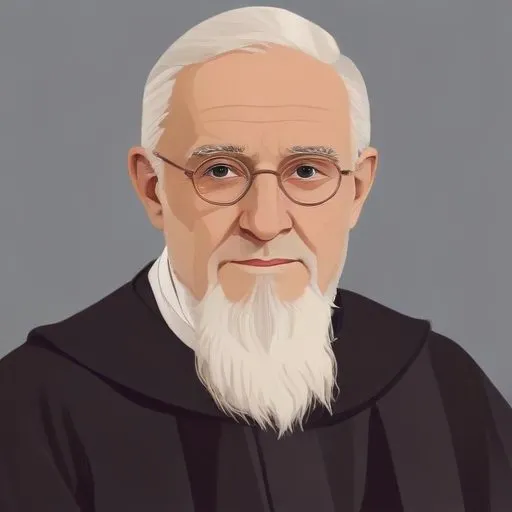
A charming English priest and scholar famous for accidentally swapping sounds in words, creating humorous phrases like "it is kisstomary to cuss the bride" instead of "it is customary to kiss the bride".
William Archibald Spooner, a British clergyman and Oxford don, is best known for his unintentional verbal slips, which have become an integral part of the English language. His unique manner of speaking, characterized by switching corresponding consonants, vowels, or morphemes, has led to the creation of "spoonerisms," a term that has become synonymous with linguistic playfulness.
Born on July 22, 1844, in London, Spooner was educated at Oswestry School and later at New College, Oxford, where he would spend more than sixty years of his life. He was ordained deacon in the Church of England in 1872 and priest in 1875, and went on to hold various positions at New College, including fellow, lecturer, tutor, dean, and warden.
Spooner was a respected scholar, particularly in the fields of ancient history, divinity, and philosophy. He lectured extensively on Aristotelian ethics and was known for his wisdom and devotion to duty. Roy Harrod, a renowned economist, described Spooner as exceeding all the heads of Oxford and Cambridge colleges he had known in terms of scholarship, devotion to duty, and wisdom.
Spooner's verbal mishaps, which became his claim to fame, were often unintentionally comedic. He would frequently switch sounds in words, creating phrases that were both amusing and confusing. For example, he might say "it is kisstomary to cuss the bride" instead of "it is customary to kiss the bride." These verbal slips, known as spoonerisms, have been attributed to his poor eyesight and general absentmindedness.
Despite his clumsiness with words, Spooner was a kind and gentle soul, loved by his students and colleagues. He was a popular figure at New College, known for his hospitality and generosity. His reputation as a genial and wise man has endured long after his passing.
Spooner's impact on the English language is undeniable. His unintended verbal creations have added a touch of whimsy and humor to our everyday conversations. Spoonerisms have become a way to poke fun at ourselves and the absurdity of language, reminding us not to take ourselves too seriously.
Although Spooner passed away on August 29, 1930, his legacy lives on in the countless phrases that bear his name. His ability to find humor in the mundane has inspired generations of linguists, writers, and comedians. Today, spoonerisms continue to delight and amuse, a testament to the power of linguistic creativity and the enduring spirit of William Archibald Spooner.
These phrases, and many more like them, have become an integral part of our language, reminding us to laugh at ourselves and the absurdity of life.
Born in 1839
A renowned Victorian-era art and literary critic, known for his influential writings on aesthetics and the importance of individualism in art. His works continue to shape art historical discourse.
Born in 1819
A prominent art critic and social reformer who championed the Pre-Raphaelite movement and advocated for social justice, leaving a lasting impact on art, architecture, and literature.
Born in 1854
A witty and flamboyant literary mastermind, renowned for crafting clever, humorous, and poignant works that continue to delight audiences with their clever wordplay and societal commentary.
Born in 1832
A brilliant mind behind beloved children's tales, crafting whimsical worlds and logic-defying puzzles, leaving an enduring mark on literature and popular culture.
Born in 1833
A leading figure in the Pre-Raphaelite movement, creating dreamlike, romantic, and mythological paintings that captivated the Victorian era. His works continue to inspire artists, designers, and writers to this day.
Born in 1828
A Victorian-era poet and painter who founded the Pre-Raphaelite Brotherhood, creating dreamlike, sensual works that explored themes of love, beauty, and mortality.
