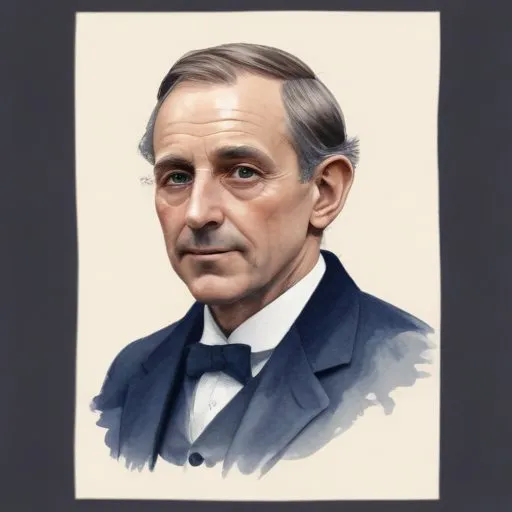
William Bate Hardy

William Bate Hardy

William Bate Hardy was born on April 6th, 1864

Nationality: English
Occupation: Biologist Academic
Birth Country: England
Language: English
Ethnicity: English
Known For: Biological Research
Profession: Scientist
Fields: Biology

A pioneer in the field of biology, he made significant contributions to the study of cell membranes and was a prominent figure in the development of Cambridge University's biology department.

Written by: Liam O'Sullivan Liam O'Sullivan

William Bate Hardy: The Pioneering Biologist and Food Scientist

A Legacy in Biochemistry and Pathology

William Bate Hardy is renowned for his groundbreaking contributions to the fields of biochemistry and pathology, earning him the prestigious Royal Medal in 1926. His pioneering work in these areas led to the establishment of two renowned research institutions: the Sir William Dunn Institute of Biochemistry at Cambridge and the Sir William Dunn School of Pathology at Oxford.

Early Life and Education

Born on April 6, 1864, in Erdington, a suburb of Birmingham, Hardy was the son of William Hardy of Llangollen and his wife Sarah Bate. He received his education at Framlingham College and later graduated with a Master of Arts from the University of Cambridge in 1888. During his time at Cambridge, Hardy carried out biochemical research that laid the foundation for his future accomplishments.

Contributions to Science

Hardy's most notable contribution was persuading the trustees of the Sir William Dunn legacy to fund research in biochemistry and pathology. This led to the establishment of the Sir William Dunn Institute of Biochemistry at Cambridge, where Professor Sir Frederick Gowland Hopkins conducted his Nobel Prize-winning research on vitamins. Similarly, the Sir William Dunn School of Pathology was established at Oxford, where professors Howard Florey and Ernst Chain developed penicillin. These institutions have since produced ten Nobel laureates.

Tribology and Boundary Lubrication

Hardy's work extended beyond biochemistry and pathology to the field of tribology. Alongside Ida Doubleday, he introduced the concept of boundary lubrication, a crucial discovery that has had a lasting impact on the field. His contributions to tribology are recognized by his inclusion in Duncan Dowson's list of 23 Men of Tribology.

Awards and Honors

Hardy's achievements were recognized with numerous awards and honors, including:

Death and Legacy

William Bate Hardy passed away on January 23, 1934, leaving behind a legacy that continues to inspire scientific innovation. The William Bate Hardy Prize, established in his honor, recognizes outstanding contributions to biochemistry and pathology. Hardy's tireless efforts to promote scientific research have led to numerous breakthroughs, cementing his place as one of the most influential scientists of his time.
Timeline
1861
Birth in England
William Bate Hardy was born on April 6, 1861, in England. He would become a prominent biologist and academic.
1884
Studies in Cambridge
Hardy studied natural sciences at the University of Cambridge, where he was influenced by the works of Charles Darwin.
1891
Appointment to the University of Cambridge
Hardy was appointed as a lecturer in biology at the University of Cambridge, where he taught for over 20 years.
1906
Election to the Royal Society
Hardy was elected as a fellow of the Royal Society, in recognition of his contributions to the field of biology.
1934
Death in Cambridge
William Bate Hardy passed away on January 23, 1934, in Cambridge, leaving behind a legacy as a pioneering British biologist.
William Bate Hardy

William Bate Hardy Quiz

What field of study did William Bate Hardy make significant contributions to?

Score: 0/5
FAQ
What field of biology did William Bate Hardy contribute to?
William Bate Hardy contributed to the field of cell biology, particularly in the study of cell membranes and the structure of living cells.
What is William Bate Hardy known for?
William Bate Hardy is known for his work on the physical properties of cell membranes and the discovery of the Hardy-Rydberg equation, which describes the behavior of gases in cells.
Did William Bate Hardy have any notable academic roles?
Yes, William Bate Hardy was a professor of biology at the University of Cambridge and served as the chairman of the department of zoology.
What awards did William Bate Hardy receive for his work?
William Bate Hardy received the Royal Medal in 1925 for his contributions to cell biology and was also elected as a Fellow of the Royal Society.
What is William Bate Hardys legacy in biology?
William Bate Hardys legacy in biology is significant, as he helped establish the field of cell biology and paved the way for future generations of biologists to explore the mysteries of the cell.

Related People:

Charles Darwin

Born in 1809

Developed the theory of evolution through natural selection, revolutionizing our understanding of life on Earth. This groundbreaking idea transformed the fields of biology, ecology, and beyond.

Alfred Russel Wallace

Born in 1823

A pioneering naturalist who discovered evolution through natural selection, independently of Charles Darwin, and contributed significantly to the field of biogeography.

Ernst Haeckel

Born in 1834

A German biologist, physician, and philosopher who coined the term "ecology" and made significant contributions to the field of evolutionary biology, including the recapitulation theory.

Jean-Baptiste Lamarck

Born in 1744

A French soldier, biologist, and academic who developed a theory of inheritance of acquired characteristics, proposing that organisms adapt to their environment and pass on those traits to their offspring.

Gregor Mendel

Born in 1822

An Austrian monk who pioneered genetics by experimenting with pea plants, discovering the fundamental laws of heredity, and laying the foundation for modern genetics.

Ronald Fisher

Born in 1890

A pioneer in statistics and genetics, he developed techniques for data analysis and laid the foundations for modern evolutionary theory. His work has far-reaching implications in fields like medicine, agriculture, and social sciences.

J. B. S. Haldane

Born in 1892

A pioneering geneticist and biologist who contributed significantly to the development of modern genetics, particularly in the fields of population genetics and evolutionary biology.

Sewall Wright

Born in 1889

Developed the modern concept of genetic drift, a fundamental principle in population genetics, and pioneered the use of statistical methods in evolutionary biology.