


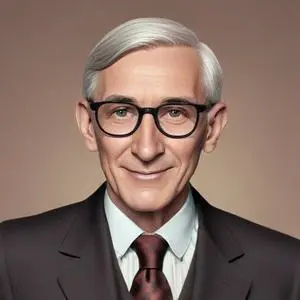
A pioneer in biochemistry, he discovered vitamins and their importance in human health, earning him a Nobel Prize. His work revolutionized nutrition and disease prevention.
Sir Frederick Gowland Hopkins, a renowned English biochemist, is celebrated for his pioneering work on the discovery of vitamins, earning him the Nobel Prize in Physiology or Medicine in 1929. Alongside Christiaan Eijkman, Hopkins uncovered the significance of these essential nutrients, revolutionizing our understanding of human health and nutrition.
Hopkins was born on June 20, 1861, in Eastbourne, Sussex, England. He pursued his education at the City of London School and later transferred to Alexandra Park College in Hornsey. Through evening classes at Birkbeck College and the medical school at Guy's Hospital, he completed his further studies with the University of London External Programme.
Hopkins' academic journey began as a lecturer in physiology and toxicology at Guy's Hospital from 1894 to 1898. In 1898, he was invited by Sir Michael Foster to join the Physiological Laboratory in Cambridge, where he delved into the chemical aspects of physiology. At the time, biochemistry was not recognized as a distinct branch of science.
In 1900, he was appointed as a lecturer in chemical physiology at Emmanuel College, Cambridge, and received the academic rank of Master of Arts (MA) honoris causa. He earned a doctorate in physiology (D.Sc.) from the University of London in 1902 and was granted a readership in biochemistry at Trinity College. During his Cambridge tenure, he was initiated into Freemasonry.
Hopkins' remarkable contributions led to his election as the first Professor of Biochemistry at Cambridge University in 1914. He also served as President of the Royal Society from 1930 to 1935, solidifying his position as a leading figure in the scientific community.
His students at Cambridge included notable figures such as neurochemistry pioneer Judah Hirsch Quastel and embryologist Joseph Needham. Hopkins' work laid the foundation for subsequent breakthroughs in biochemistry, earning him a lasting legacy in the scientific world.
Hopkins' groundbreaking discoveries have had a profound impact on our understanding of nutrition and human health. His work on vitamins has led to significant advances in the prevention and treatment of various diseases, improving the lives of countless individuals worldwide.
His legacy extends beyond the scientific community, as his contributions have influenced the development of nutrition labels, dietary recommendations, and public health policies. Sir Frederick Gowland Hopkins' remarkable life's work continues to inspire and inform modern research, cementing his place as a pioneering figure in the history of biochemistry.
Born in 1916
Pioneering scientist who discovered the structure of DNA, revolutionizing our understanding of genetics and life itself.
98 Years Old
Discovered the structure of DNA, revolutionizing our understanding of genetics and earning a Nobel Prize. Pioneering work in molecular biology has far-reaching implications for medicine and beyond.
Born in 1920
A British scientist who contributed significantly to the discovery of the structure of DNA, providing high-quality X-ray crystallography images that helped James Watson and Francis Crick develop their famous model.
Born in 1916
A Nobel Prize-winning physicist and biologist who contributed significantly to the discovery of the structure of DNA, using X-ray crystallography to produce the first clear images of the molecule.
Born in 1905
A pioneer in DNA research, this biochemist discovered the base pairing rules of DNA, leading to a fundamental understanding of genetic code.
Born in 1901
Pioneering chemist and peace activist who won two unshared Nobel Prizes, one for chemistry and one for peace, for his groundbreaking work on the nature of the chemical bond and his tireless efforts to promote nuclear disarmament.
Born in 1898
A high-ranking officer in the German Wehrmacht during World War II, known for his involvement in the July 20 plot to assassinate Adolf Hitler.
Born in 1915
A Nobel Prize-winning biologist and immunologist who made groundbreaking discoveries in tissue transplantation and immunology, leading to significant advancements in organ transplants and our understanding of the immune system.
