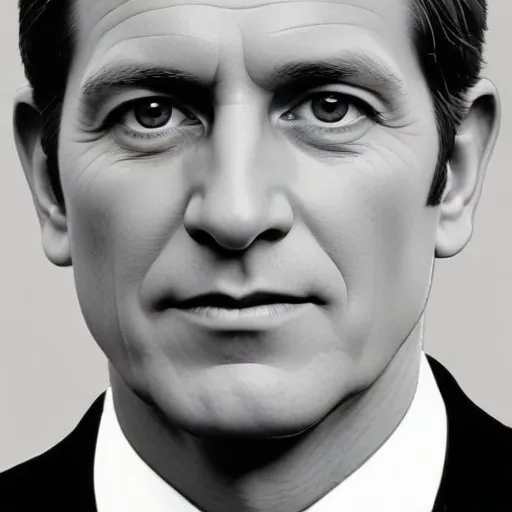
William Benham

William Benham

William Benham was born on March 29th, 1860

Full Name: William Benham
Occupation: Zoologist
Nationality: New Zealander
Birth Date: 1860
Birth Place: New Zealand
Zodiac Sign: Unknown
Notable Works: Trout and salmon of New Zealand
Active Years: 1880-1920

Noted for their groundbreaking research on New Zealand's native wildlife, particularly the tuatara, and contributions to the country's conservation efforts.

Written by: Carlos Hernandez Carlos Hernandez

Sir William Blaxland Benham: A Pioneer in Zoology

A Legacy in New Zealand Zoology

Sir William Blaxland Benham, a renowned New Zealand zoologist, made significant contributions to the field of biology, leaving an indelible mark on the scientific community. He is best known for his groundbreaking research in zoology, particularly in the areas of Archiannelida, Polychaeta, and Myzostomaria, earning him numerous accolades and recognition.

Early Life and Education

Born on March 29, 1860, in Isleworth, Middlesex, England, Benham pursued his education at Marlborough College and London University. He began his academic career as a teacher at Bedford College, London, before relocating to New Zealand in 1898.

A Notable Career

Benham's esteemed career spanned several decades, during which he held various positions of distinction. He was a member of the 1907 Sub-Antarctic Islands Scientific Expedition and served as the Governor in Council of the Board of Governors of the New Zealand Institute from 1905 to 1911. As a professor of biology at the University of Otago, he taught from 1898 until his retirement in 1937, when he was honored with the title of professor emeritus.

Awards and Honors

Benham's contributions to the field of zoology were recognized with numerous awards and honors. He was awarded the King George VI Coronation Medal in 1937 and was appointed a Knight Commander of the Order of the British Empire in the 1939 King's Birthday Honours. Additionally, he received the Hutton Medal of the New Zealand Institute in 1911 and the Hector Medal in 1935. In 1942, he was bestowed an honorary Doctor of Science degree by the University of New Zealand.

Selected Publications

Benham's published works include:

Later Life and Legacy

Benham passed away on August 21, 1950, in Dunedin, New Zealand, and his ashes were buried in Dunedin Northern Cemetery. His groundbreaking research and contributions to the field of zoology continue to inspire future generations of scientists and researchers.
Timeline
1860
Born in England
William Benham was born in England. He would go on to become a zoologist.
1886
Moved to New Zealand
Benham moved to New Zealand, where he would spend the rest of his life. He became a prominent figure in New Zealand science.
1894
Appointed Lecturer in Zoology
Benham was appointed Lecturer in Zoology at the University of Otago. He would go on to become Professor of Zoology.
1906
Published Fisheries of New Zealand
Benham published Fisheries of New Zealand, a comprehensive survey of the countrys fisheries.
1937
Died in Dunedin
Benham died in Dunedin, New Zealand. He is still remembered as one of the most important zoologists in New Zealand history.
William Benham

William Benham Quiz

What is William Benham primarily known for?

Score: 0/5
FAQ
What was William Benhams contribution to the field of zoology?
William Benham made significant contributions to the field of zoology, particularly in the study of New Zealands native fauna. He discovered and described several new species of birds, insects, and fish.
What was William Benhams role in the development of the Canterbury Museum?
William Benham was a key figure in the development of the Canterbury Museum in Christchurch, New Zealand, serving as its director and curator for many years.
What were William Benhams views on evolution?
William Benham was a proponent of Charles Darwins theory of evolution and saw it as a fundamental principle in understanding the natural world.
What was William Benhams educational background?
William Benham studied at the University of Cambridge, where he earned his degree in natural sciences.
What was William Benhams legacy in New Zealand science?
William Benhams legacy in New Zealand science is that of a pioneering zoologist who helped establish the countrys scientific institutions and advanced our understanding of its unique biodiversity.

Related People:

Charles Darwin

Born in 1809

Developed the theory of evolution through natural selection, revolutionizing our understanding of life on Earth. This groundbreaking idea transformed the fields of biology, ecology, and beyond.

Alfred Russel Wallace

Born in 1823

A pioneering naturalist who discovered evolution through natural selection, independently of Charles Darwin, and contributed significantly to the field of biogeography.

Ernst Haeckel

Born in 1834

A German biologist, physician, and philosopher who coined the term "ecology" and made significant contributions to the field of evolutionary biology, including the recapitulation theory.

Jean-Baptiste Lamarck

Born in 1744

A French soldier, biologist, and academic who developed a theory of inheritance of acquired characteristics, proposing that organisms adapt to their environment and pass on those traits to their offspring.

Richard Owen

Born in 1804

A pioneering figure in the fields of biology, anatomy, and paleontology, known for coining the term "Dinosauria" and making significant contributions to our understanding of vertebrate evolution.

Thomas Henry Huxley

Born in 1825

A prominent figure in the scientific community, known for advocating Charles Darwin's theory of evolution and coining the term "agnostic" to describe his own religious views.

Joseph Dalton Hooker

Born in 1817

A renowned botanist and explorer who contributed significantly to the discovery and classification of numerous plant species, particularly in the Himalayas and Antarctica. His work laid the foundation for modern botanical research.

Asa Gray

Born in 1810

A pioneering botanist who contributed significantly to the development of American botany, particularly in the fields of plant classification and evolution.