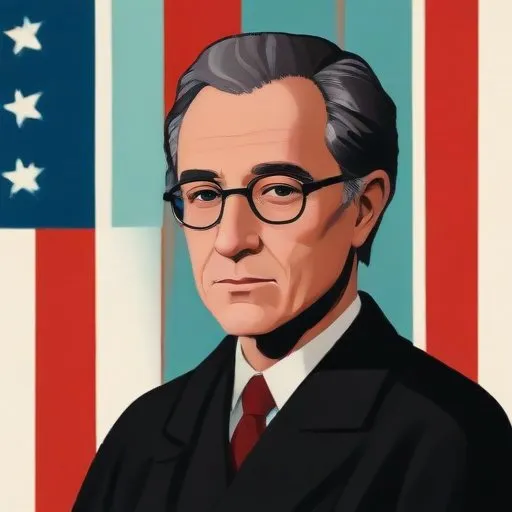
William Bronk: The Poet Who Found Inspiration in the Mundane
A Life of Poetry and Business
William Bronk, a renowned American poet, is best known for his National Book Award-winning collection,
Life Supports (1981). What sets him apart from other poets is his unique blend of artistic expression and practical business acumen, which he demonstrated by running his family's coal and lumber business for 30 years.
Early Life and Education
Born on February 17, 1918, in Fort Edward, New York, Bronk grew up in a family of modest means. His father, who ran the family business, instilled in him a strong work ethic, which would later influence his approach to poetry. Bronk attended Dartmouth College at the age of 16 and later took graduate classes at Harvard, although he didn't complete his degree.
War and Business
Bronk's life took a dramatic turn when he was drafted into the Army during World War II. He served as a private and later became an officer after completing Officer Candidate School. After the war, he returned to Hudson Falls and took over the family business, Bronk Coal and Lumber, after his father's unexpected death in 1941.
Finding Poetry in the Everyday
Bronk's poetic inspiration often came from the mundane tasks of his daily life as a businessman. He would jot down lines and phrases in longhand as they came to him, rarely rewriting or modifying his work. This approach gave his poetry a sense of spontaneity and authenticity.
Literary Contributions
Bronk's poetry is characterized by its simplicity, clarity, and depth. His unique style has been praised for its ability to convey complex emotions and ideas through everyday imagery. His collection,
Life Supports, is a testament to his skill as a poet and won him the National Book Award in 1981.
Awards and Honors
- National Book Award for Poetry (1981) for Life Supports
Personal Life and Legacy
Bronk's personal life was marked by simplicity and humility. He remained dedicated to his family and community, and his poetry reflected his deep connection to the natural world. His legacy as a poet and businessman serves as an inspiration to those who seek to balance creativity with practicality.
Quotes and Memorable Sayings
- "The poem is not about the thing, but about the meaning of the thing." - William Bronk
Historical Context and Legacy
Bronk's poetry reflects the American experience during the mid-20th century, capturing the spirit of hard work, simplicity, and community. His unique approach to poetry has influenced generations of writers, solidifying his place in American literary history.
Trivialities and Fun Facts
- Bronk was a prolific poet, publishing over 20 collections during his lifetime.
- He was a self-taught poet, never having formally studied poetry or creative writing.
William Bronk's remarkable life and work serve as a testament to the power of creativity and perseverance. As a poet, businessman, and veteran, he left an indelible mark on American literature, reminding us that inspiration can be found in the most unexpected places.
FAQ
What is William Bronks style of poetry?
William Bronks poetry is characterized by its unique blend of modernism and traditional forms, often exploring themes of nature, identity, and the human condition. His work is known for its lyricism, precision, and philosophical depth.
What awards did William Bronk win for his poetry?
William Bronk received numerous awards and honors for his poetry, including the Amy Lowell Traveling Scholarship, the Harriet Monroe Memorial Prize, and the American Academy of Arts and Letters Award.
What inspired William Bronks writing?
William Bronk drew inspiration from his rural upbringing in New York, as well as his philosophical interests in existentialism and mysticism. His poetry often reflects on the relationship between the individual and the natural world.
What was William Bronks academic career like?
William Bronk taught English literature at various institutions, including Union College, where he was a professor for over 30 years. He was also a visiting professor at Princeton University and the University of California, Berkeley.
Is William Bronks poetry widely available?
Yes, William Bronks poetry has been widely published and is available in various collections and anthologies. His work has also been translated into several languages, including French, Spanish, and Italian.