


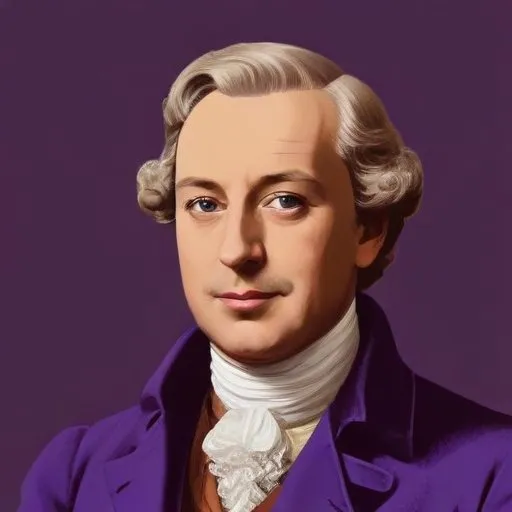
A British aristocrat and politician who served as Lord Lieutenant of Ireland and was a prominent figure in 18th-century British politics. He's known for his lavish spending and extravagant lifestyle.
William Cavendish, 3rd Duke of Devonshire, is remembered as a prominent British nobleman and Whig politician who played a significant role in the House of Commons from 1721 to 1729. He is also known for his philanthropic efforts, particularly his support for the Foundling Hospital in Bloomsbury, London.
Born on September 26, 1698, Cavendish was the son of William Cavendish, 2nd Duke of Devonshire, and his wife, the Hon. Rachel Russell. He was known as Marquess of Hartington before inheriting the dukedom. Like his father, Lord Hartington was active in public life, and his political career took off when he was returned unopposed as Member of Parliament (MP) for Lostwithiel in 1721.
He went on to serve as MP for Grampound in 1722 and Huntingdonshire in 1727, respectively. In 1729, his father's death elevated him to the House of Lords, and he surrendered his seat in the Commons. He became a Privy Counsellor in 1731 and served as Lord Privy Seal from 1731 to 1733, during which he was invested as a Knight of the Garter.
In 1734, Cavendish commissioned architect William Kent to build a new Cavendish House in fashionable Piccadilly. This grand residence became a symbol of the Cavendish family's wealth and influence. Moreover, in 1739, he became a founding governor of the Foundling Hospital, a charity dedicated to providing care to abandoned children. This institution later evolved into a center for art and music.
During the Jacobite rising of 1745, Cavendish demonstrated his loyalty to the crown by raising a militia unit, known as the Derbyshire Blues, to support the King. This cavalry unit mustered at the George Inn, Derby, on December 3, 1745.
In 1718, Cavendish married Catherine Hoskins, daughter of John Hoskins of Oxted. The couple had seven children, including William Cavendish, 4th Duke of Devonshire, and Lady Caroline Cavendish, who married William Ponsonby, 2nd Earl of Bessborough.
Throughout his life, Cavendish was driven by a strong sense of duty and public service. His contributions to politics, philanthropy, and culture have left a lasting impact on British history. Today, his legacy continues to inspire and educate future generations.
William Cavendish, 3rd Duke of Devonshire, was a multifaceted figure who left an indelible mark on British politics, society, and culture. His commitment to public service, philanthropy, and the arts continues to inspire and fascinate us today.
Born in 1640
A prominent military leader and politician who served as Lord Steward of the Household, known for his loyalty to the monarchy and involvement in significant historical events. He played a key role in shaping England's politics and governance during the 17th century.
Born in 1720
A British aristocrat who served as Prime Minister from 1756 to 1757, known for his brief tenure and lack of significant accomplishments. He was a prominent figure in 18th-century British politics, but his impact was limited.
Born in 1749
A prominent 18th-century politician who championed individual liberties and opposed British imperialism, known for his charismatic oratory skills and influential foreign policy decisions.
Born in 1738
The British monarch who ruled during the American Revolution, losing the colonies, and later suffered a mental illness that led to a regency crisis. He's also known for his cultural and artistic patronage.
Born in 1759
Prime Minister of the United Kingdom from 1783 to 1801 and 1804 to 1806, known for leading the country through the French Revolutionary and Napoleonic Wars.
Born in 1705
A prominent 18th-century politician who served as Secretary of State for the Southern Department, playing a significant role in shaping British foreign policy during the American Revolutionary War. He was a skilled orator and influential Whig leader.
