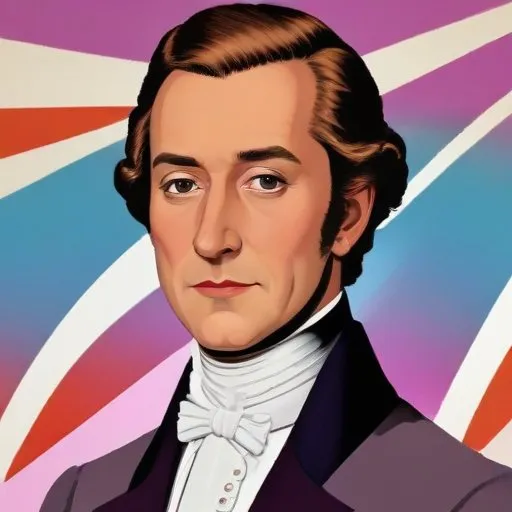
William Cavendish-Bentinck, 3rd Duke of Portland: A Revered Statesman and Academic
Early Life and Education
William Cavendish-Bentinck, 3rd Duke of Portland, was a British Whig and Tory politician who left an indelible mark on the late Georgian era. He is renowned for serving as the Prime Minister of Great Britain in 1783 and later as the Prime Minister of the United Kingdom from 1807 to 1809, with a remarkable 26-year gap between his two terms.
Born on April 14, 1738, at Bulstrode Park in Buckinghamshire, he was the eldest son of William Bentinck, 2nd Duke of Portland, and Lady Margaret Cavendish-Harley, the richest woman in Great Britain. His maternal grandmother was the daughter of John Holles, 1st Duke of Newcastle, and he inherited many lands from his maternal lineage.
He received a stellar education at Westminster School and Christ Church, Oxford, graduating with a Master of Arts degree in 1757. This academic foundation would later serve him well in his illustrious political career.
Early Political Career and Whig Faction Leadership
In December 1757, the nineteen-year-old Lord Titchfield was sent to study under Lord Stormont in Warsaw, accompanied by Stormont's secretary Benjamin Langlois. This experience acquainted him with ancient and modern history, as well as general law. Following his return, he embarked on a grand tour of Europe with Langlois, visiting Germany and Italy in 1759.
Upon his return to England, he entered politics as a Whig, aligning himself with
Charles James Fox. However, he would later break away to form the Portland Whigs faction, joining forces with
William Pitt the Younger in response to the French Revolution. This strategic move cemented his position as a prominent leader in British politics.
Prime Ministerial Tenure and Later Life
Portland's first term as Prime Minister (1783) was marked by his efforts to stabilize the British economy and promote peace in the aftermath of the American Revolutionary War. He relinquished power in 1783 but remained an influential figure in politics.
His second term as Prime Minister (1807-1809) was marked by the continuation of the Napoleonic Wars. He worked diligently to strengthen Britain's alliance with European powers and implement reforms to address the country's financial burdens. Ill health forced his resignation in 1809, but his legacy as a skilled statesman persisted.
Apart from his political pursuits, Portland served as the Chancellor of the University of Oxford from 1792 to 1809, showcasing his commitment to education and academia.
Personal Life and Legacy
Portland's personal life was marked by his marriage to Dorothy Cavendish, with whom he had six children. His great-granddaughter, Cecilia Bowes-Lyon, Countess of Strathmore and Kinghorne, would later become the grandmother of King
Charles III, solidifying his connection to the British monarchy.
Throughout his life, Portland held a plethora of titles, including Duke, Marquess, Earl, Viscount, and Baron, demonstrating his aristocratic lineage and influence.
Portland's legacy extends beyond his political achievements, as his leadership and vision continue to inspire generations of British politicians and historians. His remarkable life serves as a testament to the power of dedication, perseverance, and statesmanship.
Major Works and Contributions
- Prime Minister of Great Britain (1783)
- Prime Minister of the United Kingdom (1807-1809)
- Chancellor of the University of Oxford (1792-1809)
- Leader of the Portland Whigs faction
Trivia and Fun Facts
- Portland's 26-year gap between his two terms as Prime Minister is the longest in British history.
- He was the fourth great-grandfather of King Charles III.
- Portland held every degree of British nobility.
Historical Context and Comparative Analysis
Portland's life and career unfolded against the backdrop of significant historical events, including the American Revolutionary War, the French Revolution, and the Napoleonic Wars. His leadership and diplomacy played a crucial role in shaping Britain's response to these global events.
In comparison to his contemporaries, Portland's remarkable ability to adapt and navigate complex political landscapes sets him apart as a skilled statesman and visionary leader. His legacy serves as a testament to the enduring impact of his contributions to British politics and academia.
FAQ
Who was William Cavendish-Bentinck, 3rd Duke of Portland, and what was his role in British politics?
William Cavendish-Bentinck, 3rd Duke of Portland, was a British politician who served as Prime Minister of the United Kingdom from 1807 to 1809. He is remembered for his pragmatic and conciliatory approach to politics, which helped to stabilize the government during a period of turmoil.
What were William Cavendish-Bentincks key achievements as Prime Minister?
William Cavendish-Bentincks key achievements as Prime Minister included his efforts to reform the British electoral system, his support for the British military during the Napoleonic Wars, and his role in negotiating the Treaty of Amiens.
How did William Cavendish-Bentincks government respond to the Napoleonic Wars?
William Cavendish-Bentincks government responded to the Napoleonic Wars by increasing military spending, improving British defenses, and forming alliances with other European powers. He also played a key role in negotiating the Treaty of Tilsit.
What was William Cavendish-Bentincks relationship with King George III?
William Cavendish-Bentinck enjoyed a close relationship with King George III, who appointed him as Prime Minister. He was a loyal supporter of the monarch and played a key role in advising him on matters of state.
What is William Cavendish-Bentincks legacy in modern British politics?
William Cavendish-Bentincks legacy in modern British politics is that of a pragmatic and conciliatory leader who helped to stabilize the government during a period of turmoil. His approach to politics continues to influence British politicians today.