


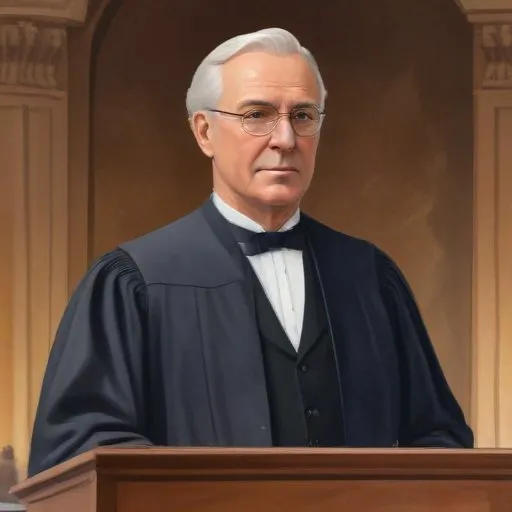
Founded the charming village of Cooperstown, New York, and served as a judge and politician, leaving a lasting legacy in American history.
William Cooper, a pioneer in American entrepreneurship and politics, is best known for founding Cooperstown, a charming village in central New York, and for being the father of James Fenimore Cooper, a celebrated author of historical novels.
Born on December 2, 1754, in a log house in Smithfield, Pennsylvania, William Cooper was the son of English Quaker parents, James and Hannah Hibbs Cooper. With no record of formal education, he began his career as a wheelwright in Byberry, Pennsylvania, before settling in Burlington, New Jersey, a Quaker city.
In the early 1780s, Cooper transformed into a successful storekeeper in Burlington, eventually becoming a wealthy land speculator and developer in Otsego County, New York. He acquired a vast tract of land along the Susquehanna River and Otsego Lake, where he founded the Village of Otsego in 1786. The village plan was inspired by that of Burlington, reflecting his Quaker roots.
Cooper's enterprising spirit led him to serve two terms in the United States Congress, representing Otsego County and central New York. He was also appointed as a county judge, showcasing his versatility in both business and politics.
On December 12, 1774, Cooper married Elizabeth Fenimore, and they had five sons and two daughters. His eldest daughter, Hannah, tragically died in 1800 after a horse riding accident. His youngest son, James Fenimore Cooper, would go on to become a renowned novelist. Despite the loss of several children in their thirties, Cooper remained devoted to his family and community.
William Cooper's entrepreneurial vision and determination transformed the Otsego region, earning him a place in American history. His legacy extends beyond his family, as Cooperstown has become a beloved destination, attracting visitors from around the world. His commitment to community development and philanthropy continue to inspire generations.
William Cooper's remarkable life serves as a testament to the power of innovation, perseverance, and community spirit. His enduring legacy continues to captivate Americans, reminding us of the importance of entrepreneurship, family, and public service.
Born in 1789
Wrote influential novels of American history and identity, including "The Last of the Mohicans", which has become an iconic tale of the American frontier.
Born in 1732
The first President of the United States, a military hero who led the country to independence, and set the standard for the office of the presidency. He's known for his honesty, integrity, and leadership skills.
Born in 1755
First Secretary of the Treasury, founder of the US financial system, and key Founding Father, known for shaping the country's economic and banking infrastructure.
41 Years Old
Professional baseball outfielder who played for several MLB teams, including the St. Louis Cardinals and Chicago Cubs, and later became a coach.
Born in 1746
First Secretary for Foreign Affairs, instrumental in negotiating the Louisiana Purchase, doubling US territory. Known for shaping America's early foreign policy and westward expansion.
Born in 1750
First U.S. Secretary of War, instrumental in shaping the country's military and defense strategy, and a key figure in the American Revolutionary War.
Born in 1740
A lawyer and politician who served as the 10th President of the Continental Congress, playing a key role in the American Revolutionary era. He's known for his contributions to the country's early development and governance.
Born in 1754
A Founding Father and early American politician, he played a key role in shaping the US government and Constitution. He's also known for mysteriously disappearing in 1829.
