


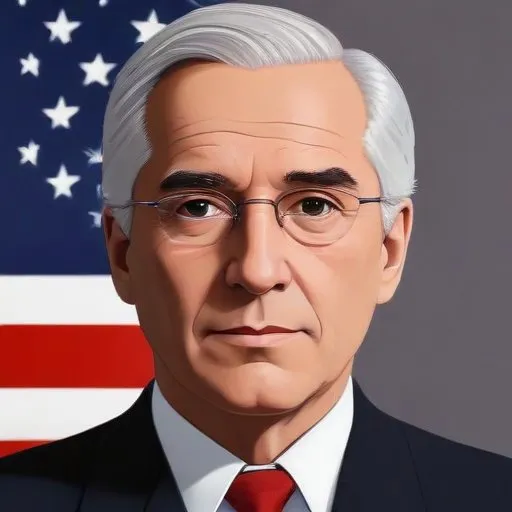
First Secretary for Foreign Affairs, instrumental in negotiating the Louisiana Purchase, doubling US territory. Known for shaping America's early foreign policy and westward expansion.
Robert R. Livingston, a prominent figure in American history, is best known for facilitating the Louisiana Purchase, a monumental deal that more than doubled the size of the United States. As a skilled diplomat and devoted public servant, Livingston played a pivotal role in shaping the country's early development.
Born on November 27, 1746, in New York City, Livingston was the eldest son of Judge Robert R. Livingston and Margaret Beekman Livingston. He received a classical education at King's College (now Columbia University), graduating in 1765. His academic pursuits laid the foundation for a successful career in law and politics.
Livingston's early legal career flourished, with him becoming a respected lawyer and member of the New York State Assembly. His dedication to public service earned him a seat in the Continental Congress, where he played a crucial role in drafting the Declaration of Independence.
In 1801, Livingston was appointed Minister to France by President Thomas Jefferson. It was during this tenure that he negotiated the Louisiana Purchase, securing approximately 828,000 square miles of land from France for $15 million. This historic agreement more than doubled the size of the United States, profoundly shaping the country's future.
Livingston's diplomatic prowess and vision for American expansion have had a lasting impact on modern society. The Louisiana Purchase paved the way for westward expansion, shaping the country's geography, economy, and cultural identity.
Livingston married Mary Stevens in 1770, with whom he had six children. He passed away on February 26, 1813, at his estate, Clermont, in New York. His legacy as a skilled diplomat, devoted public servant, and champion of American expansion continues to inspire generations.
As a testament to his enduring influence, Robert R. Livingston's life and legacy serve as a beacon of diplomacy, vision, and dedication to public service, inspiring future generations to strive for greatness.
Born in 1743
The principal author of the Declaration of Independence and a strong advocate for individual liberties and limited government, shaping America's foundational principles. He oversaw the Louisiana Purchase, doubling the country's territory.
Born in 1751
The 4th President of the United States, often referred to as the "Father of the Constitution," played a crucial role in drafting the US Constitution and Bill of Rights, shaping the country's government and laws. He was a strong advocate for individual liberties and limited government power.
Born in 1758
The 5th President of the United States was a skilled military leader and statesman who oversaw the acquisition of Florida from Spain and issued the Monroe Doctrine, a policy of opposing European colonization in the Americas. He is also known for being the last of the Founding Fathers to hold the presidency.
Born in 1767
The 6th President of the United States was a skilled diplomat and leader who played a key role in shaping America's foreign policy and expansion. He's also known for being the son of a president and a president himself, making him part of a unique American political dynasty.
Born in 1767
A fiery leader who expanded democracy and shaped the country's economy, known for his populist policies and controversial decisions, including the forced relocation of Native Americans.
Born in 1782
The first president born after American independence, he's known for being a skilled politician and statesman who navigated the country through the Panic of 1837. He's also remembered for being the first president born a citizen of the United States.
Born in 1773
The first president to die in office, serving for only one month, and known for being the oldest president elected until Ronald Reagan. He was a military hero in the War of 1812 and later a senator and governor.
Born in 1790
The first vice president to assume the presidency after the death of the incumbent, serving from 1841 to 1845 and annexing the Republic of Texas. He's known for his strong states' rights views and being the first president born after the American Revolution.
