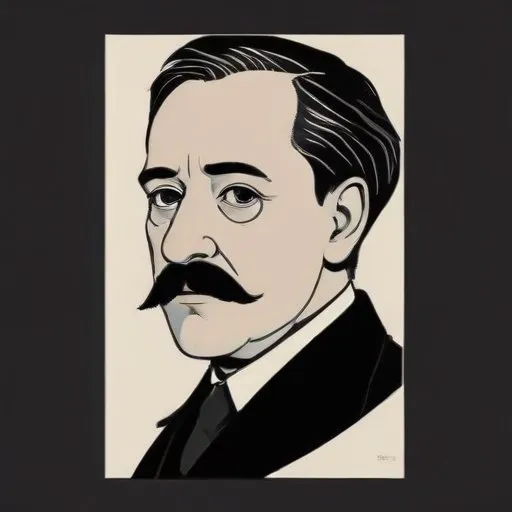
William Cosmo Monkhouse: The Poetic Voice of Art Criticism
A Life of Dual Pursuits
William Cosmo Monkhouse was a British poet and critic, renowned for his exceptional literary talents and perceptive art criticism. As a man of dual pursuits, Monkhouse effortlessly navigated the realms of poetry and art, leaving an indelible mark on both.
Early Life and Education
Born on March 18, 1840, in London, Monkhouse was the son of Cyril John Monkhouse, a solicitor, and his mother, Delafosse. He received his education at St. Paul's School, where he developed a passion for literature and the arts. At the tender age of seventeen, Monkhouse abandoned his academic pursuits to join the Board of Trade as a junior supplementary clerk. This decision marked the beginning of his prolific career, as he eventually rose to become the assistant secretary to the finance department of the office.
Poetic Beginnings and Avocation
Monkhouse's love for poetry was evident from an early age. In 1865, he published his debut collection,
A Dream of Idleness and Other Poems, which showcased his remarkable talent and maturity. Although this initial effort went largely unrecognized, Monkhouse persisted, driven by his passion for poetry. Twenty-five years later, he released
Corn and Poppies, a collection featuring the striking poem "Dead March." This was followed by the limited edition of "The Christ upon the Hill" in 1895, accompanied by etchings by William Strang. Posthumously, his poetry was compiled in
Pasiteles the Elder and Other Poems, including "The Christ upon the Hill."
Art Criticism and Literary Contributions
In 1868, Monkhouse ventured into novel-writing with
A Question of Honour. However, it was his 1879 biography of J.M.W. Turner in the Great Artists Series that marked the beginning of his illustrious career as an art critic. Thereafter, he devoted himself to writing perceptive and insightful critiques for various periodicals, including the
Academy,
Saturday Review, and
Magazine of Art. Monkhouse's astute observations and profound understanding of art made him a respected voice in the literary and artistic circles of his time.
Personal Life and Relationships
Monkhouse's personal life was marked by two marriages. His first marriage was to Laura, daughter of James Keymer of Dartford, and his second marriage was to Leonora Eliza, daughter of Commander Blount, R.N.
Legacy and Impact
William Cosmo Monkhouse's legacy extends beyond his remarkable poetry and art criticism. He played a significant role in shaping the cultural landscape of his time, contributing to the development of art criticism as a distinct discipline. Through his writings, Monkhouse not only showcased his own artistic talent but also fostered a deeper understanding and appreciation of art among the general public.
Today, Monkhouse's poetry and art criticism continue to inspire generations of artists, writers, and art enthusiasts. His unique voice, infused with a deep love for beauty and a perceptive understanding of art, remains an indelible part of the cultural heritage of the Victorian era.
FAQ
What are the notable works of William Cosmo Monkhouse?
William Cosmo Monkhouse was a prolific poet and critic, and his notable works include A Dream of Idleness and ChristableViewController. His poetry is known for its beauty and depth, and his critical writings offer insightful commentary on the literary world of his time.
What was William Cosmo Monkhouses contribution to literary criticism?
William Cosmo Monkhouse was a respected literary critic of his time, and his contributions to the field include his essays on prominent authors such as Dante Gabriel Rossetti and Robert Browning. His criticism is known for its nuance and understanding of the literary movements of his era.
What is William Cosmo Monkhouses poetry style?
William Cosmo Monkhouses poetry style is characterized by its lyricism, beauty, and depth. His poems often explore themes of love, nature, and the human condition, and are known for their musical quality and rich imagery.
What was William Cosmo Monkhouses relationship with the Pre-Raphaelite movement?
William Cosmo Monkhouse was associated with the Pre-Raphaelite movement, a group of artists and writers who sought to revive the beauty and imagination of medieval art and literature. His poetry and criticism reflect the movements emphasis on beauty, detail, and emotional intensity.
How did William Cosmo Monkhouse influence later poets?
William Cosmo Monkhouses poetry and criticism had a significant influence on later poets, including W.B. Yeats and Ezra Pound. His emphasis on beauty, musicality, and the importance of the individual poets vision helped shape the course of modern poetry.