


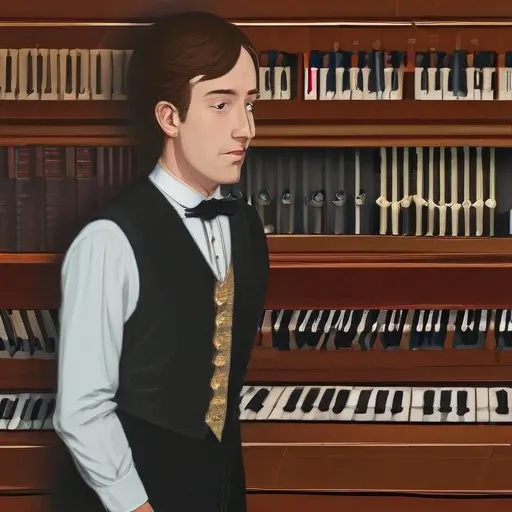
A renowned Baroque composer and organist, he wrote music for the British royal court and contributed to the development of the English opera. His compositions include sacred music, orchestral suites, and chamber music.
William Croft, a towering figure in the English Baroque period, is renowned for his exceptional compositional skills, particularly in the realm of church music. Born in 1678, Croft left an indelible mark on the music scene of his time, crafting works that continue to inspire and influence musicians to this day.
Croft's musical journey began at the Chapel Royal, where he received his education under the guidance of John Blow. This formative training laid the foundation for his illustrious career, which saw him become an organist and Gentleman extraordinary at the Chapel Royal. His friendship with Jeremiah Clarke, a fellow organist, culminated in a shared post at the Chapel Royal.
In 1700, Croft collaborated with the Italian Master, Gottfried Finger, to publish six sonatas for violin, flute, harpsichord, and viol. This innovative project introduced the Italian style to English audiences, paving the way for future generations of composers. This milestone marked the beginning of Croft's lifelong commitment to pushing the boundaries of musical expression.
In 1707, Croft succeeded Jeremiah Clarke as Master of the Children of the Chapel Royal, a position that catapulted him to the forefront of the musical scene. The following year, he took over as organist of Westminster Abbey, solidifying his reputation as a master of his craft.
Croft's talent and reputation led to a royal commission to compose works for the funeral of Queen Anne in 1714 and the coronation of King George I in 1715. These high-profile assignments further cemented his position as a leading composer of his time.
In 1724, Croft published Musica Sacra, a groundbreaking collection of church music in score form. This pioneering work included a Burial Service, which may have been written for Queen Anne or the Duke of Marlborough. Musica Sacra remains a testament to Croft's innovative spirit and his dedication to the evolution of musical expression.
Croft's untimely passing in 1727, at the age of 48, cut short a life filled with promise and creative energy. Yet, his legacy extends far beyond his lifespan. His hymn tune, St. Anne, written to Isaac Watts' poem "Our God, Our Help in Ages Past," has been incorporated into numerous works by other composers, including George Frideric Handel and Hubert Parry.
Today, Croft's compositions continue to inspire contemporary artists, such as Michael Nyman, who drew upon Croft's Ground in C minor (D221) for his piece An Eye for an Optical Theory. This ongoing impact is a fitting tribute to the enduring power of William Croft's music.
Born in 1685
A renowned Baroque composer and organist, famous for creating majestic orchestral suites, operas, and oratorios, including the iconic "Messiah" masterpiece.
Born in 1659
A renowned Baroque composer, known for his iconic opera "Dido and Aeneas" and contributions to English classical music.
Born in 1596
A prominent composer of the English Baroque period, known for his contributions to the development of the English masque and his collaborations with famous poets like John Milton. His music is still performed today, showcasing his mastery of harmony and melody.
51 Years Old
A world-class sprinter who won five Olympic medals, including three golds, and held multiple world records in the 100m and 4x100m relay events.
Born in 1891
A pioneering historian and author who shed light on African American history and culture through his extensive research and writings. His works helped to preserve and promote the contributions of African Americans to the country's development.
