


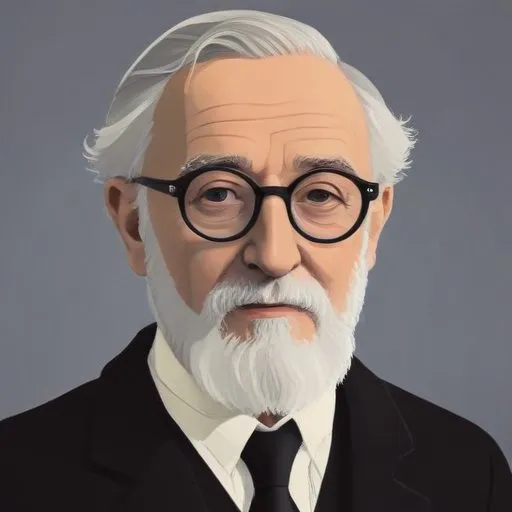
A poet and critic who pioneered close reading and ambiguous interpretations of literature, known for his influential book "Seven Types of Ambiguity".
William Empson, a renowned English literary critic and poet, is widely regarded for his meticulous practice of closely reading literary works, a fundamental approach that shaped the New Criticism movement. His seminal work, Seven Types of Ambiguity, published in 1930, remains a testament to his innovative and influential approach to literary analysis.
Born on September 27, 1906, in East Yorkshire, Empson was the son of Arthur Reginald Empson of Yokefleet Hall. He discovered his exceptional talent in mathematics at his preparatory school, which earned him an entrance scholarship to Winchester College. Empson excelled as a student, receiving what he later described as a "ripping education" despite the school's rough and abusive environment.
In 1925, Empson won a scholarship to Magdalene College, Cambridge, where he initially pursued mathematics, achieving a first-class honors degree in Part I. However, he later switched to English, securing a Bye Fellowship and impressing his supervisor, I. A. Richards, with his exceptional talent.
Empson's groundbreaking work, Seven Types of Ambiguity, was composed when he was just 22 years old and published two years later. This seminal work introduced a new approach to literary analysis, focusing on the complexities of language and the multiple meanings that could be derived from a single text. Empson's innovative methodology has had a profound impact on literary criticism, influencing generations of scholars and writers.
Jonathan Bate, a prominent literary critic, has hailed Empson as one of the three greatest English literary critics of the 18th, 19th, and 20th centuries, alongside Samuel Johnson and William Hazlitt. Bate notes that Empson's wit and humor set him apart from his contemporaries, making him a compelling and engaging writer.
Empson's life was marked by several significant events that shaped his intellectual and personal trajectory. He was a first cousin of the twins David and Richard Atcherley, and his family's connection to the aristocracy influenced his early education and interests.
Empson's decision to pursue English literature instead of mathematics, despite his exceptional talent in the latter, was a turning point in his academic career. This choice ultimately led him to develop his distinctive approach to literary analysis, which has had a lasting impact on the field.
Empson's work has extended beyond the realm of literary criticism, influencing modern society and popular culture. His emphasis on close reading and textual analysis has informed various disciplines, including law, philosophy, and cultural studies.
In addition, Empson's work has inspired creative writers, such as T.S. Eliot and Graham Greene, who have acknowledged his influence on their writing styles and critical approaches.
Empson's wit and humor are reflected in his writings, which often featured clever phrases and insightful observations. One of his most famous quotes, "The most important thing in criticism is to get the meaning of the text, and the most important thing in getting the meaning is to get the text," encapsulates his emphasis on close reading and textual analysis.
William Empson's contributions to literary criticism have been profound and far-reaching, shaping the development of New Criticism and influencing generations of scholars and writers. His emphasis on close reading, textual analysis, and the importance of ambiguity has transformed the way we approach literary texts.
As a testament to his enduring legacy, Empson's work continues to inspire new generations of scholars, writers, and thinkers, ensuring that his ideas and approaches remain relevant and influential in the world of literary criticism.
Born in 1888
A renowned poet, playwright, and critic who reshaped modern poetry with works like "The Waste Land" and "Old Possum's Book of Practical Cats", influencing literature and art with their unique style.
Born in 1885
A pioneering modernist poet and critic who transformed 20th-century literature with innovative styles and provocative ideas, shaping the course of modern poetry.
Born in 1882
A pioneering author of modernist literature, known for experimental novels and essays that explored the human experience, blurring the lines between reality and fiction.
Born in 1885
A pioneering writer of the early 20th century, known for exploring themes of human nature, relationships, and the clash between individual desire and societal expectations through novels like "Sons and Lovers" and "Lady Chatterley's Lover".
Born in 1907
A renowned poet, playwright, and composer who explored themes of love, morality, and social justice through his works, leaving a lasting impact on 20th-century literature.
Born in 1898
Renowned author of fantasy series, including The Chronicles of Narnia, and prominent Christian apologist, exploring the intersection of faith and reason.
