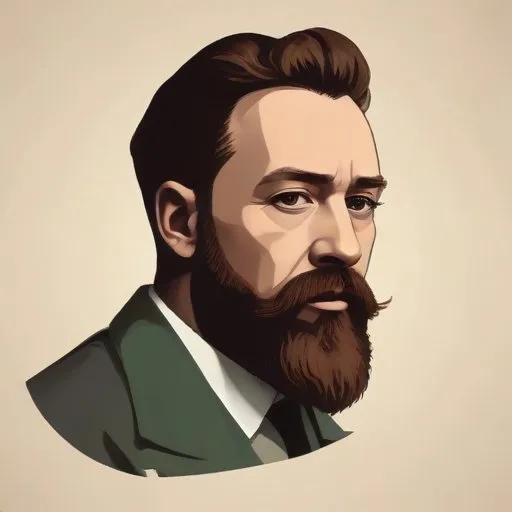
William Ernest Henley: The Unyielding Spirit Behind the Iconic Poem "Invictus"
William Ernest Henley, the renowned English poet, writer, critic, and editor, is best known for his powerful and thought-provoking poem "Invictus," which has inspired generations with its themes of resilience and determination. Written in 1875, "Invictus" has become an anthem for those facing adversity, and its impact on modern society is still felt today.
A Life of Perseverance
Born on August 23, 1849, in Gloucester, England, Henley was the oldest of six children. His early life was marked by hardship, with his father, William, passing away in 1868. Despite this, Henley persevered, and his determination to succeed was evident in his academic pursuits. He attended the Crypt School, Gloucester, where he was deeply influenced by his headmaster, Thomas Edward Brown, who instilled in him a love of learning and literature.
The Birth of "Invictus"
It was during his convalescence from tuberculosis of the bone, which he suffered from the age of 12, that Henley penned "Invictus." This iconic poem, with its famous lines "I am the master of my fate: / I am the captain of my soul," has become a beacon of hope for those facing struggles. Henley's own experiences with illness and hardship undoubtedly influenced the poem's themes of resilience and determination.
A Literary Legacy
Henley's literary contributions extended far beyond "Invictus." He wrote several books of poetry, including "In Hospital" and "London Voluntaries," and was a fixture in London literary circles. His work was widely acclaimed, and he was known for his wit and satire. Henley's friendship with
Robert Louis Stevenson, author of "Treasure Island," has led some to speculate that he may have been the inspiration for the character Long John Silver.
Influence on Modern Society
"Invictus" has had a profound impact on modern society, inspiring countless individuals to persevere in the face of adversity. The poem has been recited by world leaders, including
Nelson Mandela, and has become a symbol of resilience and hope. Henley's contributions to literature and poetry have also inspired generations of writers and poets.
Personal Milestones and Key Life Events
- In 1893, Henley received an LLD degree from the University of St Andrews.
- In 1897, he penned an admiring obituary for his former headmaster, Thomas Edward Brown, in the New Review.
- In 1900, Henley wrote an article in The Pall Mall Magazine, criticizing the shortcomings of the Crypt School, Gloucester.
Philosophical Contributions and Beliefs
Henley's poetry and writings reflect his strong philosophical beliefs. He was a proponent of individualism and believed in the power of the human spirit to overcome adversity. His poetry often explores themes of resilience, hope, and determination.
Legacy and Impact
William Ernest Henley's legacy extends far beyond his iconic poem "Invictus." He was a true literary pioneer, and his contributions to poetry and literature continue to inspire generations. His life, marked by perseverance and determination, serves as a testament to the power of the human spirit to overcome adversity. Henley's impact on modern society is still felt today, and his poetry remains a powerful reminder of the importance of resilience and hope.
FAQ
What is William Ernest Henley known for?
William Ernest Henley was an English poet, critic, and editor known for his inspirational poem Invictus and his advocacy for the arts.
What was William Ernest Henleys literary style?
William Ernest Henleys literary style was characterized by a deep sense of optimism, a strong sense of morality, and a mastery of poetic form and technique.
What were William Ernest Henleys most famous poems?
William Ernest Henleys most famous poems include Invictus, London Voluntaries, and Arabia Felix, all of which showcase his skill as a poet and his ability to evoke powerful emotions and ideas.
How did William Ernest Henleys work influence the literary world?
William Ernest Henleys work had a profound impact on the literary world, inspiring generations of poets and writers with his unique style and perspective.
What is William Ernest Henleys legacy?
William Ernest Henleys legacy is one of inspiration, creativity, and a deep commitment to the arts. His work continues to be celebrated and studied around the world.