


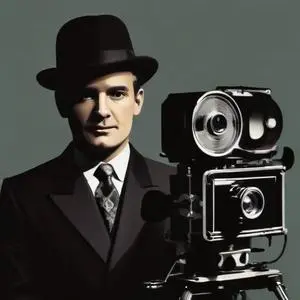
Pioneering filmmaker and cinematographer credited with inventing the first practical motion picture camera, producing early films, and developing techniques still used today.
William FrieseGreene, a prolific English inventor and professional photographer, is renowned for his groundbreaking contributions to the field of motion pictures. He devised a series of cameras between 1888 and 1891, shooting moving pictures with them in London, and later patented an early two-color filming process in 1905.
Born William Edward Green on September 7, 1855, in Bristol, FrieseGreene studied at the Queen Elizabeth's Hospital school. He began his career in photography as an apprentice to Marcus Guttenberg in 1871, but successfully went to court to be freed early from his seven-year apprenticeship. In 1874, he married Swiss-born Helena Friese, adding her maiden name to his surname in a remarkable move for the era.
FrieseGreene's fascination with magic lanterns and photography led him to experiment with devices that could display photographic slides in rapid succession, creating the illusion of movement. His collaboration with John Arthur Roebuck Rudge, a scientific instrument maker, resulted in the development of the Biophantic Lantern and the Biophantascope, precursors to modern motion picture cameras.
FrieseGreene's pioneering work in motion pictures led to several inventions and patents, including:
FrieseGreene's inventions brought him wealth, but his relentless pursuit of innovation led to financial struggles. He went bankrupt three times, was jailed once, and died in poverty on May 5, 1921. Despite his turbulent financial life, FrieseGreene's contributions to the field of motion pictures have left a lasting legacy, earning him recognition as a pioneer in the industry.
Some notable milestones in FrieseGreene's life include:
FrieseGreene's innovations in motion pictures paved the way for the development of modern filmmaking, influencing generations of filmmakers and cinematographers. His legacy extends beyond the film industry, inspiring inventors and innovators across various fields.
"The art of photography is not just about capturing the moment, but about predicting the future." - William FrieseGreene
FrieseGreene's pioneering spirit, innovative mind, and passion for photography have left an indelible mark on the world of motion pictures, ensuring his legacy as a true visionary in the history of filmmaking.
Born in 1830
Pioneering photographer and cinematographer who created the first motion pictures, capturing sequences of animal and human movement in a series of still images. Known for his groundbreaking work in motion photography and its influence on the development of film.
Born in 1847
A pioneer in innovation, credited with developing groundbreaking inventions that revolutionized the way people live and communicate, including the light bulb and phonograph.
Born in 1861
A pioneer of special effects and narrative filmmaking, creating fantastical worlds and characters in early cinema, particularly in the science fiction and fantasy genres.
Born in 1898
A pioneer of montage editing, he revolutionized filmmaking with his iconic scenes and theories, influencing generations of directors.
Born in 1875
Pioneering filmmaker behind groundbreaking silent movies, credited with developing innovative camera techniques and narrative storytelling styles.
Born in 1889
A pioneer of silent film, he is renowned for his iconic "Little Tramp" character and groundbreaking work in writing, directing, and starring in his own movies.
Born in 1899
Master of suspense, renowned for crafting iconic thrillers that blended psychological complexity with cinematic innovation, leaving an indelible mark on the film industry.
