


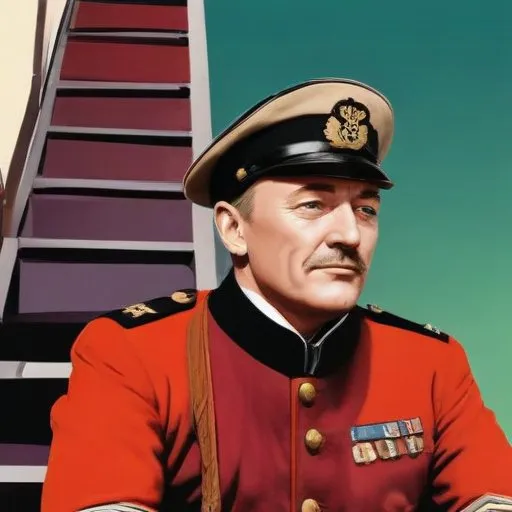
Led expeditions to Africa, mapping the Congo River and exploring the region, earning recognition for his bravery and cartographic skills.
William Grant Stairs is renowned for his fearless expeditions across Africa, navigating treacherous landscapes, and overcoming hostile encounters with native tribes. As a leading figure in two of the most controversial expeditions in the Scramble for Africa, Stairs left an indelible mark on the annals of exploration history.
Born on July 1, 1863, in Halifax, Nova Scotia, Stairs was the sixth child and third son of John Stairs and Mary Morrow. He received his early education at Fort Massey Academy in Halifax, followed by Merchiston Castle School in Edinburgh, Scotland. Stairs then enrolled in the Royal Military College of Canada in Kingston, Ontario, where he graduated as a trained engineer.
Stairs' thirst for adventure led him to spend three years working for the New Zealand Trigonometrical Survey in northern New Zealand. In 1885, he accepted a commission in the British Royal Engineers, training in Chatham, England. Later, in 1891, he transferred to the Welsh Regiment, setting the stage for his most notable expeditions.
Stairs' most significant expedition was the Emin Pasha Relief Expedition, led by the celebrated explorer Henry Morton Stanley. Joining the expedition in 1887, Stairs sailed from London and met Stanley in Suez. The expedition began on March 19, 1887, at the mouth of the Congo River and concluded on December 5, 1889, in Bagamoyo, Tanzania.
During this grueling 5,000-kilometer journey across Africa, Stairs and his companions faced numerous challenges, including malaria, dysentery, and treacherous terrain. Stairs' endurance, toughness, and perseverance shone through as he played a crucial role in the expedition's success.
Stairs' bravery and determination left a lasting impact on the world of exploration. His expeditions contributed significantly to our understanding of Africa's geography and its diverse cultures. Though Stairs' life was cut short, his spirit of adventure and discovery continues to inspire generations of explorers and travelers.
In Dublin, Ireland, a bronze plaque on the statue of expedition Surgeon Dr. Thomas Heazle Parke commemorates Stairs' remarkable journey and his unwavering commitment to exploration.
William Grant Stairs' extraordinary life serves as a testament to his unwavering courage, unrelenting determination, and insatiable thirst for adventure. His legacy continues to captivate and inspire those who dare to venture into the unknown.
Born in 1813
A Scottish missionary and explorer who traversed Africa, mapping its rivers and discovering Victoria Falls, while fighting against the slave trade. He embodied courage, compassion, and curiosity.
Born in 1827
A British soldier and explorer who led expeditions to Africa, discovering the source of the Nile River in 1858. He was the first European to set eyes on Lake Victoria.
Born in 1821
A 19th-century explorer who ventured into uncharted territories, mapping Africa's Nile River and uncovering hidden cities, earning a reputation as a daring adventurer and scholar.
