


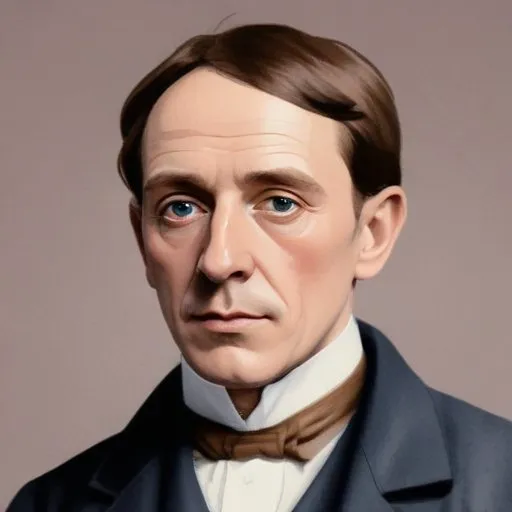
A Welsh poet and writer celebrated for his lyrical and introspective works that often explored the beauty of nature and the human experience.
William Henry Davies, a Welsh poet and writer, is renowned for his poignant observations on life's hardships, the human condition reflected in nature, and his extraordinary tramping adventures. His unique voice, shaped by his experiences as a hobo in the UK and the US, resonated with the public, earning him a spot among the most popular poets of his time.
Davies was born on July 3, 1871, in Newport, Monmouthshire, to an iron moulder and his wife. His family life was marked by tragedy, with his father's death in 1874 and his mother's remarriage the following year. Davies was raised by his paternal grandparents, Francis and Lydia Davies, who ran the nearby Church House Inn.
His grandmother, a Baptist, had a profound influence on Davies, instilling in him a sense of morality and a deep connection with nature. His grandfather, a former sea captain, regaled him with tales of the sea, which would later inform his poetry. The bohemian atmosphere of his grandparents' inn, filled with an assortment of characters, also played a significant role in shaping his writing style.
During this period, Davies developed a unique perspective on life, one that was both gritty and compassionate. He witnessed firsthand the struggles of the working class, the fragility of human existence, and the beauty of the natural world. These observations would later become the hallmark of his poetry.
His most famous collection, Songs of Joy (1911), showcases his mastery of the genre, with poems that are both accessible and profound. The collection's success catapulted Davies to fame, earning him a reputation as one of the most popular poets of his time.
His unique voice, born from the hardships and beauty of the tramping life, has enriched the literary landscape, offering a fresh perspective on the human condition. Davies' poetry, a testament to the power of perseverance and creativity, continues to resonate with readers today.
William Henry Davies' remarkable life, marked by hardship, adventure, and creativity, has left an indelible mark on literature. His poetry, a reflection of his tramping years and his deep connection with humanity, continues to inspire and uplift readers to this day.
Born in 1914
A renowned wordsmith celebrated for his emotive, lyrical poetry and plays that explored the human condition, particularly in his iconic work "Under Milk Wood".
Born in 1864
A pioneering researcher who explored the intersection of psychology, anthropology, and medicine, making significant contributions to our understanding of human culture and the human mind.
Born in 1874
Pulitzer Prize-winning poet and playwright celebrated for rural New England-inspired works that explore human nature, morality, and the American experience.
Born in 1819
A celebrated poet, essayist, and journalist who revolutionized American literature with his collection "Leaves of Grass", known for his free verse style and celebration of the human spirit.
Born in 1770
A major Romantic poet, known for his focus on nature, emotion, and the human experience, creating works that evoke a sense of wonder and connection to the natural world.
Born in 1795
Romantic poet celebrated for sensual language and vivid imagery, capturing the beauty of nature and human experience in odes like "To Autumn" and "Ode to a Nightingale".
Born in 1792
Romantic-era writer of lyrical poetry and Gothic dramas that explored the human condition, freedom, and the beauty of nature.
Born in 1873
A celebrated wordsmith, crafting hauntingly beautiful poetry and short stories that explore the human psyche, often blurring the lines between reality and fantasy.
