


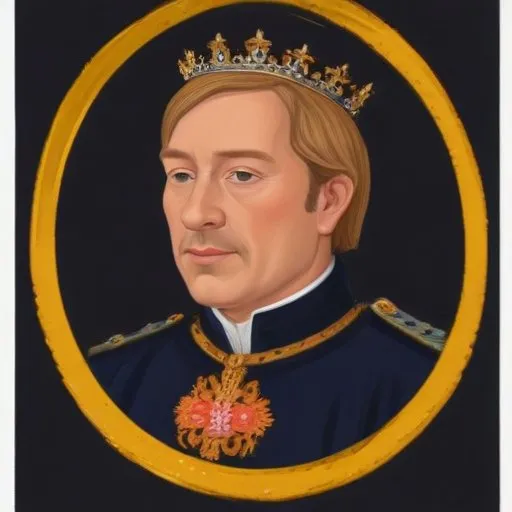
King of the Netherlands from 1840 to 1849, known for his conservative and authoritarian reign, which led to the adoption of a more liberal constitution. He was also a skilled military leader.
Known as the king who transformed the Netherlands into a parliamentary democracy, William II reigned from 1840 to 1849, leaving an indelible mark on the country's history. His ascension to the throne marked a significant shift in power, paving the way for a more liberal and representative form of government.
Born on December 6, 1792, in The Hague, William II was the eldest son of Prince William and Wilhelmine of Prussia. His maternal grandparents were King Frederick William II of Prussia and his second wife Frederika Louisa of Hesse-Darmstadt. The young prince spent his formative years in Berlin, where he received a military education and served in the Prussian Army. Later, he studied civil law at Christ Church, University of Oxford.
When his father, William I, abdicated on October 7, 1840, William II ascended to the throne, becoming the King of the Netherlands, Grand Duke of Luxembourg, and Duke of Limburg. During his reign, he oversaw the transformation of the Netherlands into a parliamentary democracy, enshrining the principles of representative government in the new constitution of 1848.
William II married Anna Pavlovna of Russia, with whom he had four sons and one daughter. His family played a significant role in shaping the course of European history, with his son, William III, succeeding him as king.
William II's reign marked a significant turning point in the history of the Netherlands, as he navigated the country through a period of rapid change and modernization. His commitment to parliamentary democracy and representative government helped lay the foundations for the country's modern political system.
Today, William II is remembered as a visionary leader who transformed the Netherlands into a more liberal and democratic nation, paving the way for the country's future prosperity and growth.
Born in 1772
King of the Netherlands who played a key role in the country's independence and modernization, and is also known as the "Founder of the Fatherland".
88 Years Old
The former Queen of the Netherlands, known for her dedication to humanitarian causes and her role in modernizing the Dutch monarchy. She reigned for 33 years, earning respect for her wisdom and diplomacy.
Born in 1911
The German-born prince who married into the Dutch royal family and played a key role in the Netherlands' liberation during World War II, later becoming a prominent figure in international conservation efforts.
99 Years Old
Husband of Queen Beatrix, he played a crucial role in modernizing the Dutch monarchy and was a strong advocate for human rights and cultural diversity. He was also known for his sense of humor and humility.
83 Years Old
The third daughter of Queen Juliana and Prince Bernhard, she's known for her humanitarian work and cultural contributions, particularly in the fields of music and dance.
