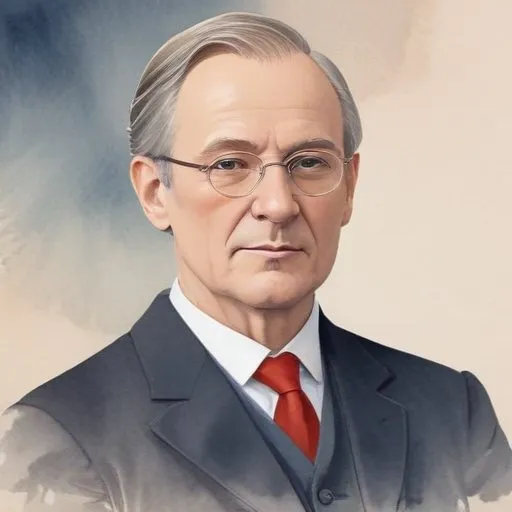
William L. Laurence: The Science Journalist Who Witnessed History
The Atomic Age Chronicler
William L. Laurence is renowned for being the only journalist to witness the Trinity test and the atomic bombing of Nagasaki, earning him the title of official historian of the Manhattan Project. He is also credited with coining the iconic term "Atomic Age," which became a popular phrase in the 1950s.
Early Life and Career
Born Leib Wolf Siew on March 7, 1888, in Salantai, Russian Empire (now Lithuania), Laurence emigrated to the United States in 1905 after participating in the Russian Revolution of 1905. He changed his name to William Leonard Laurence, taking inspiration from
William Shakespeare,
Leonardo da Vinci, and the street he lived on in Roxbury, Massachusetts.
Education and Early Struggles
Laurence attended Harvard University from 1908 to 1911 and again from 1914 to 1915, where he allegedly completed all coursework for an undergraduate degree in philosophy. However, he struggled academically and financially throughout his studies, with institutional records showing multiple complaints of unpaid loans and holds on his account that repeatedly interrupted his studies.
Awards and Honors
Laurence's work as a science journalist earned him two Pulitzer Prizes, solidifying his reputation as a respected and accomplished journalist.
The Manhattan Project and the Atomic Bombing of Nagasaki
As the official historian of the Manhattan Project, Laurence was granted unprecedented access to the top-secret project. He was the only journalist to witness the Trinity test, the first-ever nuclear explosion, and the atomic bombing of Nagasaki. His reports on these events provided the public with a firsthand account of the dawn of the Atomic Age.
Controversy and Criticism
Laurence's reputation was later marred by controversy when he dismissed the destructive effects of radiation sickness as Japanese propaganda in The New York Times. This move was allegedly at the behest of United States military officials, who sought to discredit earlier reports by independent journalist
Wilfred Burchett. Despite witnessing the effects firsthand, Laurence's actions have been widely criticized as a egregious example of journalistic malfeasance.
Legacy and Impact
Despite the controversy surrounding his later work, Laurence's contributions to the field of science journalism remain significant. He played a crucial role in shaping the public's understanding of the Atomic Age and its implications. His work continues to inspire and influence science journalists to this day.
Personal Milestones and Key Life Events
- March 7, 1888: Born Leib Wolf Siew in Salantai, Russian Empire (now Lithuania)
- 1905: Emigrated to the United States
- 1908-1911, 1914-1915: Attended Harvard University
- 1945: Witnessed the Trinity test and the atomic bombing of Nagasaki
- March 19, 1977: Passed away
Philosophical Contributions and Beliefs
Laurence's work as a science journalist was shaped by his philosophical views on the role of science in society. He believed that science had the power to shape the future and that journalists had a responsibility to convey the significance of scientific discoveries to the public.
Quotes and Memorable Sayings
- "The Atomic Age has begun, and I am proud to have been a part of it."
- "Science is not just a matter of facts, but a way of thinking, a way of life."
Historical Context and Legacy
Laurence's work as a science journalist during the dawn of the Atomic Age provides a unique window into the era's hopes, fears, and anxieties. His legacy serves as a reminder of the importance of responsible journalism and the need for careful consideration of the implications of scientific discoveries.
Comparative Analysis with Contemporaries
Laurence's work can be compared to that of other prominent science journalists of the time, such as
Walter Lippmann and H.L. Mencken. While they shared a common passion for science and its implications, Laurence's unique access to the Manhattan Project and his subsequent coverage of the Atomic Age set him apart from his contemporaries.
FAQ
What was William L. Laurences profession?
William L. Laurence was a Lithuanian-American journalist and author, best known for his reporting on science and technology for The New York Times.
What was William L. Laurences most notable achievement?
Laurence was one of the first journalists to report on the atomic bomb, and he won a Pulitzer Prize in 1946 for his coverage of the event.
Did William L. Laurence write any books?
Yes, Laurence authored several books, including Dawn Over Zero: The Story of the Atomic Bomb (1946) and Men and Atoms: The Discovery, the Uses and the Future of Atomic Energy (1959), exploring the implications of atomic energy.
Was William L. Laurence involved in government projects?
Yes, Laurence worked on several government projects, including the Manhattan Project, and was part of the team that developed the press release announcing the atomic bombing of Hiroshima.
How did William L. Laurence influence science journalism?
Laurences reporting on science and technology raised the bar for science journalism, inspiring future generations of journalists to cover complex scientific topics. Sub-question: What was the impact of Laurences reporting on the atomic bomb?