


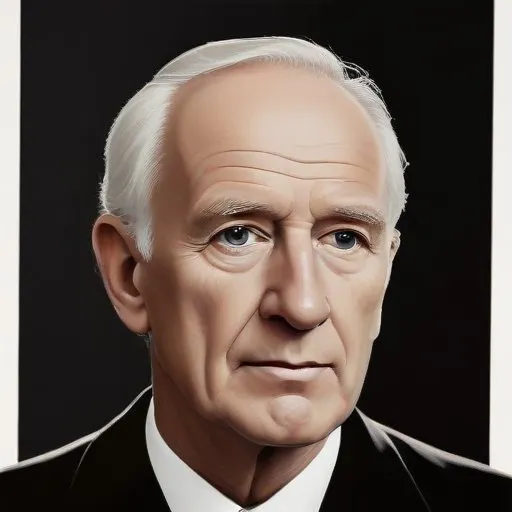
A pioneering farmer and politician who served as New Zealand's 19th Prime Minister, known for his efforts to improve the country's agricultural sector and strengthen its economy.
William Ferguson Massey, commonly referred to as "Farmer Bill," is renowned for being the 19th Prime Minister of New Zealand, serving from 1912 to 1925. As the founding leader of the Reform Party, Massey is credited with championing the interests of farmers and playing a pivotal role in shaping New Zealand's politics during a transformative period in the country's history.
Massey was born on March 26, 1856, in County Londonderry, Ireland, to a Protestant farming family. His family emigrated to New Zealand in 1870, settling near Auckland, where Massey developed a deep affinity for farming. After completing his education, Massey joined his family in New Zealand and began farming, earning his nickname "Farmer Bill."
Massey's involvement in farmers' organizations laid the foundation for his entry into politics. In 1894, he was elected to Parliament as a conservative, opposed to the Liberal government of Richard Seddon. Throughout his political career, Massey became known for his unwavering support for agrarian interests and his opposition to organized labor.
In 1909, Massey founded the Reform Party, which would become New Zealand's second organized political party. He led the party to victory in 1912, defeating the Liberal government and becoming Prime Minister. Massey's leadership was marked by his commitment to supporting farmers and his opposition to the growing labor movement.
During World War I, Massey pledged New Zealand's support to Britain, playing a crucial role in rallying the nation behind the war effort. Despite facing opposition from labor groups and the Liberal Party, Massey's leadership helped to maintain stability and unity during a turbulent period. He remained Prime Minister until his death on May 10, 1925.
Massey was known for his strong personality, which earned him both admiration and criticism. His disdain for organized labor and his focus on agrarian interests often put him at odds with liberal and labor movements. Nevertheless, his unwavering commitment to his principles and his ability to connect with rural New Zealanders helped to cement his place in the country's history.
Massey's legacy extends beyond his political career. He played a significant role in shaping New Zealand's identity and its relationship with Britain during World War I. His commitment to agrarian interests helped to promote rural development and agricultural growth, contributing to the country's economic progress.
Massey's opposition to organized labor and his support for farmers often led to criticisms of being anti-worker and favoring rural elites. His leadership during World War I also sparked controversy, as some accused him of prioritizing British interests over those of New Zealand.
In conclusion, William Massey's life and legacy are a testament to his unwavering commitment to his principles and his dedication to serving New Zealand. While controversial at times, his leadership played a significant role in shaping the country's history and identity.
Born in 1845
The 15th Prime Minister of New Zealand, a dominant figure in the country's early 20th-century politics, known for his progressive reforms and strong leadership during a time of significant social change.
Born in 1856
A pioneering entrepreneur and statesman who played a crucial role in shaping New Zealand's economy and politics, particularly in the early 20th century. He's most famous for his efforts in establishing the country's welfare state and implementing key economic reforms.
Born in 1853
A Scottish-New Zealand cartographer and politician who served as the 18th Prime Minister of New Zealand, known for his contributions to the country's early development and mapping. He played a significant role in shaping New Zealand's infrastructure and politics during the late 19th century.
Born in 1851
The 16th Prime Minister of New Zealand, serving from 1906 to 1908, is most known for his progressive social reforms and his role in shaping the country's early 20th-century politics. He's also remembered for his diplomatic efforts during the Imperial Conference of 1907.
Born in 1812
A Portuguese-New Zealand soldier, explorer, and politician who served as the 11th Prime Minister of New Zealand, known for his governance and exploration of the country. He played a significant role in shaping New Zealand's early history.
Born in 1844
The 13th Prime Minister of New Zealand, a Scottish-New Zealander who served from 1936 to 1940, known for his leadership during the Great Depression and World War II. He played a crucial role in shaping the country's economy and foreign policy.
Born in 1813
The 9th Prime Minister of New Zealand, serving from 1876 to 1882, known for his efforts to strengthen the country's economy and infrastructure. He implemented policies to promote trade, immigration, and public works.
64 Years Old
A pioneering figure in experimental and industrial music, known for his work with Coil, creating hauntingly beautiful soundscapes that pushed boundaries of electronic music.
