


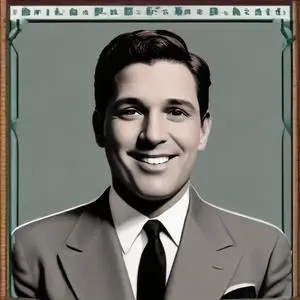
Founded the Columbia Broadcasting System (CBS), revolutionizing American television and radio by introducing popular shows and news programs that captivated audiences nationwide. He played a pivotal role in shaping the modern media landscape.
William S. Paley, a pioneering American businessman, is best known for building the Columbia Broadcasting System (CBS) from a small radio network into one of the most prominent radio and television networks in the United States. Under his leadership, CBS became a household name, synonymous with quality programming and journalism.
Born on September 28, 1901, in Chicago, Illinois, Paley was the son of Goldie and Samuel Paley, a Ukrainian immigrant who ran a successful cigar company. The family's prosperity allowed them to move to Philadelphia in the early 1920s, where Paley attended the University of Pennsylvania, graduating with a degree in economics. He was a member of the Theta chapter of Zeta Beta Tau fraternity.
In 1927, Paley's father, Samuel, and his business partners acquired a struggling Philadelphia-based radio network, the Columbia Phonographic Broadcasting System, with the intention of promoting their cigar business. However, under William's leadership, the network began to thrive, and within a year, cigar sales had more than doubled. In 1928, the Paley family secured majority ownership of the network, and William's vision for broadcasting began to take shape.
Recognizing the enormous potential of radio, Paley expanded the network to 114 affiliate stations within a decade. He introduced innovative programming, including news broadcasts, dramas, and comedies, which captivated audiences nationwide. Paley's CBS soon became synonymous with quality journalism, earning a reputation for integrity and excellence in reporting.
Paley's contributions to broadcasting were recognized with numerous awards and honors, including the Carlos Manuel de Céspedes National Order of Merit, awarded by the Cuban government for his efforts to foster greater understanding between the United States and Cuba.
Paley believed in the transformative power of broadcasting, stating, "Radio is the greatest instrument of mass communication ever invented." He saw broadcasting as a means to educate, inform, and entertain the masses, and his vision shaped the industry for generations to come.
Paley's legacy extends far beyond the realm of broadcasting. He helped shape American culture, influencing the way people consumed news, entertainment, and information. His commitment to quality journalism and programming raised the bar for the industry, leaving a lasting impact on American society.
Under Paley's leadership, CBS became a financial powerhouse, with revenues exceeding $1 billion by the 1970s. His net worth was estimated to be around $300 million at the time of his death in 1990, making him one of the wealthiest media moguls of his era.
William S. Paley's remarkable life and achievements continue to inspire generations of broadcasters, journalists, and entrepreneurs. His vision, innovation, and commitment to excellence have left an indelible mark on American broadcasting, cementing his place as one of the most influential figures in the history of the medium.
Born in 1901
Host of a popular Sunday night TV variety show featuring iconic performances by famous musicians, comedians, and entertainers, showcasing American culture from the 1940s to the 1970s.
Born in 1911
A pioneering comedian and producer who revolutionized the sitcom genre with her iconic show "I Love Lucy," leaving a lasting impact on American television comedy.
Born in 1917
A Cuban-American triple threat who pioneered the sitcom format with his hit show "I Love Lucy" and revolutionized television production with his innovative filming techniques.
Born in 1913
A beloved comedian and actor who brought laughter to millions through his physical comedy and pantomime skills, starring in numerous films and TV shows, including his own popular variety show.
Born in 1894
A beloved comedian and radio personality, famous for his witty humor, stingy persona, and iconic catchphrase "Your money or your life!"
Born in 1896
A legendary comedian and entertainer, known for his quick wit, charming stage presence, and iconic cigar, starring in films and TV shows that brought laughter to generations.
Born in 1895
A zany comedian and actress who delighted audiences with her witty banter and comedic timing on stage, screen, and radio, particularly in the 1930s and 1940s.
Born in 1908
Pioneering broadcast journalist who exposed Senator Joseph McCarthy's communist witch hunt, setting a high standard for fearless reporting.
