


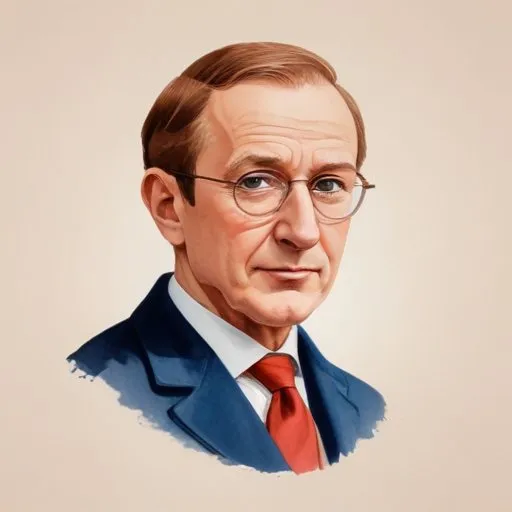
A brilliant mathematician and codebreaker who cracked the German Lorenz cipher, contributing significantly to Allied victory in World War II. His work remains influential in graph theory and computer science.
William Tutte, a British-Canadian mathematician and computer scientist, is renowned for his groundbreaking contributions to graph theory, cryptography, and codebreaking. Tutte's work laid the foundation for modern cryptography, and his codebreaking efforts during World War II played a significant role in the Allied victory.
Born on May 14, 1917, in Newmarket, England, Tutte was the youngest of three children. He developed an interest in mathematics at an early age and went on to study at Cambridge University, where he earned a bachelor's degree in 1938.
During World War II, Tutte joined the Government Code and Cypher School (GC&CS) at Bletchley Park, where he worked alongside Alan Turing and other renowned cryptanalysts. Tutte's expertise in graph theory enabled him to crack the German Tunny code, a feat that significantly contributed to the Allied victory.
Tutte's work in cryptography led to the development of the concept of the "Tutte graph," a graph theory concept that has had far-reaching implications in computer science and cryptography. His work also laid the foundation for modern cryptographic algorithms, including the Diffie-Hellman key exchange and the RSA algorithm.
Tutte's work in graph theory has had a profound impact on the field. He is known for his development of the "Tutte embedding," a method for embedding graphs in surfaces, and his proof of the "Tutte polynomial," a fundamental concept in graph theory.
Tutte's graph theory work has far-reaching implications in computer science, cryptography, and other fields. His theories have been applied in network design, coding theory, and structural biology, among other areas.
Tutte's contributions to mathematics and cryptography have been recognized with numerous awards and honors. He was awarded the CRM-Fields-PIMS Prize in 2001 and was elected a Fellow of the Royal Society of Canada in 1998.
William Tutte's pioneering work in graph theory and cryptography has left an indelible mark on modern computer science and cryptography. His contributions have paved the way for advancements in coding theory, network design, and structural biology, among other fields.
Tutte's legacy extends beyond his groundbreaking work. He has inspired generations of mathematicians and computer scientists, and his work continues to influence research in cryptography, graph theory, and beyond.
Tutte married Kathleen Irene Farrington in 1943, and the couple had two children together. He passed away on May 2, 2002, at the age of 84, leaving behind a legacy that continues to inspire and influence researchers in mathematics and computer science.
In conclusion, William Tutte's remarkable contributions to graph theory, cryptography, and codebreaking have left an indelible mark on modern computer science and cryptography. His work continues to inspire and influence researchers, ensuring his legacy will endure for generations to come.
Born in 1912
Pioneering mathematician and computer scientist who cracked the German Enigma code during WWII and laid the foundations for modern computer science and artificial intelligence.
Born in 1906
A British mathematician and computer scientist who played a crucial role in cracking the German Enigma code during World War II, and later wrote about his experiences.
Born in 1917
Noted baseball player and scout who played for several teams and later discovered talented players like Lou Brock and Lee Smith. Known for his keen eye for talent and contributions to the game.
Born in 1917
A brilliant codebreaker and coin enthusiast who helped crack the German Enigma code during WWII, making significant contributions to Allied victory.
