


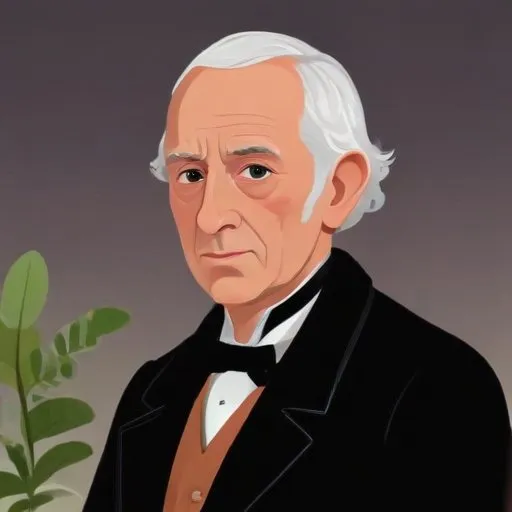
A prominent 18th-century English polymath who made significant contributions to the fields of medicine, physics, and botany, particularly in the discovery of the circulation of blood. He also wrote extensively on electricity and botany.
Sir William Watson, a British physician and scientist, is renowned for his groundbreaking contributions to the field of electricity. In particular, his work on the Leyden jar, a device that stores electrical charge, revolutionized the understanding of electricity and paved the way for future innovations.
Born on April 3, 1715, in London, Watson's early interests lay in botany. He played a significant role in introducing the works of Carolus Linnaeus to England, laying the foundation for modern taxonomy.
In 1741, Watson was elected a Fellow of the Royal Society, a prestigious honor that acknowledged his outstanding contributions to science. Later, in 1772, he was appointed vice president of the Society, further solidifying his reputation as a leading figure in the scientific community.
In 1746, Watson demonstrated that the capacity of the Leyden jar could be increased by coating it with lead foil. This innovative discovery led him to propose a radical new theory: that electricity consists of a single fluid, which he termed "electrical ether." Furthermore, he suggested that electricity is more akin to magnetism and light than a fluid, as it can pass through various materials.
Watson's experiments pushed the boundaries of electricity. On August 14, 1747, he successfully conducted electricity through a 6,732-foot-long wire at Shooters Hill in London, a feat that surpassed previous attempts in France. Later, he repeated the experiment with an even longer wire, measuring 12,276 feet.
Watson's work drew the attention of Benjamin Franklin, with whom he formed a lasting scientific and political alliance. Although they independently developed similar theories, they shared a mutual respect and admiration for each other's contributions.
In 1786, Watson was knighted for his outstanding achievements. The plant genus Watsonia was named in his honor, a testament to his botanical pursuits. His legacy extends to the scientific community, inspiring future generations of researchers and innovators.
Watson's written contributions include Observations upon the effects of electricity, applied to a tetanus, or muscolar rigidity, of four months continuance, published in 1763. This work showcased his dedication to understanding the applications of electricity in medicine.
Through his pioneering spirit, Sir William Watson left an indelible mark on the history of science, paving the way for groundbreaking discoveries in the realm of electricity.
Born in 1706
A founding father of the United States, he was a leading figure in the Enlightenment, known for his groundbreaking inventions, scientific discoveries, and influential writings. He played a key role in shaping American history and politics.
Born in 1731
A pioneering scientist who discovered hydrogen and determined the density of the Earth, making significant contributions to the fields of chemistry and physics.
Born in 1743
Father of modern chemistry, discovered oxygen, and developed a systematic method of chemical nomenclature. He laid the foundation for modern chemistry and paved the way for future scientific discoveries.
Born in 1707
Developed the system of binomial nomenclature, which is still used today to classify and name living organisms. This system has had a profound impact on the fields of biology, ecology, and conservation.
Born in 1874
Notorious hangman who carried out over 200 executions in the UK during the early 20th century, earning a reputation for his efficiency and controversial methods.
Born in 1726
Pioneering geologist and physician who formulated the theory of uniformitarianism, proposing that the Earth's geological features were shaped by slow, gradual processes over millions of years.
Born in 1744
A French soldier, biologist, and academic who developed a theory of inheritance of acquired characteristics, proposing that organisms adapt to their environment and pass on those traits to their offspring.
Born in 1743
A British naturalist who sailed with Captain Cook on the HMS Endeavour, discovering and cataloging thousands of plant species, and advising on the development of the British colonies. He's considered the "father of Australian botany".
