


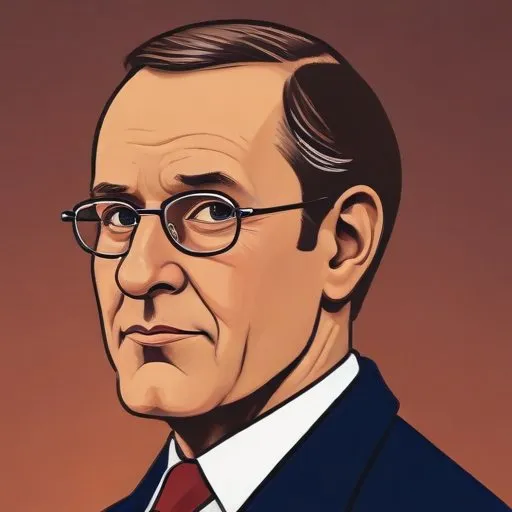
The 24th Premier of Victoria, a skilled accountant and politician, led the state government and implemented significant reforms. He's most known for his economic management and infrastructure development.
William Watt, a name synonymous with Australian politics, served two terms as Premier of Victoria and held various ministerial positions in the federal government, including acting Prime Minister during World War I.
Watt's remarkable political career spanned over three decades, leaving an indelible mark on the country's history.
Born on November 23, 1871, in Barfold, Victoria, Watt was the youngest of eleven children to James Michie Watt, a Scottish-born farmer, and Jane (née Douglas), who hailed from Ireland.
Following his father's untimely death, Watt's family moved to Phillip Island and later to Melbourne, where he received his education at the Errol Street State School (now North Melbourne Primary School).
Watt's early life was marked by hard work and determination. He left school at a young age to work as a newsboy and later as a clerk at an ironmongery and a tannery.
He attended night classes in accountancy at the Working Men's College, eventually qualifying as an accountant and becoming a partner in a hay and corn store.
Watt's entry into politics was marked by his election to the Victorian Legislative Assembly in 1897, where he represented North Melbourne.
He served as Postmaster-General in the short-lived government of Allan McLean in 1899 and later shifted to the safe liberal seat of East Melbourne in 1902.
Watt's dedication to the Australian Natives Association and his support for federation led him to become a protégé of the Victorian liberal leader Alfred Deakin.
In 1914, Watt entered federal politics, serving as a minister in the government of Billy Hughes from 1917 to 1920.
During World War I, Watt played a crucial role as acting Prime Minister, demonstrating his leadership skills and strength in times of crisis.
After the war, Watt continued to serve in various ministerial positions, including Speaker of the House of Representatives from 1923 to 1926.
Watt's contributions to Australian politics are multifaceted and far-reaching. He played a significant role in shaping the country's early years, particularly during World War I.
His dedication to public service, leadership, and vision for a unified Australia have made him an iconic figure in the country's history.
Today, Watt's legacy continues to inspire future generations of Australian politicians and leaders.
Watt's personal life was marked by private struggles and triumphs. He remained committed to his family and community, serving as secretary of the North Melbourne Debating Club and executive member of the Australasian Federation League of Victoria.
Throughout his life, Watt remained humble and dedicated to his craft, leaving behind a legacy that continues to shape Australia's political landscape.
Born in 1823
The 12th Premier of Victoria, a Scottish-Australian politician who played a crucial role in shaping the state's economy and infrastructure during the late 19th century. He's most known for his efforts in promoting trade and commerce in Victoria.
Born in 1748
A virtuosic violinist and composer, he wrote music for the theatre, including operas and incidental music, and was a prominent figure in London's musical scene during the late 18th century.
Born in 1841
Pioneering oceanographer and biologist who explored the ocean's depths, discovering new species and advancing our understanding of marine ecosystems.
Born in 1851
The 18th Premier of Victoria, serving from 1894 to 1899, is most known for his progressive reforms, including the establishment of a state bank and workers' compensation. He played a significant role in shaping Victoria's economy and social policies.
Born in 1838
Australian businessman and politician who served as the 22nd Premier of Victoria, known for his corrupt and extravagant spending habits, earning him the nickname "Bent by Name, Bent by Nature".
Born in 1858
The 21st Premier of Victoria, a pioneering figure in Australian politics, known for his significant contributions to the country's development and governance.
43 Years Old
American baseball player known for his impressive pitching skills and brief stint with the Chicago Cubs in the early 2000s.
Born in 1854
The 28th Premier of Victoria, serving from 1924 to 1927, is most known for his role in shaping the state's economic and social policies during the 1920s. He's also remembered for his efforts to reduce the state's debt and promote industrial development.
