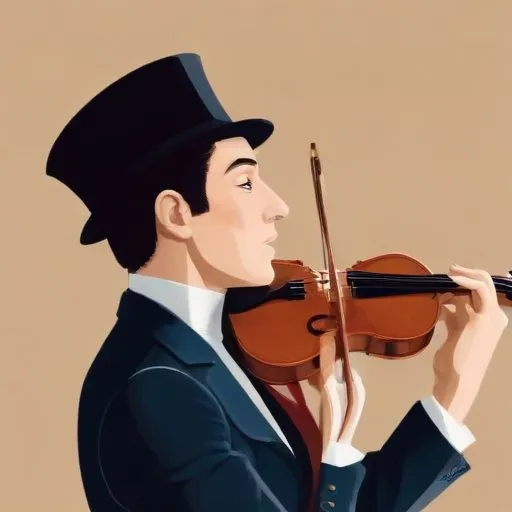
Edouard Colonne: The Champion of 19th-Century Composers
A Conductor and Violinist of Distinction
Edouard Colonne was a renowned French conductor and violinist, celebrated for his tireless advocacy of the music of
Hector Berlioz and other prominent 19th-century composers. Through his pivotal work, Colonne played a significant role in popularizing the compositions of his time, leaving an indelible mark on the world of classical music.
Early Life and Musical Beginnings
Born on July 23, 1838, in Bordeaux, France, Colonne was the son and grandson of musicians of Italian-Jewish descent. His early musical inclinations were nurtured through his exposure to the flageolet and accordion, which he began playing at the tender age of eight. His violin studies, undertaken with Baudoin, laid the foundation for his later success.
Award-Winning Education and Early Career
Colonne's talent and dedication earned him a place at the prestigious Conservatoire in Paris, where he won first prizes in both harmony and violin. From 1856 to 1867, he served as the first violinist at the Opéra in Paris, simultaneously playing second violin in the esteemed Lamoureux Quartet.
Founding the Concert National and L'Association Artistique du Châtelet
In 1871, Colonne directed concerts at the Grand-Hôtel, preceding his collaboration with music publisher Georges Hartmann to establish the Concert National at the Odéon Theatre in 1873. This venture eventually relocated to the Théâtre du Châtelet and was renamed L'Association Artistique du Châtelet. The concerts presented by this organization would come to be known as the Concerts Colonne, a name that endured until the 1960s.
An Acclaimed Conductor and Berlioz Champion
Colonne's passion for Berlioz's music led to a long-standing friendship with the composer. He premiered many of Berlioz's works, including the iconic
Fantastic Symphony, and played a crucial role in promoting the composer's oeuvre. Music critic
David Cairns noted that Colonne's contributions were instrumental in establishing Berlioz as a prominent figure in French music.
International Recognition and Collaborations
In 1878, Colonne met
Pyotr Ilyich Tchaikovsky during the Russian composer's visit to Paris. This encounter led to an exchange of concert trips, with Colonne introducing Tchaikovsky's music to French audiences and, in turn, performing in Russia.
Lasting Legacy and Impact on Modern Music
Edouard Colonne's unwavering commitment to the music of his time has left an indelible mark on the world of classical music. His tireless advocacy of Berlioz's compositions, in particular, played a significant role in solidifying the composer's place in the annals of musical history.
Timeline of Significant Events
- 1838 - Born on July 23rd in Bordeaux, France
- 1855 - Begins studies at the Conservatoire in Paris
- 1856 - Wins first prizes in harmony and violin
- 1856-1867 - First violinist at the Opéra in Paris and second violinist in the Lamoureux Quartet
- 1871 - Directs concerts at the Grand-Hôtel
- 1873 - Founds the Concert National with Georges Hartmann
- 1878 - Meets Pyotr Ilyich Tchaikovsky and introduces his music to French audiences
- 1910 - Passes away on March 28th
Quotes and Memorable Sayings
"Music is the silence between the notes." - Edouard Colonne
This quote, often attributed to Colonne, captures the essence of his dedication to the nuances and subtleties of classical music.
FAQ
What was Édouard Colonnes profession?
Édouard Colonne was a French violinist and conductor, known for his virtuosic performances and innovative approach to conducting.
What orchestra did Édouard Colonne found?
Édouard Colonne founded the Concerts Colonne, a prominent orchestra in Paris, which he conducted for over 30 years, promoting French music and composers.
What were Édouard Colonnes contributions to French music?
Édouard Colonne made significant contributions to French music, championing the works of French composers such as Berlioz, Saint-Saëns, and Debussy, and introducing new musical styles to French audiences.
What was Édouard Colonnes relationship with Claude Debussy?
Édouard Colonne had a close relationship with Claude Debussy, premiering several of his works, including Prelude to the Afternoon of a Faun, and promoting his music throughout his career.
How did Édouard Colonnes work impact the development of classical music?
Édouard Colonnes work had a significant impact on the development of classical music, as he helped to promote French music, encourage innovation, and showcase new talent, influencing generations of musicians and composers.