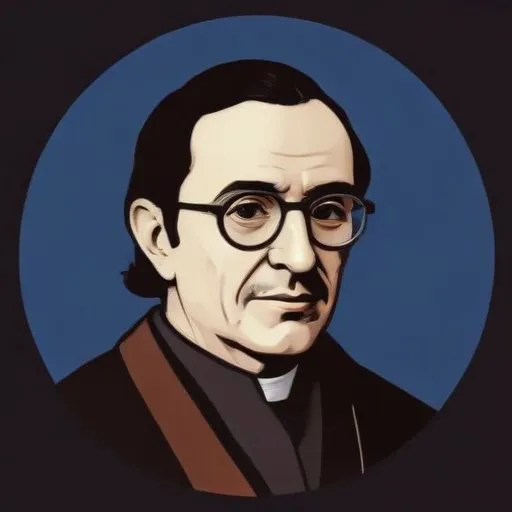
tienne Dolet: The Fearless Scholar and Printer
Controversial Figure of the Renaissance
tienne Dolet, a French scholar, translator, and printer, is renowned for his radical ideas and critiques of the established authorities, which led to his tragic demise. Born in Orléans, France, on August 3, 1509, Dolet's life was marked by controversy, imprisonment, and ultimately, his execution for heresy.
Early Life and Education
Dolet's early life remains shrouded in mystery, with some claiming him to be the illegitimate son of Francis I. Whatever his true parentage, he was raised in a family of rank and wealth, which facilitated his education in Paris and later in Padua, Italy. Under the tutelage of Nicolas Brauld, he honed his skills in languages and literature.
Rise to Prominence
Dolet's scholarly prowess earned him the position of secretary to Jean de Langeac, bishop of Limoges and French ambassador to Venice. During his time in Venice, he attended lectures by the renowned scholar Battista Egnazio and wrote Latin love poems to a Venetian woman, Elena. This exposure to diverse intellectual circles shaped his critical thinking and inclined him towards the ideals of the Renaissance humanists.
Writings and Controversies
Upon returning to France, Dolet engaged in the famous Ciceronian controversy, taking an ultra-Ciceronian stance that sparked debates among scholars. His Dialogus de imitatione Ciceroniana ( Dialogue on the Imitation of Cicero), published in 1535, showcased his mastery of Latin prose and his commitment to the ideals of classical antiquity.
Persecution and Execution
Dolet's critiques of the Inquisition, the city council, and other authorities in Toulouse earned him the wrath of the French Inquisition. Repeated imprisonments and banishments failed to silence him, and his writings continued to challenge the theological faculties of the Sorbonne. Ultimately, he was convicted of heresy, strangled, and burned with his books in 1546.
Legacy and Impact
tienne Dolet's courage in the face of persecution and his commitment to intellectual freedom have inspired generations of scholars and thinkers. His writings, though often provocative, reflected his passion for classical learning and his drive to reform the Catholic Church. Today, Dolet is celebrated as a martyr for intellectual liberty and a champion of the Renaissance humanist ideals.
Philosophical Contributions and Beliefs
- Advocated for a more inclusive and tolerant approach to faith, challenging the dogmatic authority of the Catholic Church.
- Believed in the power of education and critical thinking to bring about social and religious reforms.
- Embraced the humanist ideals of classical antiquity, emphasizing the importance of individualism and intellectual curiosity.
Influence on Modern Society
Dolet's struggles for intellectual freedom and his critique of oppressive authority have resonated across the centuries, inspiring movements for social and political change. His legacy serves as a testament to the power of ideas and the importance of protecting freedom of expression.
Personal Milestones and Key Life Events
- 1521: Moved to Paris to study under Nicolas Brauld.
- 1526: Proceeded to Padua, Italy, to further his education.
- 1530: Became secretary to Jean de Langeac, bishop of Limoges.
- 1535: Published his controversial Dialogus de imitatione Ciceroniana.
- 1546: Executed for heresy in Paris.
FAQ
Who was Étienne Dolet and what was his claim to fame?
Étienne Dolet was a French scholar, translator, and printer who was known for his passion for classical learning and his role in spreading Greek and Latin literature in Renaissance France.
What was Étienne Dolets contribution to the Renaissance humanist movement?
Étienne Dolet was a key figure in the Renaissance humanist movement, as he translated and printed many classical texts, making them accessible to a wider audience. He also wrote extensively on grammar, rhetoric, and philosophy.
What were Étienne Dolets views on language and literature?
Étienne Dolet was a strong advocate for the importance of language and literature in education. He believed that the study of classical texts was essential for understanding the human experience and for developing critical thinking skills.
How did Étienne Dolets life come to an end?
Étienne Dolets life was cut short when he was executed in 1546 for heresy and blasphemy. His execution was a result of his controversial views on religion and his criticism of the Catholic Church.
What is Étienne Dolets legacy in modern history?
Étienne Dolets legacy in modern history lies in his contribution to the development of Renaissance humanism and his role in spreading classical learning in France. He remains an important figure in the history of education and literature.