


The year 1762 marked a pivotal moment in Russian history, as Catherine II, a German princess, orchestrated a bloodless coup against her husband, Peter III, and seized the throne for herself. This daring move catapulted Catherine to the pinnacle of power, cementing her status as one of the most influential and beloved rulers in Russian history.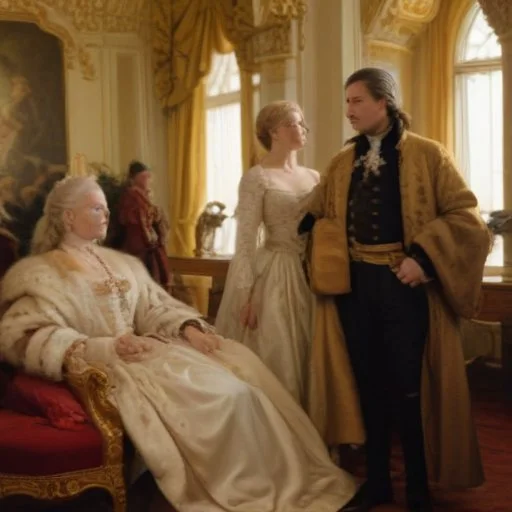
Born Sophie Friederike Auguste von Anhalt-Zerbst-Dornburg in 1729, Catherine was destined for greatness. Her intelligence, cunning, and charm caught the attention of Peter III, and she soon became his wife. However, the marriage was far from ideal, with Peter's lack of interest in governance and his disastrous decisions threatening to ruin Russia.
In June 1762, Catherine's patience wore thin as Peter III's incompetence continued to plague Russia. Seizing the opportunity, she orchestrated a bloodless coup, with her allies secretly gathering troops and nobles to support her claim to the throne. On July 9, 1762, Peter III was arrested, and Catherine declared herself the Empress of Russia.
With her husband deposed, Catherine solidified her position by issuing a manifesto, proclaiming her right to the throne. Peter III, realizing his fate was sealed, abdicated, and Catherine was crowned Empress on September 22, 1762. Her ascension marked the beginning of a new era in Russian history, characterized by cultural and economic progress.
Catherine's reign, spanning over 34 years, was marked by unprecedented growth, reforms, and cultural achievements. She patronized the arts, established educational institutions, and expanded Russia's borders through her military campaigns. Her vision and charisma earned her the admiration of her contemporaries and cemented her place as one of the greatest rulers in Russian history.
Catherine's remarkable story serves as a testament to her unwavering ambition, strategic thinking, and unrelenting passion for Russia's prosperity. Her legacy continues to inspire generations, solidifying her place as a true icon in Russian history.
| 1729 | Catherine is born in Germany |
| 1745 | Catherine marries Peter III of Russia |
| 1762 | Catherine orchestrates a bloodless coup against Peter III |
| September 22, 1762 | Catherine is crowned Empress of Russia |
Catherine's remarkable journey from a German princess to the Empress of Russia serves as a testament to her indomitable spirit, strategic thinking, and passion for greatness. Her legacy continues to captivate and inspire, cementing her place as one of the most beloved and influential rulers in Russian history.
Catherine's relationships with her lovers played a crucial role in her rise to power. Count Grigory Orlov, her lover and confidant, was instrumental in the coup against Peter III. Another notable lover was Prince Potemkin, who advised Catherine on matters of state and war. These relationships not only provided Catherine with emotional support but also helped her consolidate power and influence.
Her lovers were often chosen for their intelligence, charm, and connections, which proved valuable in her quest for power. Catherine's ability to navigate these relationships and use them to her advantage was a hallmark of her strategic thinking and political acumen.

During the 18th century, Russia was a vast and diverse empire, with a complex web of alliances and rivalries. The nobility, led by the boyars, held significant power and influence, while the Orthodox Church played a crucial role in shaping Russian identity and culture.
Catherine's coup against Peter III was, in part, a response to his disastrous policies and his failure to address the needs of the nobility and the Church. By appealing to these powerful groups, Catherine was able to rally support for her claim to the throne and solidify her position as Empress.
Catherine's reign was marked by significant economic reforms, aimed at modernizing Russia's economy and increasing its prosperity. She established a national bank, reformed the tax system, and encouraged trade and commerce.
Her economic policies led to rapid growth and development, with Russia becoming a major European power. The construction of canals, roads, and other infrastructure projects further boosted the economy, cementing Catherine's legacy as a wise and effective leader.

Catherine's reign was a golden age of Russian culture, marked by a flourishing of art, literature, and education. She patronized the arts, establishing numerous cultural institutions, including the Smolny Institute for Noble Maidens and the Hermitage Museum.
Catherine's love of literature and philosophy led her to correspond with prominent thinkers, such as Voltaire and Diderot. Her court became a hub of intellectual and cultural activity, attracting scholars, artists, and writers from across Europe.
Behind the scenes of Catherine's court, a complex web of politics and intrigue played out. The Empress navigated a delicate balance of power, managing the rivalries and alliances between her lovers, advisors, and nobles.
Factions and cliques vied for influence, with Catherine skillfully manipulating the system to maintain her authority. She was a master of palace politics, using her charm, intelligence, and strategic thinking to outmaneuver her opponents and maintain her grip on power.