


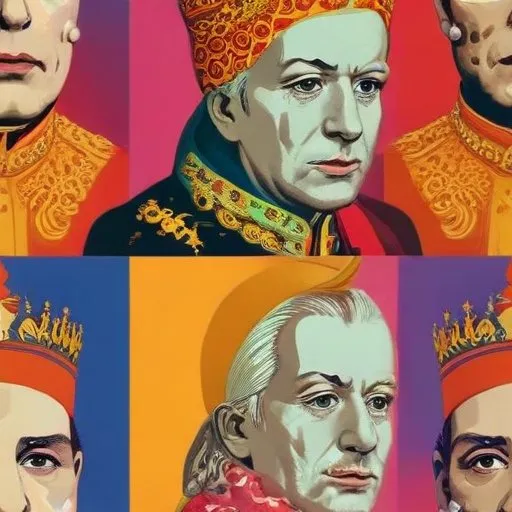
A short-lived Russian monarch who attempted to modernize and westernize the country, but was overthrown and assassinated after only six months in power.
Peter III of Russia, also known as Peter Fyodorovich, was the Emperor of Russia from January to July 1762, leaving a lasting impact on the country's history. He is remembered for his progressive reforms, including the abolition of the secret police and the introduction of religious freedom, as well as his tumultuous relationship with his wife, Catherine II the Great, who would ultimately overthrow him.
Born on February 10, 1728, in Kiel, Germany, Peter III was the grandson of Peter the Great and a great-grandson of Charles XI of Sweden. His parents, Charles Frederick, Duke of Holstein-Gottorp, and Grand Duchess Anna Petrovna of Russia, raised him with a strong sense of duty to his Russian heritage.
Upon ascending to the throne in 1762, Peter III faced opposition from the Russian nobility, who resented his German upbringing and perceived him as an outsider. His decision to withdraw Russian troops from Prussia and switch sides in the Seven Years War further eroded his popularity.
However, Peter III also implemented a range of progressive reforms, including:
Peter III's policies and personality clashes with his wife, Catherine II, ultimately led to his downfall. Catherine, who was a Russian nationalist, grew increasingly dissatisfied with her husband's pro-Prussian policies and his failure to assert Russian dominance.
In July 1762, Catherine conspired with her loyalists to overthrow Peter III, and he was deposed. He died soon after, allegedly in captivity, with some theories suggesting that his death was orchestrated by Catherine as part of the coup.
Despite his short and tumultuous reign, Peter III left a lasting legacy on Russian history. His progressive reforms paved the way for future leaders, including Catherine II, who would build upon his initiatives.
Peter III's story serves as a reminder that even the most well-intentioned leaders can fall victim to the complexities of power and politics. His vision for a more modern and enlightened Russia, though imperfectly executed, continues to inspire and inform Russian society to this day.
Through his reforms, controversies, and ultimate downfall, Peter III of Russia remains a fascinating figure in Russian history, his legacy continuing to captivate and inspire generations to come.
Born in 1729
Empress of Russia from 1762 to 1796, she transformed her country into a major European power, modernizing its culture, politics, and economy through numerous reforms and conquests.
Born in 1712
Prussian king who ruled with Enlightenment values, promoting arts, education, and religious tolerance, while also being a skilled military strategist and expanding his kingdom through wars.
