


August 20, 1968, will forever be etched in the annals of history as the day the Warsaw Pact, led by the Soviet Union, brutally crushed the Prague Spring, a beacon of democratic hope in communist Czechoslovakia. The invasion, which saw Soviet tanks roll into the capital city, marked a devastating turning point in the country's struggle for freedom and autonomy.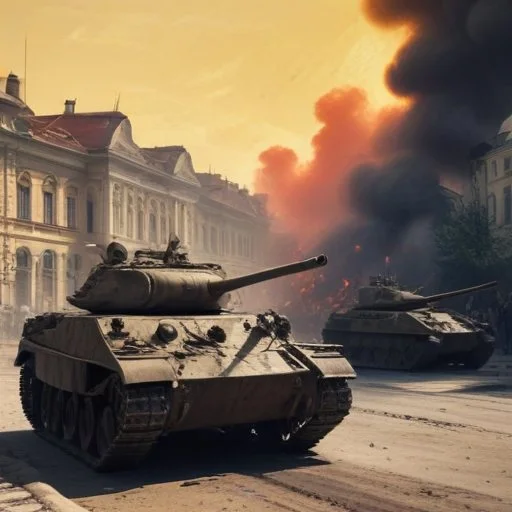
In the years following World War II, Czechoslovakia found itself wedged between the Soviet Union and the West, struggling to maintain a semblance of independence. However, as the country began to experience a semblance of economic stability, a growing sense of nationalism and desire for reform began to take root. This simmering discontent eventually coalesced into the Prague Spring, a brief but glorious period of liberalization and democratization.
In the early hours of August 20, 1968, Warsaw Pact troops, comprising Soviet, East German, Polish, Hungarian, and Bulgarian forces, descended upon Czechoslovakia. The invasion was swift and merciless, with Soviet tanks rolling into Prague, surrounded by thousands of soldiers. The city's defenders, vastly outnumbered and outgunned, were quickly overwhelmed.
East Germany, still haunted by the ghosts of World War II, limited its participation to a handful of specialists, a token gesture that belied the true extent of Soviet control. Albania and Romania, however, refused to participate, defying Soviet pressure in a rare display of independence.
The Prague Spring was brutally extinguished, and Czechoslovakia was shackled to Soviet dominance for decades to come. The invasion resulted in:
The Prague Spring's crushing defeat had far-reaching cultural and social implications, silencing the voices of liberation and:
The invasion sparked widespread international condemnation, with the United States and other Western powers condemning the Soviet Union's actions as a brutal suppression of democratic aspirations. The event has left a lasting scar on the Czechoslovakian psyche, with many still grappling with the trauma of that fateful summer.
Václav Havel, the future Czech president, then a young playwright, recalled the invasion, saying, "It was as if the whole city was occupied by a foreign power. I felt like I was living in a nightmare."
Havel's words capture the sense of despair and helplessness that gripped Czechoslovakians in the face of Soviet aggression. Yet, even in the darkest of times, there were those who dared to resist, their bravery a testament to the indomitable human spirit.
The Prague Spring's suppression marked a turning point in the Cold War, signaling a hardening of Soviet resolve and a intensification of the conflict. The event also galvanized Western opposition to Soviet aggression, paving the way for a new era of détente and diplomacy.
In the end, the Prague Spring's brutal suppression serves as a poignant reminder of the enduring human quest for freedom and autonomy, a beacon of hope that continues to inspire generations to this day.
The Prague Spring, though brutally suppressed, marked a significant turning point in the Cold War era. It showcased the Soviet Union's willingness to use force to maintain its dominance over Eastern Europe, while also exposing the limits of Soviet control.
In the context of Czechoslovakian history, the Prague Spring represented a brief moment of defiance against Soviet oppression, inspiring future generations to continue their struggle for independence.
Dubček, a Slovak communist, was an unlikely champion of reform. His commitment to decentralization and democratization earned him the admiration of Czechoslovakians and the scorn of Soviet leaders.
Dubček's fate, a mixture of exile and house arrest, served as a cautionary tale for would-be reformers in Eastern Europe.
The Warsaw Pact invasion of Czechoslovakia was a calculated move to maintain Soviet influence in Eastern Europe. The invasion came at a time when the Soviet Union was facing challenges from both the East (China) and the West (NATO).
The invasion demonstrated the Soviet Union's ability to project power beyond its borders, underscoring its commitment to maintaining a buffer zone between itself and Western Europe.
The Prague Spring's emphasis on freedom of expression and artistic liberation inspired a new generation of Czechoslovakian artists, writers, and musicians.
Despite the Soviet crackdown, the Prague Spring's cultural legacy endured, influencing the development of Czechoslovakian art, literature, and music in the decades that followed.
The Prague Spring represented a challenge to the Soviet Union's ideological dominance over Eastern Europe. Dubček's reforms threatened to create a rift within the communist bloc, undermining the Soviet Union's authority.
The invasion marked a turning point in the ideological struggle between communism and liberal democracy, galvanizing Western opposition to Soviet aggression.