


Siegfried Buback, Germany's top prosecutor, and his driver, Wolfgang Göbel, were ruthlessly gunned down by two members of the radical Red Army Faction (RAF) while waiting at a red light in their Mercedes on April 7, 1977. This brazen and brutal assassination sent shockwaves throughout Germany, exposing the dark underbelly of 1970s radical politics.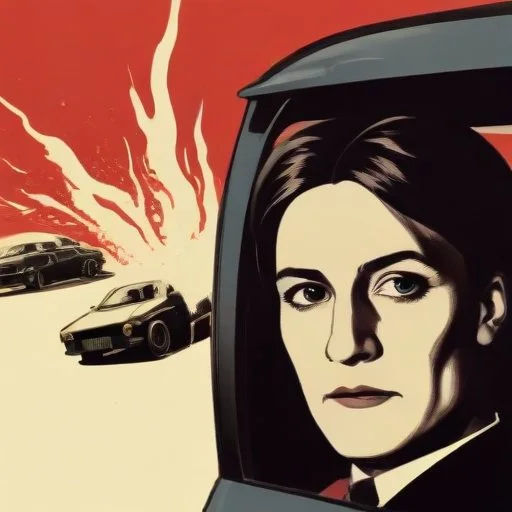
The Red Army Faction, also known as the Baader-Meinhof Group, was a far-left terrorist organization that emerged in the late 1960s. Founded by Andreas Baader, Ulrike Meinhof, and others, the group's ideology was rooted in Marxism-Leninism and anti-imperialism. They sought to overthrow the capitalist system and establish a socialist state through armed struggle.
The assassination of Buback and Göbel was a carefully planned operation. The RAF members, Christian Klar and Knut Folkerts, lay in wait for Buback's Mercedes at a red light in Karlsruhe. As the car came to a stop, the terrorists opened fire, unleashing a hail of bullets that killed Buback and Göbel instantly. The attack was swift and merciless, leaving no chance for the victims to escape.
The assassination sparked a massive manhunt, with authorities launching a nationwide search for the perpetrators. The investigation was led by the Bundeskriminalamt (BKA), Germany's federal criminal police agency. The police worked tirelessly to gather evidence, analyze clues, and track down the suspects. However, it would take several years for the perpetrators to be brought to justice.
In 1985, Christian Klar was arrested and subsequently put on trial for the murder of Buback and Göbel. The trial was highly publicized, with Klar maintaining his innocence throughout. However, the evidence against him was overwhelming, and he was sentenced to life imprisonment in 1987.
The assassination of Siegfried Buback had far-reaching consequences for Germany. It marked a turning point in the country's struggle against left-wing terrorism, leading to increased security measures and a heightened awareness of the threat posed by extremist groups. Buback's death also had a profound impact on the German legal system, with calls for greater protection for judges, prosecutors, and other public officials.
The roots of the Red Army Faction can be traced back to the student movement of the 1960s, which was marked by protests against the Vietnam War and the conservative government of Germany. The group's founders, Andreas Baader and Ulrike Meinhof, were among the key figures in this movement. They were radicalized by the police brutality they faced during the protests and decided to take up arms against the state.
One of the key events that contributed to the radicalization of the Red Army Faction was the shooting of Benno Ohnesorg, a student who was killed by a police officer during a protest against the Shah of Iran's visit to Germany in 1967. This event sparked widespread outrage and led to the formation of more radical groups, including the Red Army Faction.
The Red Army Faction's ideology was influenced by Marxist-Leninist thought and anti-imperialism. They saw themselves as part of a global struggle against capitalism and imperialism, and they believed that armed struggle was necessary to bring about revolutionary change. Their actions were also influenced by the Vietnam War and the actions of other left-wing groups around the world.

Andreas Baader was one of the founders of the Red Army Faction and one of the most notorious figures of the German left-wing terrorist movement. Born in 1943, Baader came from a middle-class family and was radicalized during the student movement of the 1960s. He was known for his charismatic personality and his ability to inspire loyalty in his followers.
Baader was arrested in 1972 and was being held in prison when he was found hanged in his cell in 1977. The circumstances of his death remain controversial, with many believing that he was murdered by the authorities.
Baader's legacy is still debated among historians and scholars. While some see him as a martyr for the left-wing cause, others view him as a dangerous terrorist who was responsible for the deaths of many innocent people.
The Red Army Faction's campaign of violence in the 1970s was not an isolated incident. It was part of a broader phenomenon of left-wing terrorism that swept across Europe and North America during this period. Similar groups, such as the Italian Red Brigades and the American Weather Underground, also engaged in armed struggle against the state.
One of the key differences between the Red Army Faction and other left-wing terrorist groups was its level of sophistication and its ability to evade capture. The group's members were highly organized and were able to carry out complex operations, such as the kidnapping of Hanns-Martin Schleyer, a prominent industrialist.
The Red Army Faction's actions also had a significant impact on German society and politics. The government responded to the group's violence with a range of measures, including the introduction of new anti-terror laws and the deployment of special police units.

The Red Army Faction's campaign of violence had a profound impact on German society and culture. The group's actions led to a climate of fear and anxiety, with many people living in fear of being targeted by terrorists.
The Red Army Faction's actions also influenced German art and literature. Many writers and artists responded to the group's violence by creating works that explored the themes of terrorism, violence, and social change.
The Red Army Faction's legacy can also be seen in the many films and documentaries that have been made about the group. These films, such as the Oscar-nominated "Der Baader Meinhof Komplex," have helped to keep the group's memory alive and have ensured that its actions remain a topic of public debate and discussion.
The Red Army Faction's ideology was rooted in Marxist-Leninist thought and anti-imperialism. The group's members saw themselves as part of a global struggle against capitalism and imperialism, and they believed that armed struggle was necessary to bring about revolutionary change.
The Red Army Faction's actions were also influenced by the ideas of Herbert Marcuse, a German philosopher who was critical of capitalism and advocated for revolutionary change. The group's members saw themselves as part of a broader movement of social change and believed that their actions were necessary to bring about a more just and equal society.
The Red Army Faction's ideology has been the subject of much debate and controversy. While some have seen the group's actions as a legitimate response to social and political injustices, others have condemned them as terrorism and have argued that they undermined the democratic process.