


On a precipice of uncertainty, Nikita Khrushchev, the Soviet leader, convened a clandestine meeting with communist heavyweights to salvage the Hungarian Revolution. This pivotal gathering would shape the fate of a nation, as Khrushchev sought to maintain the Soviet Union's grip on Eastern Europe.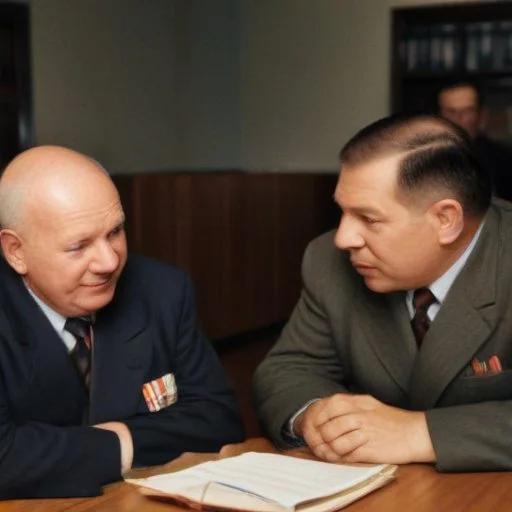
The Hungarian Revolution, sparked by student protests and worker strikes, had reached a boiling point. The streets of Budapest were ablaze, as anti-communist sentiments and demands for reform clashed with the Soviet-backed government. Amidst the chaos, Khrushchev knew he needed the counsel of his communist counterparts to quell the uprising and secure the Soviet Union's influence.
In October 1956, Khrushchev invited leaders from communist countries to a secret conclave in Moscow. Attendees included Josip Broz Tito, the enigmatic Yugoslavian leader, and Walter Ulbricht, the East German stalwart. This gathering of minds would prove instrumental in charting Hungary's future.
Khrushchev sought Tito's guidance, given his reputation as a shrewd statesman and adept mediator. Tito's wisdom would be instrumental in shaping Khrushchev's decision. Upon Tito's counsel, Khrushchev appointed János Kádár, a moderate communist, as Hungary's next leader. This choice would have far-reaching consequences, as Kádár's tenure would be marked by a delicate balance of reform and communist orthodoxy.
Kádár's ascendancy signaled a new chapter in Hungarian history. He implemented policies aimed at stabilizing the economy, increasing worker rights, and promoting cultural liberalization. Though still under Soviet influence, Hungary began to chart its own course, earning the moniker "the happiest barrack" within the communist bloc.
The clandestine gathering in Moscow had profound implications for Hungary and the Soviet Union. It underscored the complexity of communist alliances and the difficulties of maintaining control in the face of rising nationalist sentiment. Khrushchev's willingness to listen to Tito's counsel averted a potentially catastrophic confrontation, allowing the Soviet Union to maintain its grip on Eastern Europe for years to come.
As the curtain closed on this fateful meeting, the course of Hungarian history was forever altered. The decision to appoint Kádár would have far-reaching consequences, shaping the nation's future and cementing the Soviet Union's influence in Eastern Europe.
Josip Broz Tito, the enigmatic Yugoslavian leader, played a crucial role in shaping Khrushchev's decision. Born in 1892, Tito's early life was marked by poverty and hardship, which instilled in him a strong sense of determination and resilience. His rise to power was meteoric, and he became known for his charismatic leadership and shrewd diplomacy. Tito's ability to navigate the complex web of communist alliances and maintain Yugoslavia's independence earned him a reputation as a master strategist.

The fateful meeting in Moscow took place against the backdrop of a tumultuous era in Eastern European politics. The Soviet Union's grip on the region was being challenged by rising nationalist sentiment and demands for reform. The Hungarian Revolution, in particular, posed a significant threat to Soviet dominance, and Khrushchev's response would have far-reaching consequences. The meeting's outcome would not only determine Hungary's future but also send a message to other Soviet satellite states.
The geopolitical context of the time was further complicated by the Suez Crisis, which had unfolded just weeks prior to the meeting. The crisis had exposed the limits of Soviet power and created an opportunity for the United States to exert its influence in the region.
The appointment of János Kádár as Hungary's leader had significant economic implications. Kádár's reforms aimed to stabilize the economy, increase worker rights, and promote cultural liberalization. The economy, which had been in shambles following the revolution, began to recover slowly. Trade agreements with the Soviet Union and other Eastern European countries helped to stimulate growth, and Hungary's economy eventually became one of the most progressive in the communist bloc.

In the years leading up to the Hungarian Revolution, the country had been governed by a Stalinist regime, which had stifled economic growth and suppressed dissent. The death of Stalin in 1953 had created a power vacuum, which led to the rise of Imre Nagy, a moderate communist. Nagy's reforms, however, were short-lived, and he was eventually ousted by the Soviets. The revolution, sparked by student protests and worker strikes, was a culmination of years of simmering discontent.
The clandestine meeting in Moscow highlighted the complexities of communist ideology. Khrushchev's decision to appoint Kádár, a moderate communist, was seen as a pragmatic move to appease the Hungarian people while maintaining Soviet influence. This approach raised questions about the nature of communist orthodoxy and the role of nationalism in socialist states. The meeting's outcome would have significant implications for the development of communist ideology in the decades to come.