


The Immortal Seven, a group of seven prominent English noblemen, issued a secret invitation to William of Orange, the stadtholder of the Dutch Republic, to invade England in 1688. This bold move would ultimately spark the Glorious Revolution, a pivotal moment in English history that would shape the country's future for centuries to come.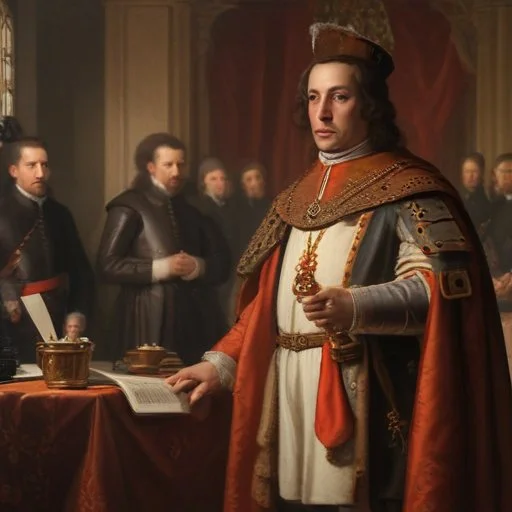
By the late 17th century, King James II of England had begun to consolidate his power, increasingly ruling without parliamentary consent. His open displays of Catholicism and appointment of Catholic officials sparked widespread discontent among the predominantly Protestant population. The noblemen, fearing the erosion of their authority and the country's Protestant heritage, sought a solution to curtail James's autocratic rule.
The seven noblemen, collectively known as the Immortal Seven, were an unlikely group of heroes. They comprised:
These noblemen, each with their own motivations and alliances, put aside their differences to address the growing crisis. They recognized that William of Orange, a seasoned military leader and Protestant champion, was the only one capable of challenging James's authority and restoring balance to the English monarchy.
On June 30, 1688, the Immortal Seven dispatched a formal invitation to William of Orange, imploring him to invade England with his army. This daring move was a calculated risk, as it could have sparked a devastating war or resulted in the noblemen's execution for treason. However, they believed that the potential benefits outweighed the risks, and that William's military prowess was the key to restoring parliamentary authority and safeguarding Protestantism.
William of Orange accepted the invitation, and on November 5, 1688, he landed at Torbay, Devon, with a large army. James II, realizing the futility of resistance, fled to France, leaving William and his wife, Mary, to claim the throne. The Glorious Revolution, as it came to be known, was a bloodless coup that marked the end of absolutism in England and the beginning of a new era of constitutional monarchy.
The Glorious Revolution had far-reaching consequences, including:
The Immortal Seven's bravery and foresight had set in motion a chain of events that would shape the course of English history, creating a more equitable and balanced system of government that would influence the development of modern democracy.
The Glorious Revolution and the Immortal Seven's role in it have inspired generations of politicians, historians, and citizens alike. As a testament to their courage and vision, their names have become synonymous with bravery, patriotism, and the unwavering commitment to liberty and justice.
In the words of William III, "The liberties of England are safe, and the Protestant religion is secured."
William Cavendish, 1st Duke of Devonshire, was a prominent figure among the Immortal Seven. Although he was not a natural politician, his nobility and wealth made him an influential voice among the English aristocracy. Cavendish's motivations for joining the Immortal Seven were largely driven by his desire to protect his family's power and interests, which were threatened by King James II's growing absolutism.
Despite his lack of political experience, Cavendish played a crucial role in convincing William of Orange to invade England. His persistence and persuasive abilities helped to bring the other noblemen on board, making him an unlikely leader in the Glorious Revolution.
The letter sent by the Immortal Seven to William of Orange is a significant historical artifact that has been preserved for centuries. Written in elegant script on vellum, the letter is a testament to the noblemen's bravery and foresight. The document is a valuable resource for historians, providing insight into the thoughts and motivations of the Immortal Seven.
The letter is now housed in the British Library, where it is carefully preserved and protected. It remains a powerful symbol of the Glorious Revolution, serving as a reminder of the courage and determination of the Immortal Seven.
The Glorious Revolution did not occur in a vacuum. The event was shaped by the complex geopolitical landscape of 17th-century Europe. The rise of Louis XIV's France had created a power vacuum, which James II of England sought to fill by consolidating his own power.
The Dutch Republic, meanwhile, was a bastion of Protestantism and democracy, and William of Orange was determined to protect his country from French aggression. The Immortal Seven's invitation to William was, in part, a response to these broader geopolitical tensions.
The Glorious Revolution had far-reaching implications for European politics, marking a significant shift in the balance of power and paving the way for a century of Anglo-Dutch cooperation.
The Glorious Revolution was a pivotal moment in English politics, marking a significant shift in the balance of power between the monarchy and parliament. The event was the culmination of a long struggle between the two, with the Immortal Seven and William of Orange acting as catalysts for change.
The revolution was not a straightforward conflict between Protestantism and Catholicism, but rather a complex struggle for power and influence. The Immortal Seven, despite their Protestant sympathies, were motivated by a desire to protect their own authority and interests.
The event's outcome, which established parliamentary supremacy and limited the monarch's powers, had a profound impact on English politics, shaping the development of modern democracy.
The Glorious Revolution had a profound impact on English culture, shaping the country's art, literature, and architecture for centuries to come. The event marked a shift towards a more Protestant and libertarian cultural identity, which was reflected in the works of writers such as John Locke and John Dryden.
The revolution also led to a resurgence of interest in classical learning and the arts, with figures such as Christopher Wren and Nicholas Hawksmoor shaping the country's architectural landscape.
The Glorious Revolution's cultural legacy can still be seen today, with the event continuing to inspire artists, writers, and thinkers around the world.