


The marriage was a masterstroke of political genius, as it not only united the rival houses but also secured Henry VII's claim to the throne and legitimized his rule. The couple had four children, including the future King Henry VIII, and their marriage was a powerful symbol of reconciliation and unity.
In conclusion, the marriage of King Henry VII and Elizabeth of York was a momentous event that brought peace and unity to a war-torn England, establishing the Tudor dynasty and shaping the course of English history for centuries to come.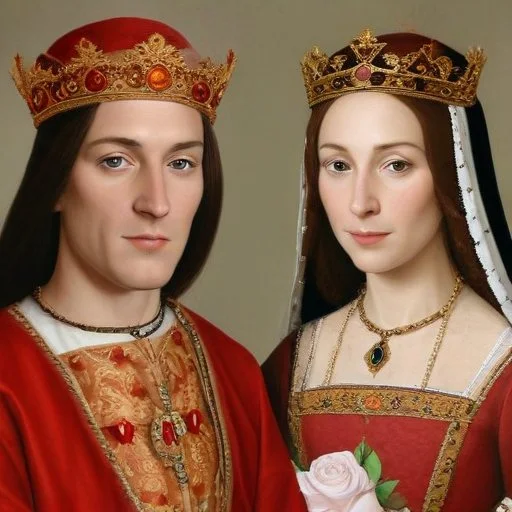
The historiographical significance of the marriage between King Henry VII and Elizabeth of York lies in its representation of a pivotal moment in English history. Historians have long debated the motivations behind Henry's decision to marry Elizabeth, with some arguing that it was a calculated move to secure his claim to the throne, while others see it as a genuine gesture of reconciliation.
Recent scholarship has shed new light on the role of women in medieval politics, and Elizabeth's marriage is seen as a key example of the complex web of alliances and rivalries that shaped the Wars of the Roses.

Edward IV: The Yorkist King
Edward IV, also known as Edward of York, was a powerful and popular ruler of England, who played a crucial role in the Wars of the Roses. Born in 1442, Edward was the eldest son of Richard, Duke of York, and Cecily Neville.
Edward's reign was marked by controversy and power struggles, including the dispute over the throne with the Lancastrian king, Henry VI. His death in 1483 sparked a succession crisis, which ultimately led to Richard III's seizure of the throne.
The marriage of King Henry VII and Elizabeth of York had a profound impact on English culture, symbolizing the end of the Wars of the Roses and the beginning of a new era of peace and prosperity.
The union was celebrated in literature, art, and music, with works such as Thomas More's The History of King Richard III and William Shakespeare's Richard III paying tribute to the event.
The marriage also influenced the development of English architecture, with the Tudor style of building becoming a hallmark of the period.

The geopolitical context of the marriage between King Henry VII and Elizabeth of York was characterized by a complex web of alliances and rivalries between European powers.
The Wars of the Roses had left England weakened and divided, creating an opportunity for foreign powers such as France and Burgundy to exert their influence.
The marriage was seen as a way to strengthen England's position and secure its borders, while also forming alliances with other European powers.
The marriage of King Henry VII and Elizabeth of York was a masterstroke of political genius, securing Henry's claim to the throne and legitimizing his rule.
By marrying Elizabeth, Henry was able to reconcile the rival houses of Lancaster and York, creating a sense of unity and stability in a war-torn England.
The marriage also enabled Henry to consolidate his power and establish a strong, centralized government, paving the way for the Tudor dynasty's success.