


The events leading up to the People Power Revolution unfolded as follows:
The People Power Revolution had far-reaching consequences, including:
The People Power Revolution had a profound impact on Philippine culture and society, inspiring:
The People Power Revolution was not without its controversies, including:
Corazon Aquino's famous quote, "The power of the people is stronger than the people in power," has become an iconic phrase, symbolizing the revolution's message of people-powered democracy.
The People Power Revolution shares parallels with other non-violent revolutions and democratic transitions, including: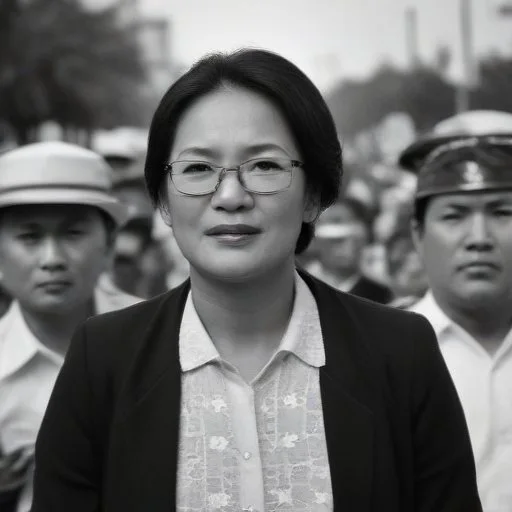
Many Filipinos recall the sense of euphoria and pride that filled the streets during the revolution, as people from all walks of life came together to demand change.
The People Power Revolution has inspired future generations of activists and democratic reformers, both in the Philippines and around the world.
Corazon Aquino was awarded the prestigious Ramon Magsaysay Award in 1998, recognizing her role in promoting democracy and human rights in the Philippines.
The People Power Revolution has become a significant chapter in Philippine history, taught in schools and universities across the country.
The Marcos regime's human rights abuses and corruption have become a cautionary tale, serving as a reminder of the dangers of authoritarianism and the importance of democratic accountability.
Ferdinand Marcos, the second-most polarizing figure in Philippine history, was a charismatic politician who rose to power in the 1960s. Born in 1917, Marcos was a decorated war hero and a cunning politician who used his charm and intelligence to win elections. However, his desire for power and control eventually consumed him, leading to the declaration of martial law in 1972.
As president, Marcos rule was marked by human rights abuses, corruption, and nepotism. He used his power to silence opposition, crush dissent, and amass wealth. His regime was notorious for its brutality, with reports of torture, disappearances, and extrajudicial killings.
Despite his fall from power, Marcos' legacy continues to be felt in the Philippines. His regime's dark history serves as a cautionary tale about the dangers of authoritarianism and the importance of democratic accountability.
The People Power Revolution was not just a political uprising but also a cultural awakening. It marked a shift in the country's cultural identity, as Filipinos began to reclaim their history, language, and traditions.
The revolution inspired a new generation of artists, writers, and musicians who sought to express the nation's hopes and aspirations. The iconic Laban sign, which symbolized resistance and defiance, became a powerful symbol of the revolution.
Today, the People Power Revolution is celebrated through various cultural events, including the annual EDSA Revolution anniversary, which features street festivals, concerts, and cultural performances. The revolution's cultural impact continues to be felt, inspiring new generations of Filipinos to stand up for their rights and fight for democracy.
The People Power Revolution shares striking similarities with the 1989 Velvet Revolution in Czechoslovakia. Both revolutions were characterized by non-violent protests, massive crowds, and a desire for democratic change.
Like the EDSA Revolution, the Velvet Revolution was led by a coalition of opposition groups and activists who demanded an end to the communist regime. Both revolutions featured iconic symbols, such as the Laban sign in the Philippines and the Velvet Revolution's use of the Czech crown.
However, there are key differences between the two revolutions. While the EDSA Revolution was sparked by the assassination of Benigno Aquino Jr., the Velvet Revolution was triggered by a series of protests and demonstrations against the communist government. Despite these differences, both revolutions demonstrate the power of non-violent resistance in achieving democratic change.
The People Power Revolution was rooted in the principles of democracy, human rights, and social justice. The revolution's leaders, including Corazon Aquino and Cardinal Jaime Sin, drew inspiration from the principles of active non-violence and civil disobedience.
The revolution's emphasis on non-violence and peaceful protest was deeply rooted in the Catholic Church's teachings on social justice and human dignity. The Church played a crucial role in mobilizing opposition to the Marcos regime and providing a moral framework for the revolution.
The People Power Revolution's philosophical underpinnings continue to influence Philippine politics and society, inspiring new generations of activists and reformers to fight for democratic values and human rights.
The People Power Revolution had significant economic consequences for the Philippines. The Marcos regime's crony capitalism and corruption had led to widespread poverty, inequality, and economic stagnation.
The revolution's aftermath saw the implementation of economic reforms aimed at promoting transparency, accountability, and free market principles. The new government also worked to recover the Marcos regime's ill-gotten wealth and assets.
Today, the Philippines is one of the fastest-growing economies in Southeast Asia, with a GDP growth rate of over 6%. While the country still faces economic challenges, the People Power Revolution marked a crucial turning point in the country's economic development.