


In the midst of unprecedented economic prosperity, the United States was grappling with a staggering contradiction: one-fifth of its population, approximately 40 million Americans, lived in poverty. The stark reality was that the American Dream remained an unattainable fantasy for millions, who struggled to access basic necessities like healthcare, education, and decent housing.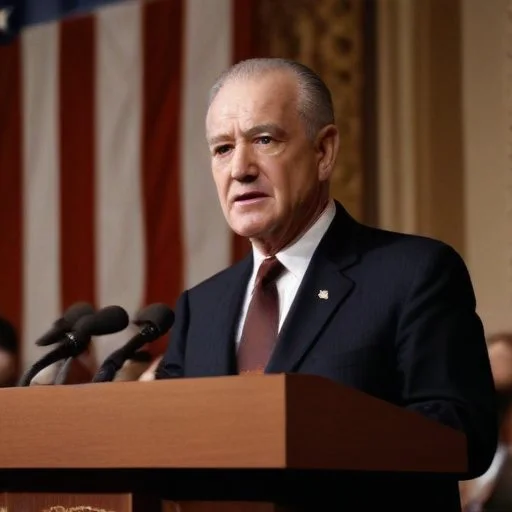
Between 1964 and 1965, Johnson's administration spearheaded a flurry of landmark legislation, including:
The War on Poverty, although imperfect, left an indelible mark on American society:
The War on Poverty remains a polarizing issue, with critics arguing that it was insufficient, overly bureaucratic, or even counterproductive. Yet, it undeniably raised the national consciousness about economic inequality and inspired a generation of social reformers.
In Johnson's own words, "The war on poverty is not a struggle simply to provide more money or more jobs. It is a struggle to provide hope, to provide a sense of dignity and self-respect."
The War on Poverty serves as a poignant reminder that the pursuit of economic justice is a perpetual, evolving struggle. As the nation continues to grapple with the complexities of poverty, racism, and inequality, it is essential to learn from the triumphs and shortcomings of Johnson's pioneering effort.
Historians have long debated the motivations behind Lyndon B. Johnson's War on Poverty. While some have attributed it to a genuine concern for the welfare of the poor, others have seen it as a calculated political move to consolidate support among African American voters. Recent research has shed new light on the role of Sargent Shriver, Johnson's trusted advisor, in shaping the policy.
Shriver's experience running the Peace Corps had instilled in him a commitment to social justice, which he brought to the War on Poverty. His influence can be seen in the emphasis on community-based initiatives and the establishment of the Office of Economic Opportunity.
The War on Poverty was not only a domestic policy initiative but also a reflection of the Johnson administration's broader political strategy. By framing poverty as a national issue, Johnson aimed to create a new coalition of supporters that would transcend traditional party lines.
This strategy was closely tied to Johnson's vision for the Great Society, which sought to reengineer American society through a series of bold reforms. The War on Poverty was a key component of this vision, as it addressed the root causes of poverty and empowered marginalized communities.
The War on Poverty had a profound impact on American culture, inspiring a wave of social activism and community organizing. Music and art played a key role in this movement, with artists like Bob Dylan and Aretha Franklin using their platforms to raise awareness about poverty and inequality.
The War on Poverty also influenced the development of documentary filmmaking, with works like "Hunger in America" (1968) exposing the harsh realities of poverty to a wider audience.

Dorothy Height, a pioneering civil rights activist, played a crucial role in shaping the War on Poverty policies. Her experience working with marginalized communities informed her advocacy for programs that addressed the specific needs of African American women.
Height's collaboration with the Johnson administration not only secured crucial funding for community-based initiatives but also helped to amplify the voices of grassroots activists. Her legacy continues to inspire social reformers today.
The War on Poverty had a profound impact on the American economy, injecting billions of dollars into community development projects and social programs. Research has shown that every dollar invested in these programs generated a return of up to $1.50 in economic growth.
The War on Poverty also laid the groundwork for future economic policies, influencing the development of landmark legislation like the Americans with Disabilities Act (1990) and the Affordable Care Act (2010).