


On September 10, 1919, the Republic of German-Austria put its signature on the Treaty of Saint-Germain-en-Laye, relinquishing substantial territories to Italy, Yugoslavia, and Czechoslovakia. This landmark agreement reshaped the political landscape of Central Europe, redrawing borders and paving the way for the emergence of new nation-states.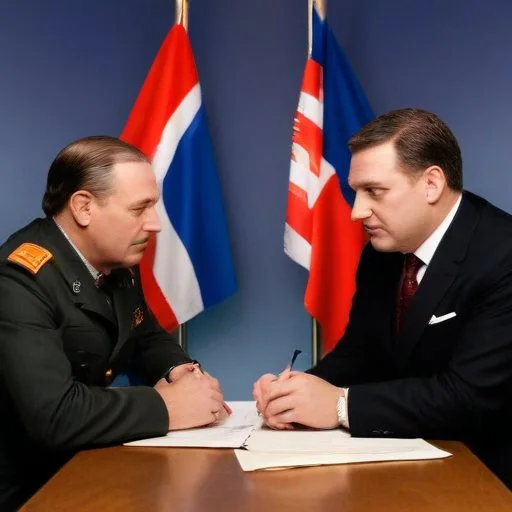
In the aftermath of World War I, the Austro-Hungarian Empire lay in ruins, its territories fragmented and its people weary of conflict. The Republic of German-Austria, a fledgling nation born from the ashes of the empire, struggled to assert its identity and secure its borders. Meanwhile, the victorious Allied powers, led by the United States, France, and Britain, sought to reorganize the region and prevent future conflicts.
The Treaty of Saint-Germain-en-Laye was signed on September 10, 1919, following months of intense negotiations between German-Austria and the Allied powers. The treaty entered into force on July 16, 1920, marking the beginning of a new era in Central European politics.
The Treaty of Saint-Germain-en-Laye led to significant territorial losses for German-Austria, with the cession of:
These territorial adjustments had far-reaching consequences, shaping the destiny of the nations involved and influencing the course of European history.
The Treaty of Saint-Germain-en-Laye had a profound impact on the cultural and social fabric of the region. The redrawing of borders led to the displacement of populations, the erosion of cultural identities, and the emergence of new nationalisms.
The treaty also had significant economic implications, as the newly established nations struggled to rebuild their economies and adapt to the new political landscape.
The Treaty of Saint-Germain-en-Laye was met with widespread criticism and disillusionment in German-Austria, where many felt that the nation had been unfairly punished and stripped of its territory.
In contrast, the Allied powers hailed the treaty as a triumph of diplomacy, celebrating the establishment of a new world order and the prevention of future conflicts.
The Treaty of Saint-Germain-en-Laye served as a precursor to the Treaty of Trianon, which imposed similar territorial losses on Hungary. Together, these treaties reshaped the political landscape of Central Europe, paving the way for the rise of fascist and nationalist movements in the 1920s and 1930s.
The treaty's legacy continues to resonate in modern-day European politics, serving as a reminder of the importance of diplomacy, sovereignty, and national identity.
Karl Renner, the Chancellor of German-Austria, played a crucial role in negotiating the terms of the Treaty of Saint-Germain-en-Laye. Born in 1870, Renner was a seasoned politician who had served as the Minister of Social Affairs in the Austro-Hungarian Empire before becoming the leader of German-Austria. Despite his reluctance to accept the treaty's harsh terms, Renner recognized the need for German-Austria to adapt to the new realities of the post-war world.
Renner's pragmatic approach to politics earned him the respect of his peers, and his leadership during the tumultuous period following World War I helped to pave the way for the emergence of a new Austrian state.

The Treaty of Saint-Germain-en-Laye was negotiated against the backdrop of a rapidly changing geopolitical landscape. The war had left European powers weakened, and the United States had emerged as a major player on the world stage. The treaty reflected this new balance of power, with the Allied powers imposing their will on the defeated nations.
The treaty also marked a significant shift in the balance of power in Central Europe, as the newly established nations of Yugoslavia and Czechoslovakia began to assert their independence. The treaty's provisions, particularly the redrawing of borders and the imposition of reparations, had far-reaching implications for the region's politics and economy.
The Treaty of Saint-Germain-en-Laye had a profound impact on the cultural identity of the nations involved. The redrawing of borders led to the displacement of populations, the erosion of cultural identities, and the emergence of new nationalisms.
In German-Austria, the treaty's provisions led to a crisis of identity, as the nation struggled to come to terms with its reduced borders and diminished status. In contrast, the newly established nations of Yugoslavia and Czechoslovakia saw the treaty as an opportunity to forge new national identities, free from the dominance of their former imperial overlords.

The Treaty of Saint-Germain-en-Laye had significant economic implications for the nations involved. The redrawing of borders led to the disruption of trade routes, the loss of valuable resources, and the imposition of reparations.
In German-Austria, the treaty's provisions led to a severe economic crisis, as the nation struggled to rebuild its economy in the face of significant territorial losses. In contrast, the newly established nations of Yugoslavia and Czechoslovakia saw the treaty as an opportunity to develop their economies, free from the dominance of their former imperial overlords.
Historians have long debated the significance of the Treaty of Saint-Germain-en-Laye, with some viewing it as a necessary step towards the democratization of Central Europe, while others see it as a punitive measure that sowed the seeds of future conflict.
Recent scholarship has highlighted the importance of considering the treaty within the broader context of the Paris Peace Conference, which aimed to establish a new world order in the aftermath of World War I. By examining the treaty's provisions in light of the conference's goals, historians can gain a deeper understanding of the complex and often competing interests that shaped the treaty's negotiations.