


The Treaty of Versailles, signed on June 28, 1919, marked the official end of the state of war between Germany and the Allied Powers of World War I, bringing a long-awaited respite to a devastated Europe. This pivotal event is renowned for imposing severe penalties on Germany, reshaping the global balance of power, and inadvertently sowing the seeds of future conflict.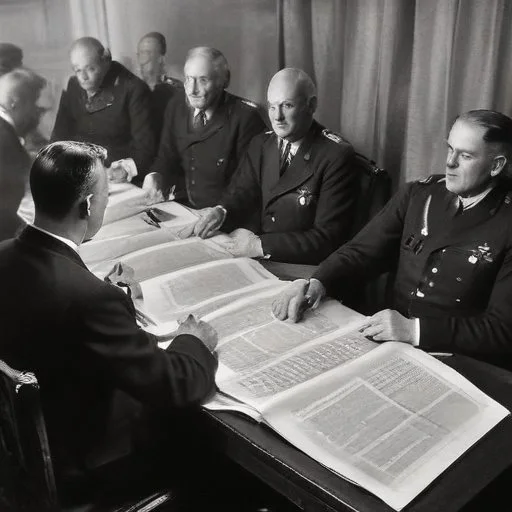
The road to the Treaty of Versailles was paved by the catastrophic consequences of World War I. The war, which lasted from 1914 to 1918, resulted in the loss of millions of lives, widespread destruction, and unprecedented economic costs. As the war drew to a close, the Allied Powers, led by the United States, Great Britain, and France, set out to establish a new world order, punishing Germany for its perceived aggression and ensuring that such a devastating conflict would never occur again.
The Treaty of Versailles was the culmination of efforts by several prominent figures, including:
The journey to the Treaty of Versailles was marked by:
The Treaty of Versailles had far-reaching consequences, including:
The Treaty of Versailles had a profound impact on popular culture and society, inspiring:
Notable quotes from the time include:
The Treaty of Versailles played a significant role in shaping the course of future events, including:
The Treaty of Versailles was a complex and multifaceted event that continues to resonate in modern times. As we reflect on this pivotal moment in history, we are reminded of the importance of diplomacy, cooperation, and the pursuit of lasting peace.
The Treaty of Versailles was signed against the backdrop of a rapidly changing world order. The Russian Revolution of 1917 had brought communism to the forefront, and the Allied Powers were keen to prevent its spread to other parts of Europe. The treaty's emphasis on national self-determination and the redrawing of borders was, in part, a response to the fear of communist expansion. Additionally, the treaty marked a shift in the global balance of power, with the United States emerging as a dominant player and Europe's traditional powers, such as Germany and Austria-Hungary, facing significant decline.
The post-war settlement also saw the rise of new international organizations, such as the League of Nations, which aimed to promote collective security and prevent future conflicts. However, the league's inability to prevent Japan's invasion of Manchuria in 1931 and Italy's aggression in Ethiopia in 1935 exposed its limitations and paved the way for the aggressive expansion of fascist powers in the 1930s.

David Lloyd George: The Unlikely Peacemaker
David Lloyd George, the Prime Minister of the United Kingdom, played a crucial role in shaping the Treaty of Versailles. Despite his reputation as a firebrand and a strong advocate for British interests, Lloyd George emerged as a pragmatic leader who sought to balance the need for German punishment with the desire for a lasting peace. His diplomatic skills and ability to negotiate with his counterparts, including Woodrow Wilson and Georges Clemenceau, were instrumental in brokering a treaty that, while flawed, marked a significant step towards international cooperation.
Lloyd George's commitment to the League of Nations, in particular, reflected his desire to create a more stable international order, where nations could work together to prevent future conflicts. His leadership during the Paris Peace Conference helped to establish the League as a cornerstone of post-war diplomacy.
The Treaty of Versailles and the Rise of Anti-German Sentiment
The Treaty of Versailles had a profound impact on popular culture and society, particularly in Germany. The harsh penalties and reparations imposed on Germany fostered a sense of injustice and resentment among the German people, which contributed to the rise of anti-Semitic and nationalist sentiment in the 1920s and 1930s. The treaty's emphasis on German guilt and responsibility for the war also created a sense of victimhood, which further fueled anti-German sentiment in other parts of Europe.
In addition, the treaty's cultural impact extended beyond Germany, as it helped to shape a new era of international relations and diplomacy. The treaty's emphasis on collective security and international cooperation inspired a new generation of diplomacy, which sought to prevent future conflicts through negotiation and dialogue.

The Economic Consequences of the Treaty of Versailles
The Treaty of Versailles imposed significant economic penalties on Germany, including reparations of 132 billion gold marks. The impact of these penalties was devastating, causing hyperinflation and widespread economic hardship in Germany. The treaty's economic provisions also had far-reaching consequences for the global economy, contributing to the Great Depression of the 1930s.
The treaty's economic impact was not limited to Germany, as it also affected the global economy. The collapse of the German economy had a ripple effect on other European economies, leading to widespread unemployment and economic instability. The treaty's emphasis on protectionism and nationalism also contributed to a decline in international trade, further exacerbating economic downturn.
The Historiographical Debate: Interpreting the Treaty of Versailles
Historians have long debated the significance and impact of the Treaty of Versailles. Some have viewed the treaty as a flawed but necessary response to the devastation of World War I, while others have seen it as a missed opportunity for more radical reform. The treaty's legacy has also been the subject of intense historiographical debate, with some seeing it as a precursor to World War II and others viewing it as a necessary step towards the creation of a more stable international order.
More recent historiographical trends have emphasized the complexity and nuance of the treaty's impact, highlighting the ways in which it reflected the conflicting interests and ideals of the victorious powers. This more nuanced approach has helped to shed light on the treaty's many contradictions and has provided a more textured understanding of its significance in world history.