


The Louisiana Purchase, a landmark event in American history, marked a pivotal moment when the United States Senate ratified a treaty that would change the nation's trajectory forever. On April 30, 1803, the Senate voted overwhelmingly in favor of the purchase, effectively doubling the size of the United States and setting the stage for westward expansion.
The Louisiana Purchase was the culmination of years of diplomatic efforts by three visionaries: Robert Livingston, James Monroe, and François Barbé-Marbois. These men navigated the complex web of international politics to secure a treaty that would transfer ownership of approximately 828,000 square miles of land from France to the United States.
The negotiations were a delicate dance of politics, diplomacy, and strategy. Livingston, Monroe, and Barbé-Marbois had to balance the interests of their respective nations while also addressing the concerns of other European powers. Their collective efforts resulted in a treaty that was nothing short of a diplomatic masterpiece.
The Louisiana Purchase added a vast and largely uncharted territory to the United States. The new land stretched from the Mississippi River to the Rocky Mountains and north to the Canadian border, encompassing parts of present-day Montana, Wyoming, Colorado, Kansas, Oklahoma, Arkansas, Louisiana, and Missouri.
This vast expanse of land was home to numerous indigenous tribes, including the Osage, Omaha, and Comanche. The purchase set the stage for a complex and often fraught relationship between the United States government and Native American nations.
The Louisiana Purchase sparked a new era of exploration and settlement in the United States. The acquisition of this vast territory opened up new opportunities for trade, commerce, and expansion.
Meriwether Lewis and William Clark's iconic expedition, commissioned by President Thomas Jefferson, was a direct result of the Louisiana Purchase. Their journey, which spanned from 1804 to 1806, mapped the western wilderness and established trade relationships with Native American tribes.
The Louisiana Purchase had far-reaching consequences for the United States. It set a precedent for westward expansion, which would shape the nation's identity and destiny.
The purchase also had significant economic and cultural implications. It opened up new markets, resources, and opportunities for settlement, fueling the growth of the United States into a continental power.
In a letter to Senator John Breckinridge, Thomas Jefferson wrote, "The fate of generations depends on this momentous decision." Jefferson's words proved prophetic, as the Louisiana Purchase paved the way for the United States to become a global superpower.
The Louisiana Purchase stands as a testament to the power of vision, diplomacy, and strategic planning. It reminds us that even the most seemingly insurmountable challenges can be overcome with determination, creativity, and a commitment to the greater good.
The Louisiana Purchase continues to shape the United States to this day. It has inspired generations of Americans to explore, settle, and shape the nation's destiny.
As we look to the future, we would do well to remember the courage, wisdom, and foresight of those who dared to dream big. The Louisiana Purchase serves as a powerful reminder of the transformative power of vision, leadership, and collaboration.
The Louisiana Purchase is an enduring testament to the boundless potential of the human spirit. It stands as a shining example of what can be achieved when vision, leadership, and diplomacy come together to shape the course of history.
Robert Livingston, one of the key architects of the Louisiana Purchase, was a New York lawyer and politician who served as the Minister Plenipotentiary to France from 1801 to 1804. Born in 1746, Livingston graduated from King's College (now Columbia University) and went on to study law. He was a strong advocate for American independence and played a crucial role in the Revolutionary War, serving as a member of the New York Provincial Congress.
Livingston's diplomatic skills and knowledge of French politics proved invaluable during the Louisiana Purchase negotiations. He worked closely with James Monroe and François Barbé-Marbois to secure a treaty that would benefit both the United States and France. Livingston's commitment to the purchase was unwavering, and he reportedly said, "From this day the United States take their place among the powers of the first rank."
The Louisiana Purchase had a profound impact on the American economy, opening up new markets, resources, and opportunities for trade. The acquisition of the vast territory provided access to the Mississippi River, a vital transportation artery that connected the East Coast to the West.
The purchase also sparked a surge in westward expansion, leading to the growth of new industries such as agriculture, mining, and manufacturing. The country's economy began to shift from a primarily agrarian society to a more diversified economy, with the West playing a significant role in the nation's industrial development.
The Louisiana Purchase took place against the backdrop of a complex and tumultuous global landscape. The Napoleonic Wars were raging in Europe, and the French Empire was struggling to maintain its control over its colonial territories.
In this context, the sale of the Louisiana Territory was a strategic move by Napoleon Bonaparte to raise capital for his military campaigns and to focus on European conquests. The purchase marked a significant shift in the global balance of power, with the United States emerging as a major player in international politics.
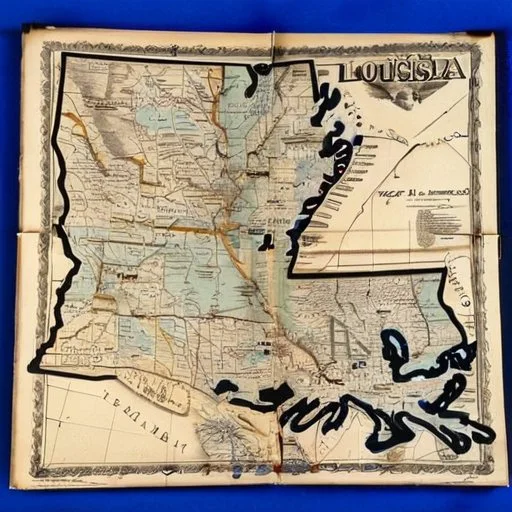
The Louisiana Purchase had a profound impact on the cultural identity of the United States, shaping the nation's values, traditions, and sense of self. The acquisition of the vast territory opened up new opportunities for exploration, settlement, and expansion.
The purchase also led to the displacement and marginalization of indigenous peoples, sparking a complex and often fraught relationship between the United States government and Native American nations. The Louisiana Purchase serves as a reminder of the complex and often painful history of American westward expansion.
The Louisiana Purchase Treaty, signed on April 30, 1803, is a remarkable document that reflects the diplomatic skills and strategic thinking of the negotiators. The treaty's 13 articles outlined the terms of the sale, including the transfer of ownership, boundaries, and territorial rights.
The treaty is notable for its brevity and simplicity, with a focus on practical considerations rather than grand ideological statements. The document's signatures, including those of Robert Livingston, James Monroe, and François Barbé-Marbois, serve as a testament to the power of diplomacy and international cooperation.