


The Battle of Jena-Auerstedt is remembered as one of Napoleon's most brilliant military victories, where his French army defeated the Prussian forces in a dual battle that would have far-reaching consequences for Europe. This decisive battle marked a turning point in the War of the Fourth Coalition, cementing Napoleon's reputation as a military genius and paving the way for French dominance over Prussia.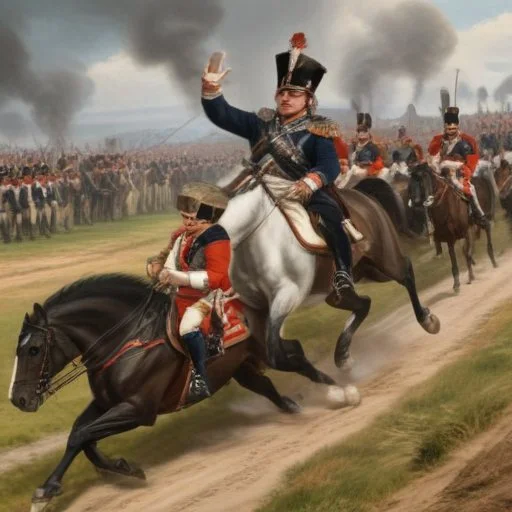
In 1806, the War of the Fourth Coalition was in full swing, with Napoleon's French Empire facing off against a coalition of European powers, including Prussia, Russia, and Austria. Tensions had been building between France and Prussia for months, with Napoleon seeking to expand his empire and King Frederick William III of Prussia determined to resist French aggression.
The battle began on October 14, 1806, with Napoleon's army facing off against the Prussian forces at Jena, while Marshal Davout's corps engaged the Prussian army at Auerstedt. Despite being outnumbered, Napoleon's tactical genius and clever use of reserves soon turned the tide of the battle in favor of the French.
The Battle of Jena-Auerstedt resulted in a crushing defeat for the Prussian army, with over 25,000 soldiers killed or wounded. The Prussian army was shattered, and King Frederick William III was forced to flee the battlefield. Napoleon's victory paved the way for French occupation of Prussia, marking a significant shift in the balance of power in Europe.
The Battle of Jena-Auerstedt had far-reaching cultural and social implications, marking the beginning of a new era in European politics. Napoleon's victory cemented his position as a dominant force in European politics, and his military conquests would have a lasting impact on the continent.
According to eyewitness accounts, Napoleon's tactical genius was on full display during the battle. One soldier recalled seeing Napoleon ride onto the battlefield, his presence inspiring his troops to fight with renewed ferocity. Meanwhile, Marshal Davout's corps fought bravely at Auerstedt, despite being vastly outnumbered.
The Battle of Jena-Auerstedt had a profound impact on future events, shaping the course of European history for generations to come. Napoleon's victory marked the beginning of French dominance over Prussia, and paved the way for further military conquests across Europe.
The War of the Fourth Coalition was a complex and multifaceted conflict that involved several European powers. The coalitions were formed in response to Napoleon's aggressive expansionist policies, which threatened the balance of power in Europe. The Prussian army, led by King Frederick William III, was determined to resist French aggression and protect its territorial integrity. The war was marked by several key battles, including the Battle of Jena-Auerstedt, which would prove to be a decisive turning point in the conflict.
The Battle of Jena-Auerstedt was a culmination of months of tensions between France and Prussia. Napoleon's army had been making steady gains in Central Europe, and the Prussian army was determined to stop them. The battle was fierce and intense, with both sides suffering heavy casualties. However, Napoleon's tactical genius and clever use of reserves ultimately gave him the upper hand, and the Prussian army was forced to retreat.
In the aftermath of the battle, Napoleon's army occupied Prussia, and the French Emperor imposed harsh terms on the defeated nation. The Treaty of Tilsit, signed in 1807, marked the end of the War of the Fourth Coalition and cemented Napoleon's dominance over Europe.

King Frederick William III of Prussia was the King of Prussia who led his army against Napoleon's forces during the War of the Fourth Coalition. Despite being vastly outnumbered, he was determined to resist French aggression and protect his territorial integrity. Unfortunately, his army was no match for Napoleon's tactical genius, and he was forced to flee the battlefield.
King Frederick William III was a devout Lutheran and a strong supporter of the aristocracy. He was known for his conservative views and his opposition to the ideals of the French Revolution. Despite his defeat at the Battle of Jena-Auerstedt, he remained a popular figure in Prussia and continued to rule until his death in 1840.
The Battle of Jena-Auerstedt is often compared to other key battles in Napoleon's military career, such as the Battle of Austerlitz and the Battle of Borodino. While all three battles were significant victories for Napoleon, they differed in terms of strategy and tactics. The Battle of Jena-Auerstedt was notable for Napoleon's clever use of reserves and his tactical genius on the battlefield.
In contrast to the Battle of Austerlitz, which was marked by a series of daring maneuvers and clever tactical decisions, the Battle of Jena-Auerstedt was more of a grinding, attritional battle. Napoleon's army was heavily outnumbered, and he was forced to rely on his reserves to turn the tide of the battle.
Despite these differences, all three battles showcased Napoleon's military genius and his ability to adapt to changing circumstances on the battlefield.

The Battle of Jena-Auerstedt had a profound impact on European culture and society. The defeat of the Prussian army marked the beginning of French dominance over Europe, and Napoleon's military conquests would have a lasting impact on the continent.
The battle also had significant cultural implications. The defeat of the Prussian army led to a shift in the balance of power in Europe, and Napoleon's military conquests would inspire a new generation of European writers, artists, and intellectuals.
In addition, the battle had an impact on the development of European nationalism. The defeat of the Prussian army marked the beginning of a new era of French dominance over Europe, and Napoleon's military conquests would inspire a new generation of European nationalists.
Historians have long debated the significance of the Battle of Jena-Auerstedt. Some have argued that the battle was a decisive turning point in the War of the Fourth Coalition, marking the beginning of French dominance over Europe. Others have seen the battle as a key example of Napoleon's military genius, showcasing his tactical skills and ability to adapt to changing circumstances on the battlefield.
Despite these debates, most historians agree that the Battle of Jena-Auerstedt was a significant event in European history. The battle marked the beginning of a new era of French dominance over Europe, and Napoleon's military conquests would have a lasting impact on the continent.