


The First Battle of Ypres, fought from October 19 to November 22, 1914, was a brutal and pivotal engagement that marked the debut of trench warfare on the Western Front. This gruesome initiation would forever etch the Belgian city of Ypres into the annals of history, claiming countless lives and setting the tone for the bloody conflict that would soon engulf Europe.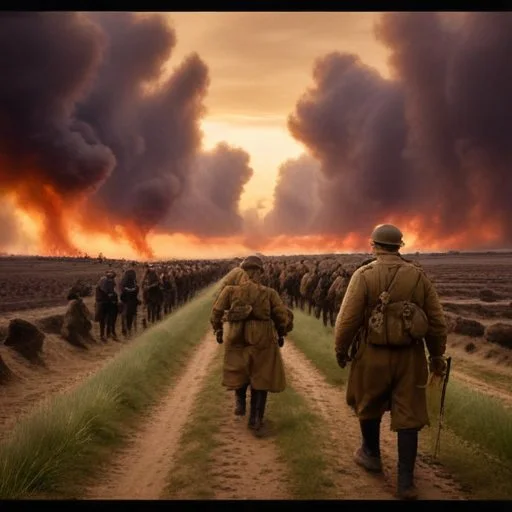
In the summer of 1914, the European continent was ablaze with tensions, as the complex web of alliances and nationalist sentiment pushed the world toward war. The assassination of Archduke Franz Ferdinand of Austria-Hungary by Gavrilo Princip, a Serbian nationalist, proved the catalyst for the Great War. As alliances were invoked, Germany, under the leadership of Kaiser Wilhelm II, found itself at odds with France, Russia, and Great Britain.
The war's early months saw a series of swift and decisive German victories, including the Battle of the Frontiers, which pushed the French and British armies back toward the Marne River. The Allies' fortunes changed, however, with the First Battle of the Marne, which halted the German advance and forced them to retreat to the Aisne River.
The First Battle of Ypres was a baptism by fire for both the Allies and the Germans, with casualties numbering in the hundreds of thousands. The battle marked a significant shift in the war's trajectory, as the mobile warfare of the early months gave way to the trenches, barbed wire, and stalemate of the Western Front.
The Allies suffered approximately 70,000 casualties, including 7,000 British soldiers, while the Germans lost an estimated 130,000 men. The devastation and futility of the battle would soon become synonymous with the horrors of World War I.
The First Battle of Ypres had a profound impact on the cultural and social fabric of Europe, as the brutal realities of modern warfare shook the continent to its core. The battle inspired a wave of anti-war sentiment, as writers, artists, and intellectuals responded to the senseless slaughter with works that would shape the cultural narrative of the 20th century.
In the aftermath of the battle, the likes of Siegfried Sassoon, Robert Graves, and Ernest Hemingway would reflect on the futility and horror of war, crafting literary masterpieces that continue to resonate with audiences today.
"I died in hell – They called it Passchendaele." – Siegfried Sassoon, counters the myth of the glamorous war hero with a haunting epitaph that would become synonymous with the devastation of World War I.
The First Battle of Ypres serves as a poignant reminder of the devastating consequences of war, a testament to the bravery and sacrifice of those who fought and died on the battlefields of Flanders. As we reflect on the centenary of this pivotal engagement, we are compelled to remember the lessons of history, lest we forget the horrors that lurk in the shadows of human conflict.
General Douglas Haig, a seasoned British officer, played a crucial role in shaping the Allied strategy during the First Battle of Ypres. Haig's experience in the Boer War and his understanding of modern warfare made him an ideal candidate to lead the British Expeditionary Force (BEF) in the early months of World War I.
Haig's strategy during the First Battle of Ypres was centered around holding the line against the German advance, while also attempting to break through the enemy lines and restore mobility to the battlefield. Although the BEF suffered heavy casualties, Haig's leadership and tactics helped to prevent a complete collapse of the Allied front.
The devastating experience of the First Battle of Ypres had a profound impact on the literary landscape of the early 20th century. Writers such as Siegfried Sassoon, Robert Graves, and Ernest Hemingway drew upon their own experiences on the battlefields of Flanders to craft powerful anti-war literature.
Sassoon's poetry, in particular, became a powerful indictment of the senseless slaughter and bureaucratic ineptitude that characterized the war effort. His famous poem, "Declaration Against the War," marked a turning point in the literary response to the conflict, as writers began to question the morality and purpose of the war.
From the German perspective, the First Battle of Ypres was a strategic gamble that ultimately backfired. Erich von Falkenhayn, the German Chief of the General Staff, had hoped to push the British and French armies back toward the English Channel, thereby gaining a crucial advantage on the Western Front.
Falkenhayn's plan, however, was predicated on a series of flawed assumptions about the strength and resilience of the Allied armies. As the battle wore on, it became clear that the German army was ill-prepared to deal with the trench warfare and artillery tactics employed by the Allies.
A recently discovered letter from a British soldier, written during the heights of the First Battle of Ypres, provides a poignant glimpse into the experiences of those who fought on the front lines.
The letter, penned by Private John Smith, describes the brutal conditions and senseless slaughter that characterized the battle. Smith's words paint a vivid picture of the "Ypres Salient," a notorious stretch of trenches that became synonymous with the horrors of World War I.
The devastating consequences of the First Battle of Ypres had far-reaching social implications for the communities and families affected by the conflict. The loss of life and limb, combined with the disruption to traditional social structures, led to a profound shift in the social fabric of Europe.
In the aftermath of the battle, many soldiers returned home to find their communities forever changed. The trauma and psychological scars inflicted by the battle would take years to heal, leaving a lasting impact on the social dynamics of the post-war era.