


In the midst of World War II, on October 18, 1944, the German city of Ulm bore witness to a poignant spectacle – the state funeral of Field Marshal Erwin Rommel, the legendary Desert Fox. This grand farewell ceremony, attended by high-ranking Nazi officials and thousands of mourners, marked a stark contrast to the mysterious and tragic circumstances surrounding Rommel's forced suicide just days prior.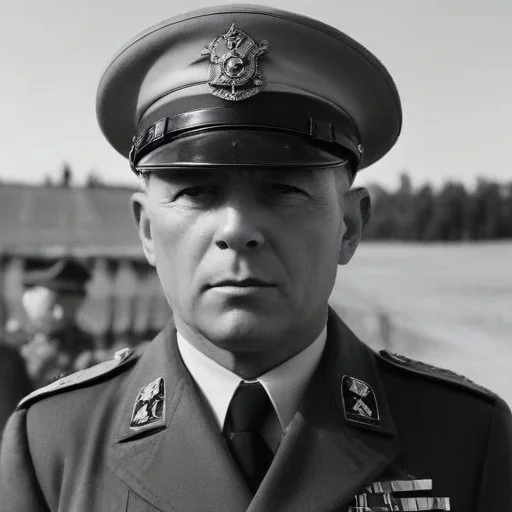
Rommel, the highest-ranking German officer of the war, was a complex figure – a celebrated warrior, a loyal patriot, and a reluctant participant in the Nazi regime. His military prowess had earned him the respect of Allied forces, who dubbed him the "Desert Fox" for his cunning tactics in North Africa. Rommel's loyalty to his country, however, was tempered by his growing disillusionment with the Nazi regime, ultimately leading to his alleged involvement in a plot to overthrow Adolf Hitler.
On that crisp autumn morning, the city of Ulm was draped in black, white, and red, the colors of the Nazi party. The funeral procession, led by Rommel's staff car, wound its way through the streets, accompanied by the mournful strains of a military band playing Chopin's Funeral March. Thousands of Ulm's citizens lined the route, paying their respects to the fallen hero.
The funeral ceremony was attended by the crème de la crème of the Nazi elite, including Reichsmarschall Hermann Göring, Admiral Karl Dönitz, and Minister of Propaganda Joseph Goebbels. The presence of these high-ranking officials was a testament to Rommel's stature within the German military and the esteem in which he was held by his peers.
The news of Rommel's death had sent shockwaves throughout Germany, sparking widespread mourning and tributes from the German people. This outpouring of grief was a testament to Rommel's enduring popularity, which transcended the Nazi regime's propaganda machine. As the funeral procession made its way to the Ulm Minster, the air was thick with emotion, as the city bid farewell to a hero who had embodied the best of German values.
Rommel's state funeral served as a poignant reminder of the complexities of his legacy – a brilliant military strategist, a loyal patriot, and a reluctant participant in the Nazi regime. This ceremony, with all its pomp and circumstance, would ultimately be overshadowed by the controversy surrounding Rommel's forced suicide, leaving behind a legacy that continues to fascinate and intrigue historians to this day.
In the end, the Desert Fox's farewell in Ulm, Germany, served as a poignant reminder that even in the midst of war, humanity and honor can prevail, if only for a fleeting moment.
The events leading up to Rommel's forced suicide are still shrouded in mystery. Historians believe that Rommel's involvement in the July 20 plot to assassinate Hitler was the catalyst for his downfall. After the plot failed, Rommel's name was implicated, and he was summoned to Berlin to face an investigation. Fearing a lengthy and humiliating trial, Rommel chose to take his own life, rather than betray his comrades or compromise his honor.
Rommel's death was met with widespread shock and disbelief in Germany. The news of his suicide was kept secret, and instead, the official story was that he had died of injuries sustained in a strafing attack on his staff car. This deception was perpetuated to maintain morale and prevent any potential unrest.
In the aftermath of Rommel's death, the Nazi regime went to great lengths to sanitize his image and erase any hint of his suspected treason. Rommel's loyalty to the Fatherland was emphasized, and his military achievements were highlighted, while his personal doubts and reservations about the war were conveniently omitted.

Field Marshal Erwin Rommel was a man of contradictions - a brilliant military strategist, a loyal patriot, and a reluctant participant in the Nazi regime. Born in 1891, Rommel was a decorated veteran of World War I and rose through the ranks to become one of Germany's most respected and feared military leaders.
Rommel's early life was marked by a strong sense of duty and loyalty to his country. He joined the German Army in 1910 and saw action on the Italian front during World War I. His bravery and tactical genius earned him numerous decorations, including the prestigious Pour le Mérite.
Rommel's complex personality was shaped by his experiences on the battlefield. He was known for his chivalrous conduct towards his enemies, often going out of his way to spare civilian lives and treat prisoners with dignity.The funeral ceremony was a carefully choreographed event, designed to showcase the Nazi regime's power and Rommel's loyalty to the Fatherland. The presence of high-ranking officials like Göring, Dönitz, and Goebbels was a deliberate attempt to demonstrate the regime's solidarity and unity.
The Nazi regime's official line was that Rommel had died a hero's death, fighting bravely against the enemy. This narrative was perpetuated to maintain morale and to conceal the embarrassing truth about Rommel's involvement in the July 20 plot.
Rommel's funeral served as a propaganda opportunity for the Nazi regime, allowing them to reinforce their message of loyalty, duty, and sacrifice. By co-opting Rommel's image and legacy, the regime sought to bolster its own legitimacy and credibility.

The funeral procession in Ulm was a microcosm of the complex geopolitical landscape of 1944. As the Allies advanced on all fronts, the Nazi regime was desperately seeking to maintain its grip on power and to shore up its crumbling defenses.
Rommel's death occurred at a critical juncture in the war, when the tide was turning decisively in favor of the Allies. The Soviet Union was pushing deep into German territory, and the Western Allies were preparing to launch a major offensive in France.
In this context, Rommel's funeral took on a symbolic significance, serving as a fleeting moment of distraction from the crushing realities of war and defeat. The grandeur and pomp of the ceremony were a desperate attempt to momentarily forget the looming specter of defeat and occupation.
Rommel's state funeral had a profound impact on German popular culture, cementing his status as a national hero and a symbol of resistance against the Allied forces. The ceremony was heavily televised and radio-broadcast, allowing millions of Germans to pay their respects to the fallen hero.
In the aftermath of the war, Rommel's legacy continued to inspire and fascinate the German people. His image was co-opted by both the East and West German governments, who sought to claim his mantle and associate themselves with his values of honor, duty, and loyalty.
Today, Rommel remains an important cultural icon in Germany, with numerous museums, memorials, and monuments dedicated to his memory. His legacy continues to inspire debate and reflection, serving as a poignant reminder of the complexities and contradictions of the human experience.